
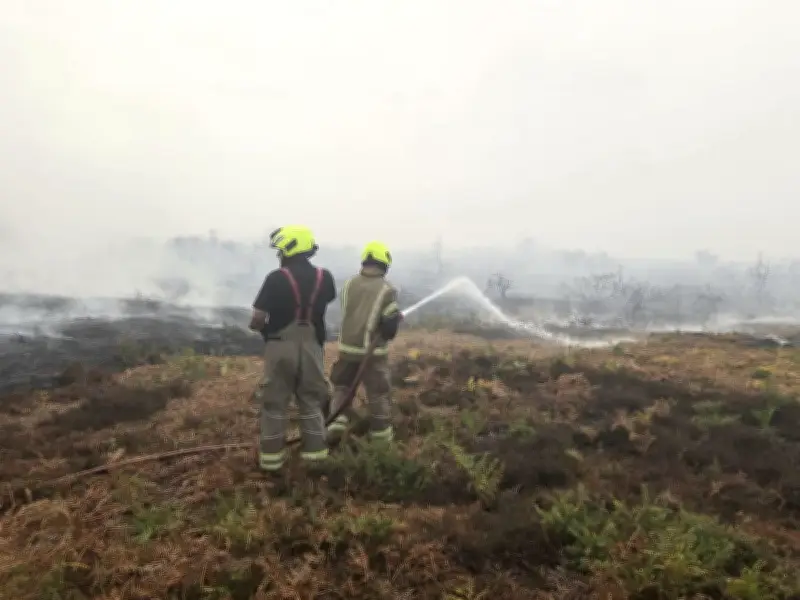
Experts have warned that rewilding schemes could worsen wildfire risks if they are not actively managed, following a 371-acre blaze that tore through the RSPB's Minsmere reserve and spread to neighbouring Dunwich Heath in Suffolk.
Blaze size and response
At its height, the inferno was the size of 210 football pitches, and crews are expected to remain at the scene throughout the week. Fire chiefs said 15-metre-wide firebreaks created with bulldozers, helped by local farmers using tractors, had "really helped" halt the spread of the blaze.
However, temperatures in underground hotspots were still reaching around 600C, with surface temperatures of 60C, meaning crews from Suffolk, London, Wiltshire, Dorset and Gloucestershire will remain on site for days.
Expert warnings
Dr Thomas Smith, associate professor of environmental geography at the London School of Economics, said: "There's a naivety in some people's ideas of rewilding that you leave the land alone, but it requires active management to go back to forested landscape."
He also warned that "very shrubby" landscapes and long grasses can create an abundance of dry fuel during heatwaves, helping flames spread more rapidly.
Resident concerns
Furious residents living near the blaze claimed years of overgrown vegetation had turned the area into an "absolute tinderbox". One resident from nearby Westleton said: "People with their green agendas need to think about people who live in the countryside. Quite often when anything falls off trees, they leave it lying around.
"Whenever they seem to do any work they are not very good at it. There is always so much debris left behind over the years. This whole area is an absolute tinderbox."
The villager added: "We have been lucky here. If the wind had been going in from the sea, Westleton would have had to be evacuated."
Organisations respond
The RSPB rejected suggestions its land management was responsible, saying it carries out ongoing habitat management to reduce fire risk. The charity blamed the unprecedented scale of this summer's wildfires on prolonged drought and extreme heat.
The National Trust said healthier, wetter landscapes are more resilient to fire and argued climate change was driving the recent surge in blazes.




