
Ghana hosted an 'historic' reparations conference last month, where the Caribbean Community (Caricom) presented an updated 10-point plan for reparative justice. The event, billed as Next Steps, was the first major gathering since the UN resolution in March declaring the transatlantic slave trade the gravest crime against humanity. It concluded with a global framework for reparatory justice, including formal apologies, fair compensation, and debt relief.
A striking demand was compensation for gender-based violence, placing the issue at the forefront of the campaign for repair and redress. Ghana's President John Mahama stated that 'the historical experiences of women and girls cannot remain footnotes in the global narrative.'
Resurrecting the History of Enslaved Women
Prof Olivette Otele, a historian at SOAS University of London and a member of the Guardian's Legacies of Enslavement advisory panel, welcomed the move. 'As somebody who has been working on this history for several decades, I am very happy,' she said. 'There was a lot of consultation about this. This is something that was missing. We can finally share that history, but also the role that women played and the extreme violence they experienced.'
Of the 20 million Africans forcibly transported across the Atlantic, about 30% were women, and 1.2 million experienced sexual violence, according to Caricom's plan. A 2023 Brattle report on reparations for transatlantic chattel slavery stated it was 'reasonable to assume that 100% of enslaved women over the age of 10 were subjected to sexual abuse by enslavers.'
During the slave trade, the legal doctrine of partus sequitur ventrem, codified in 1662 in Virginia, meant a child took the mother's legal status. 'From that moment it meant that, as an enslaved woman, you were the property of the owner,' Otele explained. 'Women were currency, they could be bought, exchanged. They were a reproductive tool being impregnated to extract more enslaved people, more labour, more profit.'
Legacies and Resistance
Otele noted that the legacies persist today in misogynoir and the adultification of young Black girls. 'I think this will open the debate on gender-based violence,' she said, adding that while the grooming of white working-class girls is discussed, 'we never talk about the grooming of young Black girls. They are at the bottom of the social ladder like young white girls, yet their stories are ignored.'
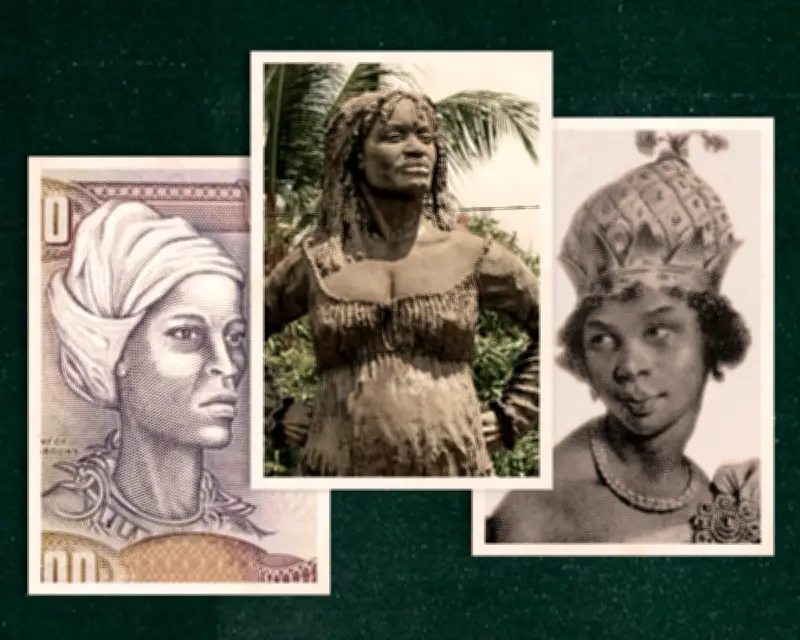
She also highlighted the role of Black women in resistance, such as Queen Nzinga of Ndongo, Solitude of Guadeloupe, Nanny of the Maroons in Jamaica, and Nanny Grigg in Barbados. 'Women were always at the forefront of resistance and Black liberation,' Otele said. 'They were working in the houses so would have information about what was happening in the master's house.'
What Next?
Historians like Hilary Beckles, Barbara Bush, Verene Shepherd, and Stella Dadzie have shed light on this history, but more work remains. 'For those who have looked at this history I applaud them, but very few Black women have been able to do so,' Otele said. 'For a long time it's been said they would be too partial. But there are a handful of Black women coming up who are working on this history who are now mid-career. I hope this will open the door.'
Regional Spotlight: Manchester, Sea Islands, Jamaica
In Manchester, Keisha Thompson highlighted the Vimto brand as representative of the Manchester experience. Created in 1908 by John Noel Nichols, its trademark is registered in Guyana, and it succeeded in the US due to popularity in Africa and Asia. The brand won an award in 2018 for its anti-advertising campaign and created mascots like Justin the Vimtoad.
Angel Parson, US south-east programme manager, discussed the Sea Islands and Gullah Geechee corridor, where preserving land ownership is critical. 'Land loss remains a critical issue affecting Black communities across the US,' she said. 'To be displaced from Gullah Geechee lands is to disrupt more than a home; it unsettles one's very being.'
Jamaica's culture minister Olivia Grange confirmed officials will travel to the UK on 6 September to formally lodge a petition with King Charles for legal guidance on slavery reparations. Her ministry will produce a 'One Hundred Discussion Points on Reparations' document and integrate reparatory justice into school curricula.
What We're Enjoying
Courtney Yusuf, audio producer, recommended Hurvin Anderson's first major solo show at Tate Britain in London. Anderson, born in Handsworth, Birmingham, to Jamaican parents, creates art touching on nostalgia, community, and disconnection. 'There are so many stirring and thought-provoking works; personally, I just want to go back and sit among the dappled purple leaves of Wait a Moment,' Yusuf said.




