
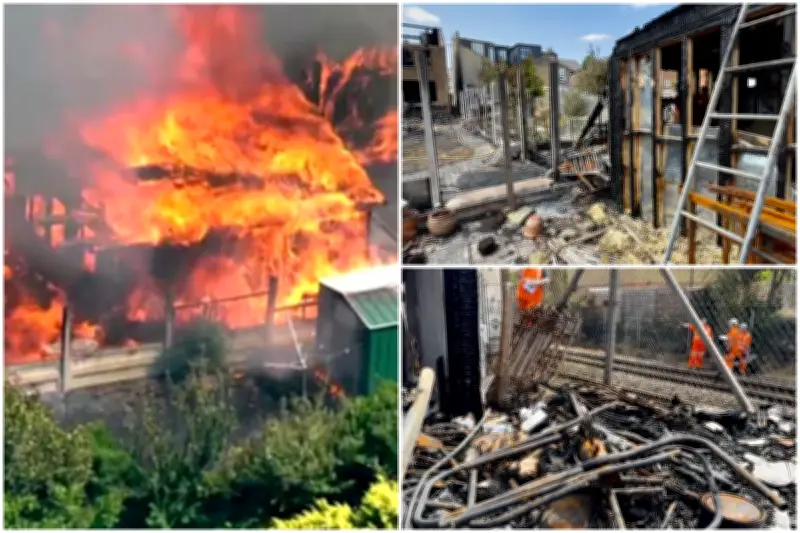
Fire and rescue services in London need to be rebuilt to adapt to the pressures of a changing climate, a fire chief has warned. Firefighters in the capital and across the UK have been put under enormous strain as they endure an “unprecedented summer of dangerous and volatile wildfires”.
Scientists have warned the situation is only likely to get worse, with scorching temperatures, drought-like conditions and wildfires potentially becoming less “unprecedented” in years to come and instead an annual expectation.
Urgent need for 5,000 more firefighters
FBU general secretary Steven Wright said rebuilding the country’s emergency services is a “national priority” in order to meet the demands of the future. He said: "We've seen communities in London suffer huge increases in grass fires with firefighters responding to around a 1000 such incidents at the end of July. As a result, we urgently need to rebuild our fire and rescue services in London and across the country."
He added: “Recruiting 5,000 more firefighters must be an urgent starting point, alongside providing the equipment and resources that our members require to meet these growing challenges safely and effectively. This must be a national priority."
Record callouts and major incidents
London Fire Brigade is currently experiencing an exceptionally busy summer, with daily emergency callouts nearly doubling the usual numbers amid back-to-back heatwaves and a severe “flash drought” drying out the capital’s parks, commons and green spaces. On July 6, LFB control officers recorded their busiest 24-hour period so far this year, taking 1,251 calls in total to incidents across the capital. Fire crews attended 13 separate blazes, with the most significant incident seeing 80 firefighters and 12 fire engines called to a fire on High Road in Wood Green, where crews remained on site for 12 hours.
A huge grass fire at Ingrebourne Hill in Rainham torched 10 hectares of grassland at the end of July, leading to the precautionary evacuation of 35 residents. It took 70 firefighters and 10 engines four hours to bring the blaze under control.
Firefighters are not only dealing with a rapidly growing number of wildfires caused by dry and hot conditions, but also fires that are spreading much more quickly, with the parched land essentially acting as a tinderbox.
Challenging urban environment
While LFB remains ready to respond to incidents as and when they occur, it acknowledged that London presents one of the most “challenging urban environments”, with just under half of the capital considered green space. It has urged Londoners to do their part by being wary of the several ways a fire can be ignited. Throwing lit cigarette butts away and having disposable barbecues on dry, open spaces are just some of the ways fires can start.
Deputy Assistant Commissioner for Control and Mobilising Joanne Smith said: “London has been experiencing an extremely hot and dry summer and our Control Officers, firefighters and support staff have been dealing with thousands of emergency calls and responding to hundreds of wildfires alongside water rescues and other significant incidents across the capital. Their tireless efforts are keeping Londoners safe and protecting homes and livelihoods right across the capital.
“London presents one of the most challenging urban environments in the world for a fire and rescue service. Just under half of the capital is considered green space, but the risk is heightened because many of these areas sit close to homes and businesses. Fires in dry grass can spread rapidly, particularly in windy conditions, and can quickly threaten nearby properties, as well as infrastructure that the whole city relies upon.”
Fire chiefs say they have learned from previous events, including the summer of 2022, when the brigade was forced to declare a city-wide major incident after receiving 2,670 emergency 999 calls in a single day – its busiest since the Second World War. LFB has invested in new equipment and training and said it will continue to evolve to adapt to future summers.
“Despite the additional demand on our crews, control officers and support staff, the Brigade has maintained emergency cover across the capital,” Ms Smith added. “The Brigade has firefighters at 103 fire stations across the capital, and we’ve been monitoring incidents and resourcing needs daily to ensure we have the cover where it is needed. Londoners should rest assured that we are ready and able to respond to emergencies across London.”




