
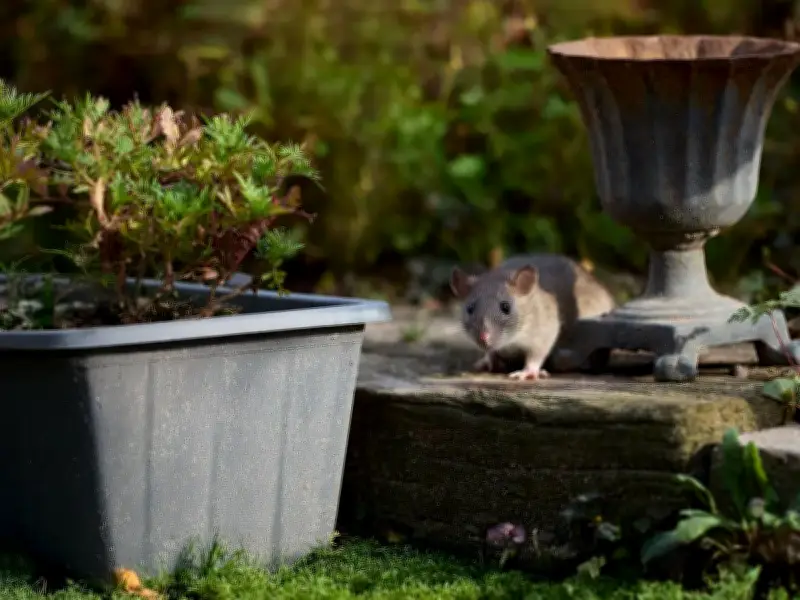
Rats will find it difficult to enter gardens and homes if washing-up scourers are used to block their entry points, according to pest control specialists. As temperatures drop and outdoor food sources become scarce, rats instinctively seek warmth and shelter indoors, but they often colonise gardens first.
Why late summer is a critical period for rats
Late summer and early autumn are critical periods for rodent behaviour. Gardens frequently offer straightforward access to nourishment, water, and sanctuary, making them appealing habitats for rats. Natural, effective, and humane methods exist to remove rats from gardens and prevent them from accessing properties.
One measure recommended by pest control specialists is steel wool, though metal scourers typically used for washing up can serve as substitutes. Experts at Positive Pest Management observed that scouring pads work to "keep them away" by blocking entry points to both gardens and homes.
Signs of rats in the garden
Identifying signs of rats promptly offers the greatest opportunity to remove them before they reproduce or cause substantial harm. The initial step involves searching for small apertures in the earth measuring roughly five to 10cm across with smooth perimeters. Burrows are commonly discovered around the foundations of sheds, decking, or alongside walls and fences, and may feature loose earth surrounding them.
While rats dig burrows, they also create surface nests, particularly when rearing young. These nests are typically constructed from twigs, leaves, and grass, and can incorporate man-made materials such as shredded cardboard, insulation, or paper. Rat droppings are another telltale sign: they are dark brown to black, resemble a grain of rice in shape, and are typically around one to 2cm in length. They can be discovered in clusters, and are larger than mouse droppings and darker than those from squirrels.
Gnawing evidence may also be noticed on wooden sheds, plastic bin lids, garden tools, plant pots, hoses, and even concrete or brick.
How to use washing-up scourers to deter rats
Once a rat problem is confirmed, pest control professionals recommend blocking entry points to the garden and home with scouring pads. These locations include gaps in fencing, at the end of rat burrows, and between the foundation of the property and the ground.
The experts said: "By filling the gaps and other rat entry points with scouring pads, rats will have a hard time chewing through the material. This is because the material gets stuck in their teeth, making it difficult for them to move or chew."
Pest experts at Rentokil also praise scourers as a "great option" that has proved to be "effective in keeping rats away" because they are unable to chew through the tough material.




