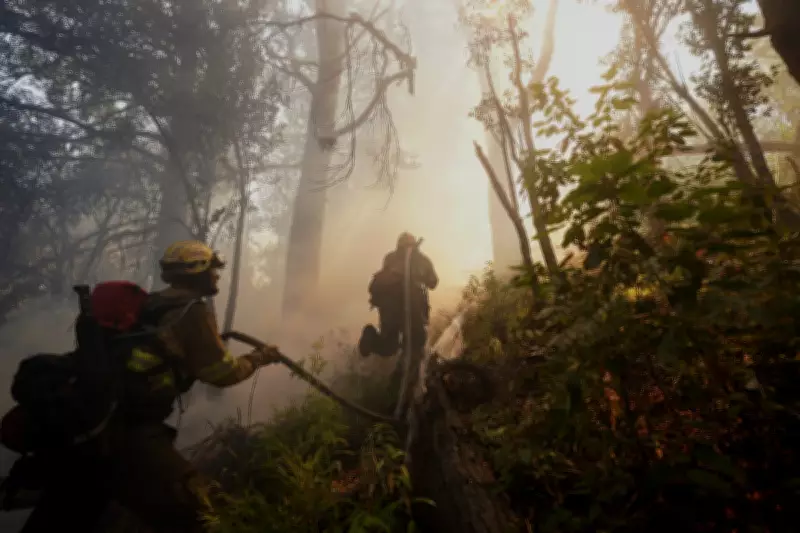
Argentina's pristine Patagonia region is currently engulfed in a devastating wildfire crisis, with vast expanses of its ancient forests reduced to ash and ember. The majestic slopes, once celebrated by generations of writers and adventurers, now resemble a war zone under a canopy of thick, acrid smoke.
UNESCO Heritage Site Under Siege
Among the hardest hit areas is the Los Alerces National Park, a UNESCO World Heritage site renowned for its 2,600-year-old trees. Over the past month and a half, wildfires have consumed more than 45,000 hectares—equivalent to over 110,000 acres—of Argentina's native forests. The inferno has forced the evacuation of thousands of residents and tourists, with the blazes continuing to spread uncontrollably as of this week.
Austerity Meets Environmental Crisis
The disaster has ignited fierce criticism of President Javier Milei's radical libertarian government and its severe austerity policies. In the two years since taking office, Milei has implemented deep spending cuts across public services, including agencies vital for wildfire prevention and combat.

"There has been a political decision to dismantle firefighting institutions," stated Luis Schinelli, one of only 16 park rangers responsible for the 259,000-hectare Los Alerces National Park. "Teams are stretched beyond their limits."
Official budget analyses reveal staggering reductions in fire management funding. Spending on the National Fire Management Service was slashed by 80% in 2024 compared to the previous year, with a further 71% cut planned for 2026 according to the Environment and Natural Resources Foundation (FARN).
Firefighters on the Frontlines of Neglect
On the ground, firefighters face overwhelming challenges with dwindling resources. Hernán Mondino, a firefighter battling blazes in Los Alerces, described the situation with his face smeared in soot: "Climate change is undeniable. This is us living it. But we see no sign that the government is concerned about our situation."
The crisis exposes systemic failures in disaster preparedness. When lightning ignited a small fire in early December, response was critically delayed due to remote location challenges and lack of aircraft. This initial failure forced park management resignations and criminal negligence complaints from residents.
Prevention Abandoned Amid Budget Cuts
Experts argue the problem extends far beyond firefighting capacity to fundamental prevention measures. "Fires are not something you only fight once they exist," explained Andrés Nápoli, director of FARN. "They must be addressed beforehand through planning, infrastructure and forecasting. Prevention has essentially been abandoned."
Beyond fire services, the National Park Administration has suffered tens of millions in cuts, resulting in hundreds of ranger and firefighter dismissals. Staffing levels have fallen dangerously below recommended minimums—a 2023 report called for 700 firefighters, while current employment stands at just 391.
Political Controversy and Public Anger
The wildfires have become a potent political symbol of Milei's governance approach. For weeks as Patagonia burned, the president remained largely silent, even dancing onstage with his ex-girlfriend as provincial governors pleaded for emergency declarations.
"While Patagonia burns, the president is having fun singing," criticized centrist lawmaker Maximiliano Ferraro, capturing widespread public frustration.
Milei eventually declared a state of emergency last Thursday, unlocking $70 million for volunteer firefighters and announcing "a historic fight against fire" on social media. However, this response follows years of policy decisions that many argue created the crisis conditions.
Human and Ecological Toll
The human cost extends beyond property loss to firefighter welfare. With average monthly wages of $600 in Patagonia—dropping to just over $400 in cheaper provinces—many firefighters work second jobs as gardeners and farmhands. Staff resignations over poverty-level wages further strain remaining personnel.

"From the outside it looks like everything still functions, but our bodies bear the cost," said Mondino. "When someone leaves, the rest of us carry more weight, sleep less and work longer hours."
For local communities, the devastation represents both ecological catastrophe and personal loss. "It hurts because it's not just a beautiful landscape, it's our home," shared Mariana Rivas, a volunteer organizing support for exhausted firefighters. "There's anger about what could have been avoided, and anger because every year it gets worse."
The Patagonia wildfires now serve as a stark case study in how austerity measures intersect with climate vulnerability, raising urgent questions about environmental stewardship amid economic restructuring.