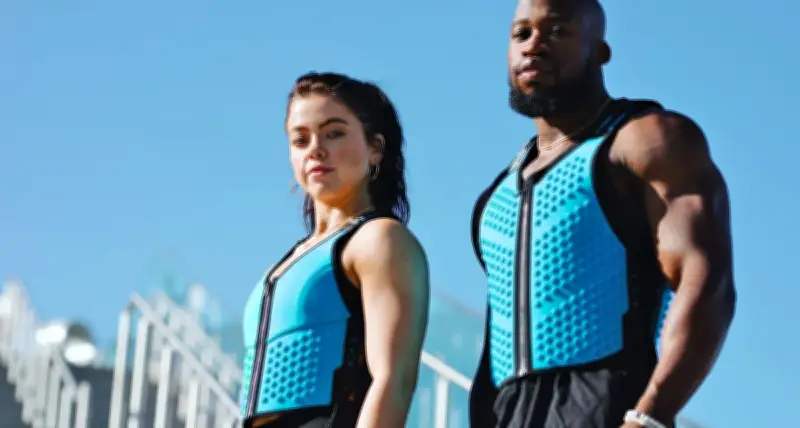
Omorpho's line of weighted apparel, launched in the UK last month, aims to make everyday training more effective by adding resistance. The streamlined designs use smart “microloading technology” — tiny weights fastened across form-fitting garments that distribute the load across the wearer. The goal is to increase resistance, making activities such as walking, running, circuits and even tennis incrementally more intensive and effective.
Celebrity and Athlete Adoption
Cynthia Erivo and Taylor Swift are among the early adopters, alongside athletes Carlos Alcaraz and Michael Johnson. Omorpho was founded by Stefan Olander, Nike’s former vice president of global digital innovation. Its best-selling products are the G-Vest Icon and G-Vest Run, adjustable from 2.7 to 9.1kg and 1.4 to 7.3kg respectively.
The Science Behind the Load
Olander explains the concept simply: “Five per cent of your body weight is enough to see physiological changes. If you put too much load on your body, you limit your ability to move naturally, which limits the results.” Lee Mullins, founder of Workshop Gymnasium in Knightsbridge, agrees: “Start at around five per cent of your bodyweight and cap it near 10 per cent. Beyond that you generally start compromising with your spine. The load should be something you barely notice at the start of a session and definitely notice by the end.”

Olander says the science is persuasive: “you can burn up to eight per cent more calories, increase your VO2 max by up to seven per cent and increase workload by six to seven per cent.” Research has also shown improvements including a 3.4 per cent reduction in 10m sprint times and an 8.7 per cent increase in jump height. These incremental gains are particularly beneficial for time-poor city dwellers or regular travellers.
Practical Use and Design
Mullins suggests using a weighted vest for “the low-intensity end of your training, walking, hiking, incline walking work, bodyweight circuits, carries. It’s a way of making the less complex exercises count for more, not a way of making the hard stuff harder.” The vests allow wearers to add weight, enabling progressive overload as strength improves. Alongside strength and cardio benefits, the designs may support bone health, though clinical studies linking weighted vests with bone density improvements are limited.
With Olander’s Nike background, aesthetics and comfort are central. “Obviously performance and innovation is really, really important,” he says, “but if it doesn’t look good, and feel comfortable, people aren’t going to use it.” Mullins highlights heightened “proprioceptive feedback” — awareness of balance, posture and coordination. “A walk with a vest on feels like training rather than a walk. For a lot of people that’s the difference between doing it and not doing it, and consistency beats optimisation every time,” he says. In Olander’s words, you “feel like a badass,” which he says is an important factor in working out.
Available at omorpho.com from £69.