Northern Territory Confronts Unprecedented Climate Crisis with Five Disasters in Single Wet Season
The 2025–26 wet season has delivered a devastating reality check for Australia's Northern Territory, with five major disasters striking in rapid succession. Communities across the Top End are facing unprecedented challenges as flooding, cyclones, and infrastructure failures expose the immediate impacts of climate change.
Unprecedented Disaster Sequence
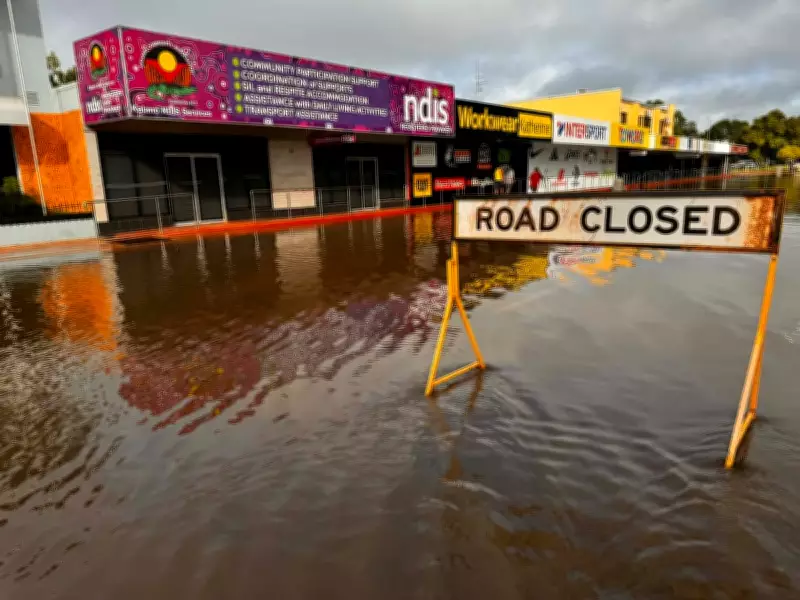
The season began with Tropical Cyclone Fina making landfall on the Cobourg Peninsula and Darwin in November 2025—the earliest cyclone to hit the NT coast since records began and the most intense since Cyclone Tracy. This was followed by extensive flooding in late February, affecting approximately 85% of roads across the Barkly region as a tropical low settled over central Australia.
Katherine experienced its highest flood levels since 1998 this month, forcing hospital evacuations, school closures, and the relocation of over 1,000 residents. While this captured brief national attention, the ongoing flooding and isolation of multiple First Nations communities across the Top End has received minimal coverage.

Compounding Crises and Inadequate Response
As communities still reel from recent floods, Tropical Cyclone Narelle approaches, threatening to dump hundreds of millimetres of rain on already saturated landscapes. Darwin has not been spared either—the capital city's main water supply was nearly severed by unprecedented flooding, while nearby Darwin River residents lost everything.
Remote and First Nations communities have borne the brunt of these disasters. Residents from Naiyu and Palumpa have been evacuated to Darwin showgrounds and Adelaide River with no return timeline, while Jilkminggan residents remain stranded in a Mataranka shed. Approximately 500 Numbulwar community members were airlifted to Darwin ahead of Tropical Cyclone Narelle.
The patchwork emergency response has drawn criticism from multiple Aboriginal peak bodies, highlighting systemic failures in supporting communities that have waited years for adequate infrastructure, housing, and government support.
Economic and Infrastructure Toll
Pastoralists across the Territory face destroyed fencing, inundated infrastructure, and severely eroded access roads. Critical supply routes have been severed, and boil water alerts have been issued across multiple communities. The economic impact is immediate and severe.
Darwin now holds the dubious distinction of being Australia's most expensive city for home insurance, with average premiums reaching $4,015 annually—surpassing Sydney and Brisbane. The combination of escalating climate disasters and rising construction costs has made home insurance unaffordable for many Territorians.
Climate Reality and Political Failure
The National Climate Risk Assessment forecasts a 423% increase in heat-related deaths in Darwin, with nearly 70% of the NT's population living in high or very high-risk areas. These projections describe the current reality, not some distant hypothetical scenario.
Despite this, the NT government has scrapped climate and renewable energy targets while approving fossil fuel expansion projects including Santos's Barossa gas project, the Beetaloo Basin fracking operation, Inpex's Ichthys gas plant, and the proposed Middle Arm gas and petrochemical hub. The government's review of Katherine flooding lacks credibility when it comes from leadership refusing to acknowledge the climate crisis driving these disasters.
Call for Accountability and Action
As LNG ships sail from Darwin Harbour earning billions in profits, Territorians pay the price through escalating disasters and cost-of-living pressures. There is growing demand for a 25% tax on gas exports and a climate pollution levy on fossil fuel companies to fund disaster response and address economic challenges.
The Northern Territory has always demanded resilience from its residents, but there are limits to what communities can endure when disasters follow without pause, adequate resources, or honest leadership about their causes. The climate crisis has arrived for Territorians, and the rest of Australia must finally pay attention.