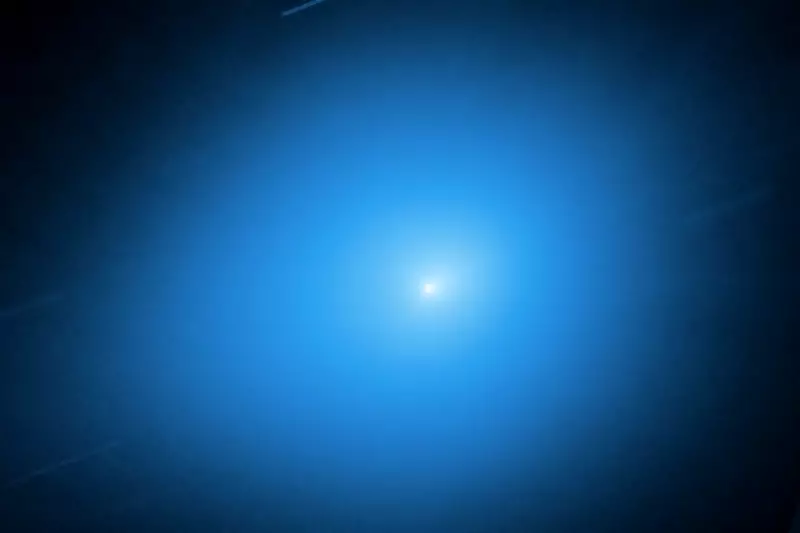
NASA's Perseverance rover has captured a breathtaking sunset on Mars, showcasing a sky tinged with blue hues, a phenomenon caused by the planet's unique atmospheric dust. The image, taken from the Jezero Crater, provides scientists with valuable data about Martian weather patterns and atmospheric dynamics.
How Martian Sunsets Differ from Earth's
On Earth, sunsets appear red and orange due to Rayleigh scattering, where shorter blue wavelengths are scattered by the atmosphere. On Mars, however, the fine dust particles in the atmosphere scatter light differently, creating a blue glow near the sun. This occurs because the dust absorbs blue light and scatters red, but during sunset, the longer path through the atmosphere allows blue light to become more visible.
Implications for Martian Climate Studies
The Perseverance rover's Mastcam-Z instrument captured the sequence, which lasted about 30 minutes. Scientists analyze such images to understand dust particle size, distribution, and seasonal variations. This data is crucial for future human missions, as dust storms can impact solar power generation and equipment functionality.

This is not the first time a Martian sunset has been observed; previous rovers like Spirit and Opportunity also documented similar phenomena. However, Perseverance's advanced cameras provide higher resolution and color accuracy, enabling more detailed analysis.
The image has sparked public fascination, with many comparing it to science fiction depictions. NASA continues to release such visuals to engage the public and highlight the beauty of our neighboring planet.