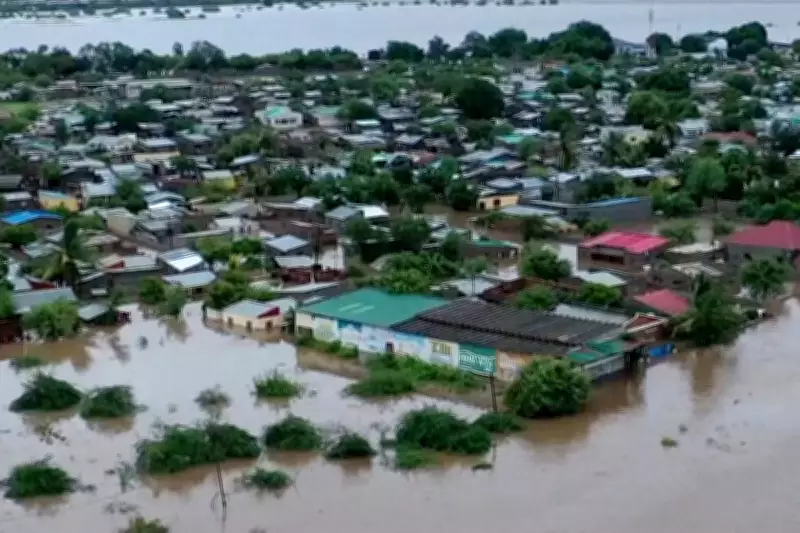
Humanitarian Crisis Deepens as Mozambique Floods Overwhelm Response Capacity
International aid agencies are confronting a critical shortage of donor funding as they attempt to respond to catastrophic flooding in Mozambique, which has submerged more than 150,000 homes and claimed at least 22 lives. The situation represents a stark example of growing donor fatigue amid escalating climate-driven disasters.
Funding Shortfall Exacerbates Emergency Response Challenges
Gaspar Sitefane, country director for WaterAid Mozambique, has revealed that securing financial support for the current crisis has proven significantly more difficult than during previous emergencies. "In the past it was much easier to access donor support than it is today," he explained. "Now, the majority of donor countries are telling aid organisations that they have other priorities and they are not able to offer support for this emergency."
The funding gap is particularly alarming given the scale of destruction. According to the UN Office for the Coordination of Humanitarian Affairs (OCHA), approximately $187 million (£136m) is required for the humanitarian response. However, confirmed contributions as of late January included just $1 million from the United States, $2 million from Norway, and a European Union shipment valued at $552,000 intended to support around 50,000 people.

Climate Change Intensifies Disaster Frequency While Support Diminishes
Mozambique's vulnerability to climate extremes is well documented, with the nation experiencing successive crises including Cyclone Kenneth, prolonged drought across 2023-2024, and now severe flooding. Sitefane highlighted the troubling paradox: "The famous floods that everyone can easily recall were in 1977 – then we had big ones again in 2000, 2015, 2023, and now 2026. But even though these events are becoming more common, the aid available is reducing, which makes it harder for countries like Mozambique to respond."
Scientific analysis from World Weather Attribution confirms that climate change has substantially increased both the likelihood and severity of the extreme rainfall causing the current flooding. Researchers found a 40 percent increase in rainfall intensity since pre-industrial times, with ten-day rainfall events becoming more frequent as global temperatures rise.
Multiple Crises Converge in Vulnerable Communities
The humanitarian impact extends far beyond flooded homes. Current assessments reveal:
- 430,000 livestock deaths
- 440,000 hectares of farmland inundated
- 229 health centres and 355 schools forced to close
- Standing water increasing risks of cholera and malaria outbreaks
- Crocodile attacks claiming at least three lives
Logistical challenges further complicate relief efforts, with many temporary camps only accessible by helicopter due to flooded roads. Sitefane estimates that numerous people among Mozambique's 35 million population have yet to receive any assistance.
Climate Justice and Adaptation Funding Barriers
Experts emphasise the injustice of the situation, noting that Mozambique contributes minimally to global emissions yet suffers disproportionately from climate impacts. Friederike Otto of Imperial College London described it as "a textbook case of climate injustice." She added: "The people of South Africa, Mozambique, Zimbabwe, and Eswatini have not contributed to climate change, nor are they profiting from using or selling fossil fuels. Yet they are the ones losing their lives, homes and livelihoods."
Compounding the immediate crisis is the difficulty in accessing climate adaptation finance. Sitefane reported that Mozambican organisations face significant obstacles when applying for resilience funding: "It's extremely difficult for organisations in Mozambique to receive money for climate adaptation projects at the moment. There are lots of stories of organisations, and even the government, applying for climate adaptation finance and not succeeding."
Former UK Foreign Secretary David Miliband has called for increased grant-based aid to support climate resilience, arguing that protecting communities from climate impacts represents a long-term benefit worthy of sustained investment.

The convergence of reduced humanitarian funding, barriers to climate adaptation finance, and increasingly severe weather events creates a perfect storm for vulnerable nations like Mozambique, raising urgent questions about global responsibility and response mechanisms in an era of accelerating climate disruption.