
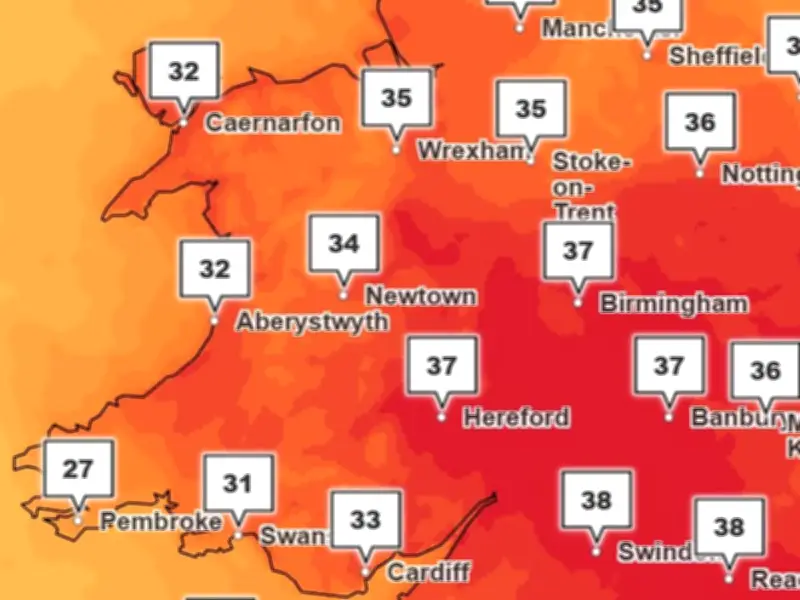
The Met Office has issued a second amber extreme heat warning in four days, covering much of Wales from midnight on Wednesday until 11.59pm on Thursday. Forecasters warn that the prolonged heat, combined with high humidity and unusually warm nights, could pose serious risks to health and daily life.
Widespread Warning Across Wales
The amber warning covers Blaenau Gwent, Bridgend, Caerphilly, Cardiff, Carmarthenshire, Ceredigion, Conwy, Denbighshire, Flintshire, Gwynedd, the Isle of Anglesey, Merthyr Tydfil, Monmouthshire, Neath Port Talbot, Newport, Powys, Rhondda Cynon Taf, Swansea, Torfaen, the Vale of Glamorgan and Wrexham. BBC weather presenter Louise Lear described the conditions as "potentially dangerous", while the Met Office warned that the heat is likely to affect the wider population, not just those traditionally considered vulnerable.
Temperature Rise Day by Day
Met Office weather maps show temperatures steadily increasing across Wales as the week progresses. On Monday, Monmouth is forecast to be the hottest location in Wales, reaching 31°C, with other parts of Wales ranging between 26°C and 30°C. Tuesday will see temperatures rise further, with Monmouth again the hottest at 34°C, while Newport and Abergavenny are both forecast to hit 33°C. Much of south and east Wales will experience temperatures well above average for the time of year.
By Wednesday, the heatwave intensifies. Coastal areas in the west are expected to remain slightly cooler, though temperatures could still reach around 27°C. Further east, conditions will become increasingly oppressive, with Monmouth, Merthyr Tydfil, Newport, Cardiff and Newtown all forecast to record temperatures between 34°C and 36°C.
Peak Heat on Thursday
Thursday is expected to be the peak of the heatwave and could become the hottest day of the year so far. Monmouth is forecast to reach a scorching 37°C, while temperatures across much of Wales are expected to average around 35°C. The most intense temperatures are forecast on Thursday, with some areas potentially reaching 38°C.
Health and Transport Warnings
The Met Office has warned that the prolonged spell of hot weather could lead to serious illness and danger to life. Significant changes to daily routines and working practices may be needed, particularly for those spending long periods outdoors. Transport disruption is also possible, with roads, rail services and airports potentially affected by the extreme temperatures. Officials have further warned that heat-related failures could impact electricity, water, gas and mobile phone services.
Overnight temperatures are expected to remain exceptionally high, with some areas unlikely to fall below 20°C or 21°C. Combined with high humidity, this could make sleeping difficult and increase health risks for vulnerable people. The warning also highlights an increased risk of water-related incidents as people flock to beaches, rivers and lakes to cool down. Popular destinations including Barry Island, Tenby, Llandudno, Rhyl, Aberystwyth, Barmouth and the Gower coast are expected to see a surge in visitors.
People are being urged to stay hydrated, avoid strenuous activity during the hottest parts of the day and check on elderly relatives, neighbours and those with underlying health conditions.
Official Statement
A Met Office spokesperson said: "Very hot weather is likely to continue in general until at least Thursday across the highlighted region, although significant variations from place to place and day by day are likely. Temperatures by day are widely expected to exceed 30 Celsius, with the hottest areas potentially peaking around 38 Celsius. Overnight, temperatures are unlikely to fall much lower than high teens Celsius, and some places will not fall below 20 or 21 Celsius. These high temperatures will also be accompanied by high humidity. Cooler conditions may begin to become established from the west following this period, but confidence is low."
Forecasters say there is a chance cooler Atlantic air could begin moving into western areas later in the week, although confidence remains low and many parts of Wales could continue to experience very warm conditions beyond Thursday.




