
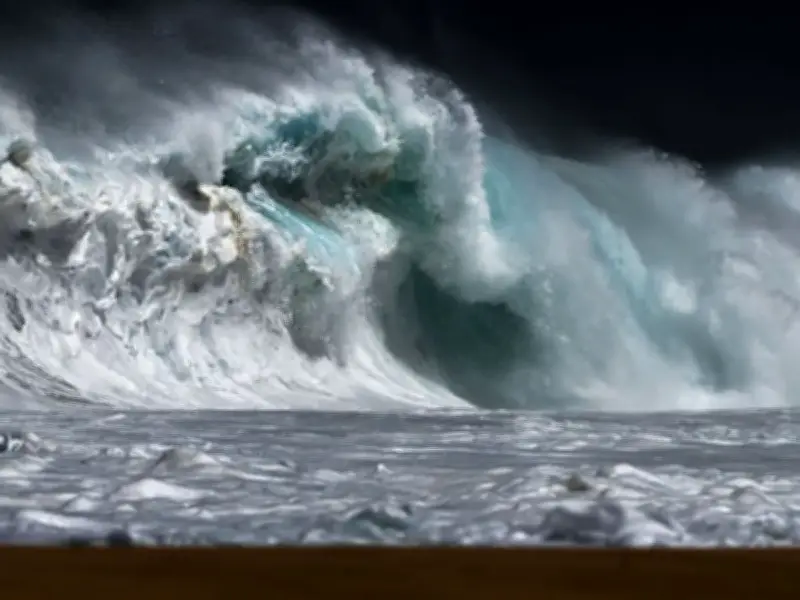
Experts have warned that a biblical flood capable of turning swathes of land into the sea could force 1.5 million people to flee. Weather researchers say it is a case of 'when' not 'if' massive waves will engulf large sectors of California, and it could even strike this winter.
ARkStorm 2.0 scenario
The flooding threat comes from ARkStorm 2.0 – a scientifically plausible scenario involving a relentless chain of extreme storms unlike anything the state has experienced for nearly 200 years. Researchers cannot predict when it will happen, but say it could be at any point, and will see multiple atmospheric rivers hit the West Coast over a course of 30 days, hitting the area with huge amounts of rain and snow.
Climate change impact
They blame climate change and global warming, saying warmer air is able to hold more moisture, adding that in their predicted scenarios, floodwater could reach as high as 20 feet in some areas. More than 1.5 million people currently live in the area.
Dr Daniel Swain, a UCLA climate scientist who coauthored the ARkStorm 2.0 study, said: "It was always a when, not if. Before global warming, that 'when' might have been centuries away. Now it's quite likely to be within my own lifetime."
Historical precedent
ARkStorm stands for 'Atmospheric River 1,000-year Storm' and was created to help officials prepare for an extreme but realistic weather disaster in advance. The original ARkStorm scenario was developed by the US Geological Survey (USGS) and a team of federal, state and academic experts in 2010 and has been updated as the years go by, and as the threat of global warming increases.
The scenario has been modelled on California's Great Flood of 1861-62, when storms battered the state for approximately 45 days and transformed the Central Valley into a lake nearly 300 miles long. Then, towns, farms and roads disappeared beneath the water.
Increased runoff risk
Swain continued: "You can essentially just imagine an ordinary kitchen sponge that grows progressively larger with warming. It has the capacity to absorb much more water. When that swollen atmospheric sponge is wrung out over California, it can release far more rain."
He added there is also a risk from snow to make the situation worse. "You get increased precipitation intensity, but also a large shift from snow to rain. The combined 'double whammy' could increase runoff in parts of the southern Sierra Nevada by between 200 and 400 percent compared with historical megastorms."




