
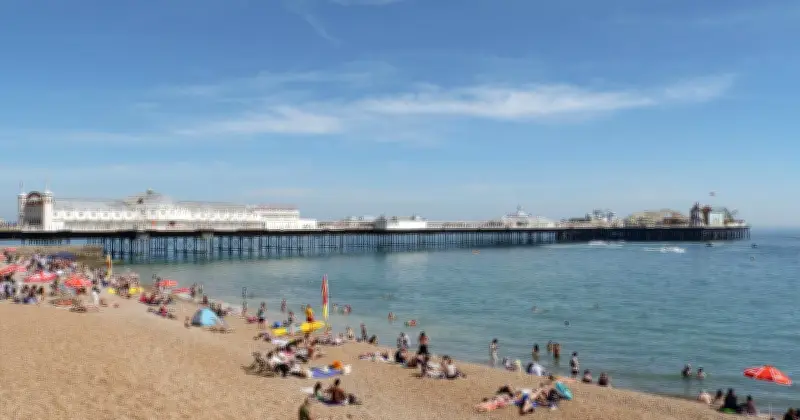
The Met Office has issued a warning for a marine heatwave expected to arrive later this week, raising concerns for the welfare of British sea creatures. The phenomenon, driven by so-called 'heat domes,' could see sea surface temperatures rise 4-5°C above average in some areas, particularly off the coasts of eastern and southern England.
What Is a Marine Heatwave?
A marine heatwave is a prolonged period of unusually high sea surface temperatures. The Met Office confirmed that this event is caused by heat domes, which also contributed to the record-breaking heatwaves in the UK in May and June. Long-term ocean warming due to climate change is also a factor, as global sea surface temperatures have surpassed previous records for this time of year, according to the Copernicus Climate Change Service (C3S) and Copernicus Marine Service (CMEMS).
Impact on Marine Life
Dr Zoe Jacobs of the National Oceanography Centre in Southampton told the BBC: "We're starting to see temperatures now that we would expect to see at the height of summer, [at the] end of August. So, if this event keeps coming… we might start seeing some serious impacts on ecological systems." Seagrasses, shellfish, and other species could face mass die-offs as a result of the elevated temperatures. Shallow waters like the English Channel are particularly vulnerable, as heat can quickly reach deeper layers.
Wider Context and Forecast
Dr Ségolène Berthou, Air-Sea Interaction Specialist at the Met Office, said: "Marine heatwaves around the UK have developed rapidly following the recent heat dome, and we are now seeing widespread strong to locally severe conditions. This is the third and most intense marine heatwave we have seen this year." She added that while the warmer seas did not significantly increase peak land temperatures, they reduced night-time cooling and sustained warmth, especially in coastal areas. With further sunny and calm weather likely next week, the surface marine heatwave could intensify further, potentially reaching extreme levels in the south—conditions highly unusual for UK waters.
The UK has already experienced near-40°C temperatures on land in recent weeks, and the marine heatwave adds to concerns for ecosystems as summer continues.




