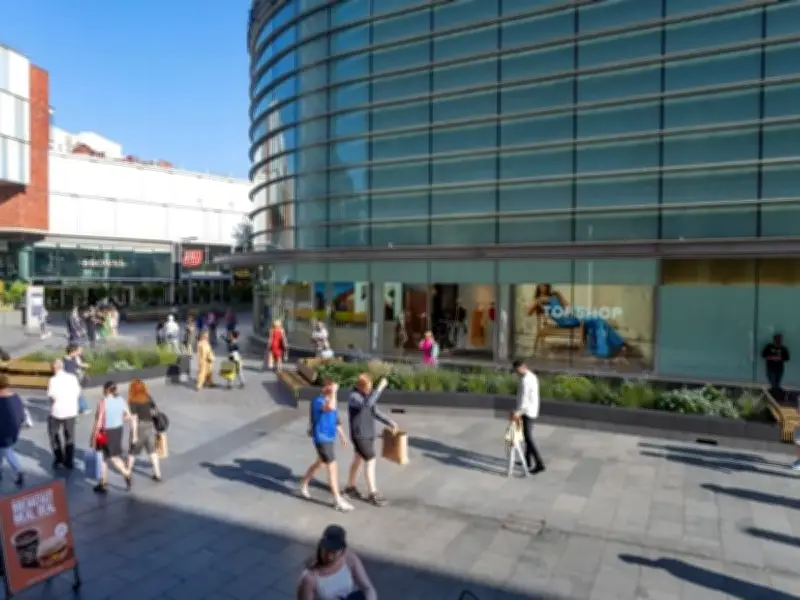
A planning application submitted to Liverpool City Council has requested the creation of two new rain gardens in Liverpool ONE. The new additions will act as vibrant and attractive features throughout the year adjacent to the John Lewis frontage.
Part of £30m spongy city scheme
The proposed development forms part of a wider £30m scheme being programmed by the applicant alongside United Utilities as part of the initiative to transform Liverpool into a "spongy city" by 2030.
The proposed Liverpool ONE works comprise two raised landscaped rain gardens positioned adjacent to the John Lewis frontage, together with associated improvements including new paving, seating and soft landscaping.
Design and features
An emphasis has been placed on enhancing the greening of Paradise Place through the two rain gardens. There will be a mix of species suited to both wetter and drier conditions, ensuring a robust and visually attractive landscape feature throughout the year.
New granite paving, kerbs and wall features will be introduced alongside timber seating like benches with back and arm rests.
Managing extreme rainfall
With extreme rainfall becoming more frequent, United Utilities is investing £30m to manage water in a more sustainable way by capturing rain where it falls in a bid to make Liverpool a more "spongy" city.
The programme will lead to a raft of blue-green interventions, including rain gardens, green roofs, urban wetlands and "greener" playgrounds – all designed to soak up rainwater like a sponge and reduce reliance on traditional concrete solutions such as storage tanks.
Impact on sewers and flood risk
The scheme will help to slow the flow into sewers, easing pressure on the network and helping to reduce the operation of storm overflows.
As part of the investment, which will be delivered by 2030, the company will work alongside global leaders to bring "sponge city" principles, already in use in cities including New York and Shanghai, to Liverpool.
The plans build on an agreement struck last year with the Liverpool City Region Combined Authority and the Mersey Rivers Trust to tackle flood risk, reduce sewage discharges and improve water quality.
Around 85% of sewers in Merseyside are combined, meaning rainwater and wastewater flow through the same pipes. During heavy rainfall, storm overflows may be used to prevent sewage backing up into homes and streets.
Work is already underway across the city including in Deysbrook where United Utilities has partnered with Alder Hey Children's Hospital on a £536,000 scheme to cut flooding by diverting rainwater away from the combined sewer into new surface water drains.