
Iran today vowed not a single drop of oil or gas will leave the Strait of Hormuz until the United States ends its criminal attacks, escalating tensions in the region. The warning from the Islamic Revolutionary Guard Corps came after Donald Trump's forces launched a seventh consecutive night of airstrikes on Iran on Friday night, following two earlier waves aimed at easing Tehran's grip on the strategic waterway.
Revolutionary Guard Statement
In a statement on Saturday, the Islamic Revolutionary Guard Corps declared: "Until the aggressions of criminal America end, the export of chemical fertiliser and even a single drop of oil and gas from this region will not be possible." The body also claimed two ships had struck mines and exploded in the strait, but US Central Command (CENTCOM) denied the incident.
US Strikes Intensify
According to US media, the latest strikes targeted military logistics infrastructure, including surveillance sites, underground weapons storage, and maritime capabilities. Iranian state media reported that overnight attacks damaged bridges and hit an electricity and desalination plant in the southern province of Jask, leaving approximately 10,000 people without water.
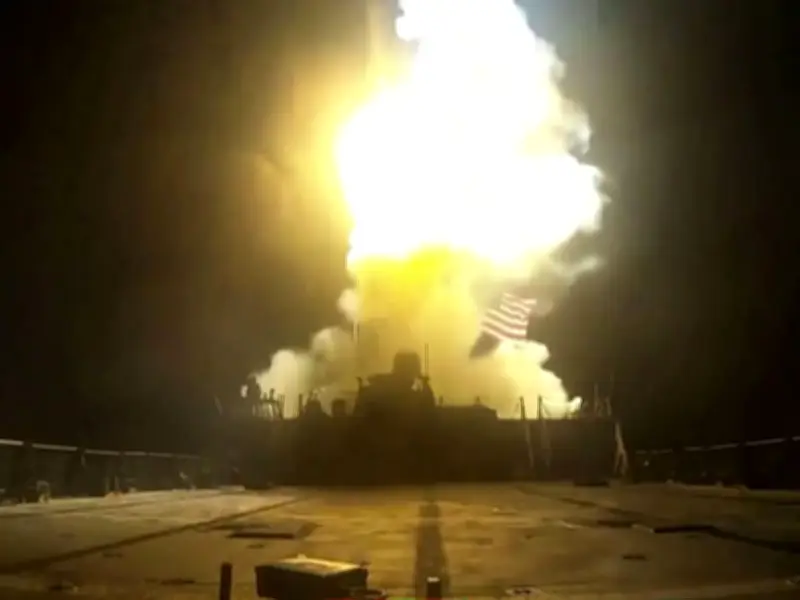
Video released by CENTCOM showed several cruise missiles launched from a Navy warship, along with fighter jets taking off and at least three targets being struck, including what appeared to be a communications tower and a highway road bridge.
US Military Readiness
In a chilling threat, a CENTCOM statement said: "More than 50,000 American service members are operating across the Middle East and remain vigilant, lethal, and ready." The US is also vowing to enforce a naval blockade against Iranian ports.
Iranian Retaliation
Iranian state media today reported explosions in parts of central and southern Iran, including Ahvaz, Lar, Yazd, and Sirik. In response, Iran's military leaders fired missiles and launched drones at several countries in the region. Kuwait's army claimed they had intercepted Iranian missiles and drones. Jordan's military said it stopped incoming missiles launched by Iran, and air raid sirens reportedly sounded in Bahrain.
Casualties and Diplomatic Fallout
A spokesperson for Iran's health ministry announced that at least 50 people have been killed in US strikes on Iran since June 27. The collapse of an interim ceasefire leaves no end in sight for the war that the US and Israel began more than four months ago.
Iran's deputy foreign minister, Kazem Gharibabadi, said the country has suspended its commitments to the Memorandum of Understanding agreed between Tehran and Washington last month, which was designed to bring about a ceasefire. He stated: "We have also suspended our commitments; we are not implementing them and are busy defending our country."
Trump's Threats
Donald Trump previously said the agreement was over during a NATO summit in Ankara, Turkey. On Tuesday, President Trump vowed to hit Iran very hard before threatening to target power plants in the country if Iran refuses to agree to a deal to stop the war. He said: "We're going to hit them very hard tonight. We're going to hit them very hard tomorrow night. We're going to hit them very hard the night after, and then next week it gets really bad for them because next week comes the power plants. Next week comes the bridges. We're going to knock out all their power plants. We're going to knock out all their bridges unless they get to the table and negotiate."




