
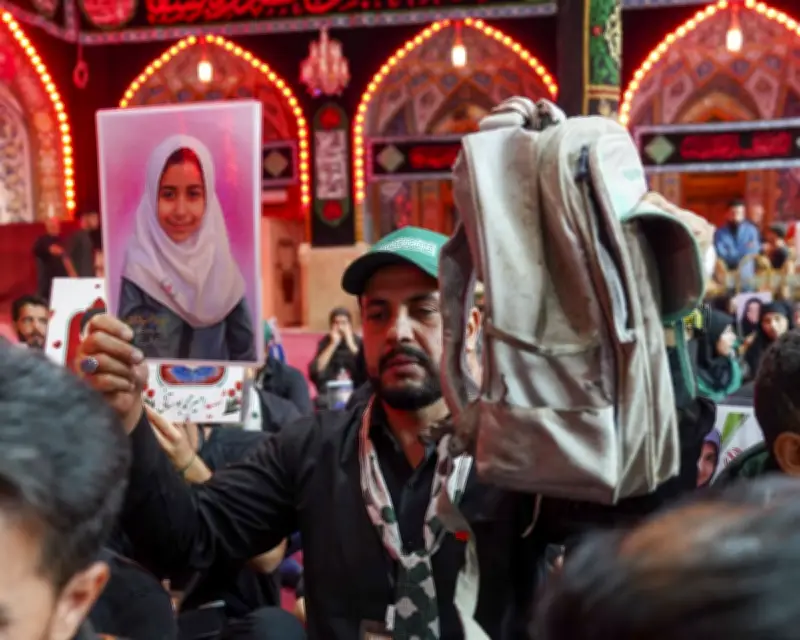
Four months after the US military strike on a girls' elementary school in Minab, Iran, which killed at least 175 people—mostly children—fears are growing that the Trump administration and Secretary of Defense Pete Hegseth will bury the findings of the secretive investigation. The attack, one of the deadliest civilian bombings by the US in decades, occurred on the first day of the war with Iran. Despite the Pentagon's investigation reportedly concluding, critics doubt the results will ever see the light of day.
Attack Details and Casualties
The strike involved a Tomahawk cruise missile fired into the school, killing at least 175 people, predominantly children under 12. Back-to-back strikes, known as a double tap, hit the school building. Mohammadreza Ahmadi Tifakani lost two children: his seven-year-old daughter Hanieh was killed instantly, and his ten-year-old son Sobhan died in the second blast after running back to find his sister. Tifakani identified them at the morgue, describing severe injuries.
Trump's Reaction and Investigation Status
Initially, President Donald Trump suggested Iran carried out the attack, then claimed Iran had access to US Tomahawk missiles—which it does not. At a G7 press conference in Évian-les-Bains, France, Trump dismissed the incident as a mistake: "Nobody did that on purpose." He said the investigation was continuing, but US Central Command provided no updates. Media reports indicate the investigation has concluded, with preliminary results citing seven-year-old targeting data that failed to identify the building as a school.
Pentagon's Civilian Oversight Under Hegseth
Pete Hegseth, as part of his anti-woke crusade, has shuttered or reduced units that review civilian casualty incidents. He has publicly advocated for "bold, precise" rules of engagement designed to "unleash American power, not shackle it." Former Pentagon officials express doubt that the Hegseth Pentagon will follow through on accountability. The reduction in civilian oversight may make it easier to skirt blame.
Comparisons to Past Mass Casualty Incidents
The Minab bombing is comparable to the 2017 Mosul airstrike (at least 105 civilian deaths), the 2015 Kunduz hospital airstrike (42 deaths), and the 1991 Amiriyah shelter bombing (over 400 deaths). Wes Bryant, a former US air force targeting expert, said the incident reflects "pure negligence and recklessness" and a degradation of culture at senior military levels.
Congressional and Human Rights Concerns
Congresswoman Yassamin Ansari (D-AZ) wrote to the Trump administration demanding answers but received little response. She said, "Donald Trump is hiding the truth from the American people and Congress." Niku Jafarnia of Human Rights Watch noted that Hegseth's actions have systematically weakened protection measures meant to ensure compliance with the law. She added, "We saw the effects of that on day one of the war."
Whistleblower Fears and Future Accountability
Bryant said his remaining colleagues overseeing civilian harm reduction have been prevented from seeing preliminary results. He believes Hegseth and Trump will suppress the investigation unless a brave whistleblower steps forward. The Pentagon's inspector general reported in May that the US military lacks the people, tools, and infrastructure to comply with federal statutes on civilian casualty policy.




