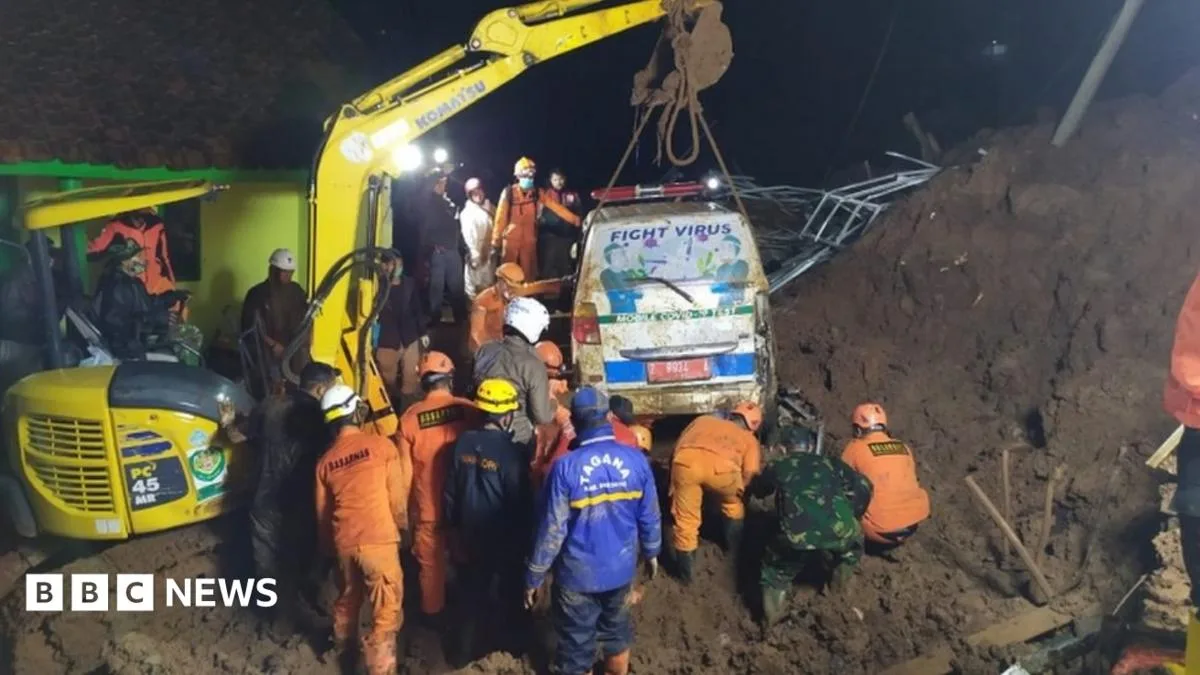
Indonesian rescue teams are confronting immense challenges as they continue their desperate search for dozens of people still missing following a devastating landslide on the island of Java. The operation is being severely hampered by treacherous conditions, including deep mounds of mud, debris, and water-soaked ground that have turned the recovery effort into a gruelling battle against nature.
Mount Burangrang Landslide Buries Village
The catastrophic event occurred in the predawn hours of Saturday, when torrential rains triggered a massive landslide on the slopes of Mount Burangrang in West Java province. The roaring wall of earth and debris buried approximately 34 houses in Pasir Langu village, catching residents in their sleep and transforming the community into a scene of utter devastation.
As of Sunday, the grim statistics paint a harrowing picture of the disaster's scale. At least 11 people have been confirmed dead, with rescue workers retrieving two more bodies on Sunday morning. The search and rescue office, represented by spokesperson Ade Dian Permana, confirmed the rising death toll while emphasising the ongoing nature of the operation.
Desperate Search Amid Unstable Conditions
Perhaps most alarmingly, 79 individuals remain unaccounted for, with many feared to be buried beneath tons of mud, rocks, and uprooted trees that now cover the village landscape. About 230 residents living near the disaster site have been evacuated to temporary government shelters as authorities work to prevent further casualties.
The rescue operation faces extraordinary difficulties due to the unstable terrain. Heavy equipment and excavators have been rendered mostly useless because the ground remains too soft and dangerously unstable for mechanical intervention. This has forced rescue teams to rely primarily on manual methods, using farm tools and even their bare hands to search for survivors and recover victims.
Videos released by Basarnas, Indonesia's national search and rescue agency, on Saturday showed the heartbreaking reality of these efforts. Rescuers could be seen carefully pulling a mud-caked body from the ground before placing it in an orange bag for transportation and eventual burial.
Official Response and Ongoing Challenges
Indonesian Vice President Gibran Rakabuming Raka visited the affected area on Sunday, pledging that authorities would implement measures to prevent similar disasters in the future. He specifically urged local authorities in West Java and West Bandung to address land conversion issues in disaster-prone areas and develop strategies to reduce risks for vulnerable communities.
Basarnas chief Mohammad Syafii provided a sobering assessment after visiting the devastated Pasir Langu village with the vice president. He confirmed that both the difficult terrain conditions and continuing bad weather were complicating search operations on Sunday, creating a race against time for rescue teams.
"We are at the mercy of the weather, and the slide is still mud ... flowing and unstable," Syafii told reporters. He emphasised that despite the challenges, authorities would deploy every available asset—including drones, K-9 teams, and ground units—while prioritising safety above all else.
Seasonal Risks in Vulnerable Regions
This tragedy highlights the persistent vulnerability of Indonesia's population to natural disasters, particularly during the rainy season. From approximately October to April each year, seasonal rains and high tides frequently cause flooding and landslides across the archipelago nation.
With more than 17,000 islands and millions of people living in mountainous areas or near fertile flood plains, Indonesia faces ongoing challenges in protecting communities from such geological hazards. The West Java landslide serves as a stark reminder of the human cost when extreme weather meets vulnerable landscapes.
As rescue operations continue, authorities estimate that mounds of mud reach heights of up to 5 meters (16 feet) in some areas, with Permana noting that "some homes are buried up to the roof level." The search teams remain prepared to continue their manual efforts for as long as necessary, though they acknowledge that the unstable slopes present constant dangers to both rescuers and any potential survivors.




