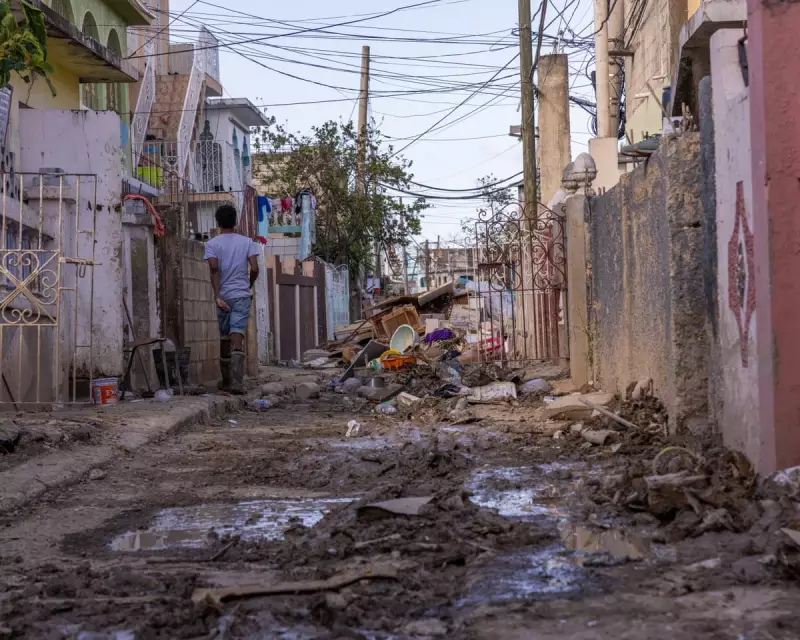
The catastrophic winds of Hurricane Melissa, which tore through the Caribbean with unprecedented force in late October 2025, have left a trail of destruction and a powerful warning. A photograph from Catherine Hall in Montego Bay, Jamaica, on 4 November 2025, captures the stark aftermath, a scene repeated across islands. This disaster, scientists confirm, was made five times more likely by the human-driven climate crisis.
The Science of Attribution and a World Unprepared
Attribution science has moved from theory to stark reality. While the link between greenhouse gases and a warming planet was long established, we can now directly connect this heating to specific extreme events. The 252mph winds of Melissa, the scorching wildfires in Iberia, and the UK's own June heatwave are all supercharged by climate change. The task of minimising risks from such events falls to climate adaptation experts, whose alarming consensus is that the world is dangerously underprepared. This failure is measured in lives, as seen in the deadly floods across Thailand, Sri Lanka, and Indonesia.
The Political Battle for Climate Justice and Finance
The politics of adaptation reveal a deep global injustice. At the recent Cop30 in Belém, Brazil, vulnerable nations left angry. While the projected annual adaptation budget was tripled to $120 billion, the deadline was pushed to 2035 with no solid plan for rich nations to pay. This sum is itself a fraction of the overall $300bn climate finance goal and falls far short of the over $310bn annually needed by 2035. For countries like Jamaica, already burdened by debt, this gap is a trap, forcing them to spend on disaster recovery instead of future-proofing their economies.

This imbalance is not confined to the Global South. In the UK, scientists recently held a “national emergency briefing” to highlight the nation's own alarming lack of preparedness. Adaptation in wealthy countries is often seen as a technocratic issue, sidelined from mainstream political debate until disaster strikes, as with the floods that led to the resignation of Valencia's president in Spain.
What True Climate Adaptation Must Look Like
One reason adaptation is neglected is the urgent focus on cutting emissions. However, preparing for a hotter, more unstable world is not an admission of defeat but a necessity. Under the UK's Climate Change Act, the government is legally bound to adapt. The Climate Change Committee envisions a “well-adapted” nation with resilient flood defences, climate-ready transport, and homes built for the future. Crucially, as a recent report argues, adaptation cannot be left to the market; it requires state leadership and public investment.
The path forward demands that National Adaptation Plans are brought to the forefront, with real finance and real justice. For the wealthy world, adaptation is prudent. For the poorest, it is a question of survival. The catastrophic events of 2025, from hurricanes to droughts, make the answer clear: the time for political honesty and urgent, just action on climate adaptation is now.