
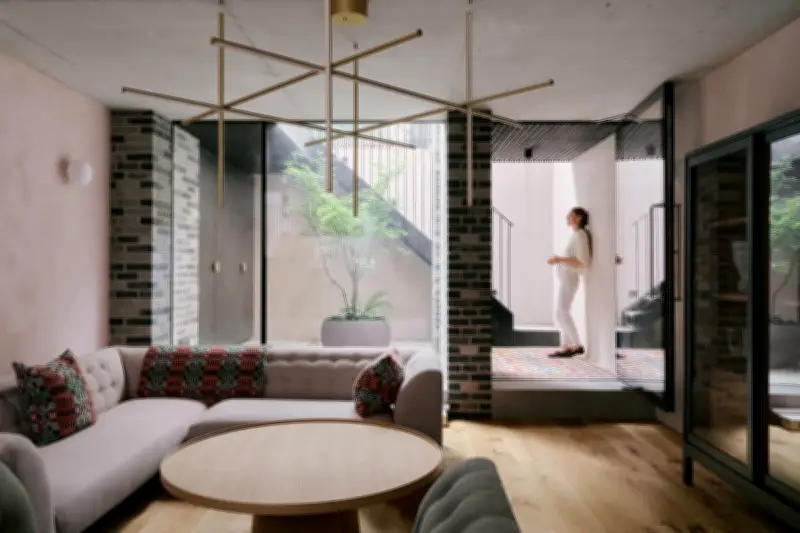
If May's scorching bank holiday taught us anything, it is that London homes are woefully inadequate at keeping us cool. For days after the last heatwave, air-con units were the talk of the town, but despite the increasing frequency and intensity of UK heatwaves, Brits remain reluctant to resort to them en masse, and for good reason. Unsightly external units and noise are immediate turn-offs, but the environmental impact and drain on household finances are equally off-putting.
Why Avoid Air Conditioning?
Richard Gill, architect and director of Paul Archer Design, recent winners of a 2026 RIBA London Award for their sustainable retrofit of a Victorian terrace house (Hebron House) in Hammersmith, explains: "Lots of clients ask about air conditioning but it's far from the most sustainable option: you're pumping more air and using more energy, at a cost, to cool the space down." According to Gill, it is always best to consider "no tech" ventilation first, but he concedes this is not always viable. "It does seem as though air-con is here to stay, for the time being at least."
Costs of Air Conditioning
Air-con units create air flow and expel heat via an exhaust hose that goes out of the window. Running costs are between £4 and £6 per 24 hours of continuous use, according to the Energy Saving Trust. The average cost of a wall-mounted unit usually suitable for an average sized bedroom is £750, with installation at around £1,150, according to checkatrade.com. Ensure there are no gaps that would allow warm air back into the room, and check out local regulations to avoid neighbour complaints. Depending on their agreement, renters could install a portable unit, typically priced between £350 and £420. The app-controlled Dimplex EcoIQ portable air-con and dehumidifier unit solves a few problems with one buy: a fan-only option, cooling down to 16 degrees and removing up to 40 litres of moisture per day. It costs £449 (robertdyas.co.uk). Running costs are 34.5p per hour and it doesn't require permanent installation — it comes with a window kit designed to fit most UK window types.
Smart Alternatives to Air Conditioning
If You're Doing a Full Renovation
If you can go back to brick in your renovation, as was the case at Hebron House, then breathable, wood fibre insulation on walls can serve to enhance thermal efficiency. Water vapour passes through the material, preventing trapped condensation, and the wood fibre boards slow down heat transfer, keeping interiors cooler during hot weather compared to synthetic materials. Prices range from £15 to £30 per square metre from online suppliers such as steico.com/uk and warmshell insulation from lime-green.co.uk.
Allowing natural light into spaces means you're less reliant on electricity. At Hebron House, Gill says a rooflight over the main staircase floods the space with natural light. Choose a design that can be opened to draw warm air up and out, and rain sensors to ensure a sudden downpour doesn't catch you out. Orientation is key. The back of Hebron House is north-facing so the architects were able to fit a large expanse of glass — if it were south-facing an alternative design approach would have been taken.
Solar control glass can be used to reduce solar gain and avoid overheating — it's a standard glass with specialist metallic coating applied to reflect infrared radiation but maintain light transmission. By limiting the amount of solar heat that passes through the glass, the need for mechanical cooling and energy consumption is reduced. It is often used on south and south-west-facing windows, as well as skylights, and costs from £40 to £180 per square metre, but it's best to go to local suppliers for a tailored quote.
Splurge-Worthy Upgrades
A DIY option is solar control window film, highly rated for heat and glare reduction and protection for furniture against fading. Climate 35 film (from £58.20 for 1.5 x 1 metre, windowfilm.co.uk) promises to reduce solar energy by 68 per cent, glare by 60 per cent and UV light by 99 per cent. Double or triple glazing reduces thermal transition, with the added benefit of improving acoustic performance. Costs tend to be from £500 per window according to checkatrade.com.
Quick Fixes for Summer 2026
External shading is more effective than internal measures as heat is prevented from reaching your windows in the first place. Even a well-placed tree can have a huge impact. Stop sunshine heating up a patio or living space with an awning or blinds. Budget from £500, although you can get off-the-shelf awnings and pergolas from £100. Head to debenhams.com for sunshelters on sale or hillarys.co.uk for bespoke.
Fans are a relatively cheap way to keep air moving and allow you to stay cool. Placing a bowl of ice cubes in front of the fan cools the air being blown. When the air is cooler outside than inside (early morning or overnight), open windows on opposite sides of the room or house to encourage air flow. Fans cost from 15p to 31p for 24 hours of continuous use. Check out Dimplex's FlexBlade multidirectional bladeless fan (£199.99, amazon.co.uk) for airflow reaching 20 metres, or Dyson's PC1 for a fan that purifies the air (£449.99, dyson.co.uk).
Keeping babies cool and well rested can be a huge worry for new parents. The newly-launched Elvie Rise smart bouncer and bassinet has a bamboo sheet and breathable inner side wall to keep new additions comfortable and heat rash free on hot days and sticky nights (£599, uk.elvie.com). Smart features include SootheLoop technology which learns and repeats the bounce parents want, meaning you can sit back — likely in front of a fan — and enjoy a hands-free moment. A seamless transition takes the Elvie Rise from bouncer to a flat bassinet suitable for day and night-time sleep, crucially without having to move and risk unsettling your baby.
Seal gaps around closed doors and windows to block hot air from entering and trap cooler air inside. Signs your window seals need replacing include condensation, mould and draughts. The average cost to replace a blown window is £100.
Change Your Habits
- During peak temperatures, keep your windows shut and blinds or curtains closed, especially in rooms on the sunny side of your home.
- If you have sash windows, try the Victorian air conditioning technique. Open the top and bottom of the window equally to allow cooler air to enter at the bottom while warm air leaves through the top.
- Freeze your pillowcase or a hot water bottle filled with cold water for 20 to 30 minutes before bed to help you get to sleep faster.
- Turn off chargers, TVs and devices like laptops if you're not using them. LED bulbs emit far less heat than traditional bulbs, and are cheaper to run too.




