Billions Face Unprecedented Heat as Global Temperatures Rise
A stark new study published in Nature Sustainability has delivered a sobering warning: the number of people living with extreme heat is projected to more than double by 2050 if global heating reaches 2°C above pre-industrial levels. This comprehensive research, the most detailed of its kind, maps how temperature extremes will spread across the globe, leaving no region untouched by the escalating climate crisis.
No Escape from the Rising Thermometer
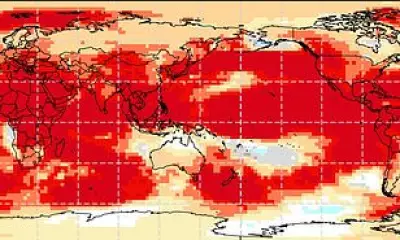
Scientists estimate that 41% of the projected global population in 2050—approximately 3.79 billion people—will face extreme heat conditions if the 2°C threshold is breached. This represents a dramatic increase from the 1.54 billion people (23% of the world population) who were affected in 2010. The study defines extremes based on how many days each year temperatures deviate from a temperate baseline of 18°C, using sophisticated computer models to predict impacts.
The tropics and southern hemisphere are expected to bear the brunt of the suffering, with nations like India, Nigeria, Indonesia, Bangladesh, Pakistan, and the Philippines seeing the majority of affected populations. However, the research highlights that the most significant increase in dangerous temperatures will threaten countries including the Central African Republic, Nigeria, South Sudan, Laos, and Brazil.

Northern Nations Ill-Prepared for New Reality
While the immediate impacts may be felt most acutely in warmer regions, the authors stress that no part of the world will be immune. Countries in the north, including the United Kingdom, face particular adaptation challenges because their built environments, infrastructure, and energy systems have historically been designed to cope with cooler climates.
Radhika Khosla of the Smith School of Enterprise and the Environment at Oxford University, one of the study's authors, emphasised the universal nature of the threat. "No part of the world will be able to shy away from extreme heat. There is a lack of preparedness across nations," she warned. She pointed to the UK's ageing buildings and infrastructure as particularly vulnerable when temperature extremes move in the opposite direction, posing serious challenges to health systems, energy supplies, and economic stability.
Energy Demands Set for Dramatic Shift
The research reveals how climate change will fundamentally alter global energy consumption patterns. Over the coming decades, heating demands in the northern hemisphere will decrease while cooling requirements in the southern hemisphere will increase substantially. Separate studies have confirmed that by the end of the century, global energy demand from air conditioning will not only overtake but far outstrip that from heating systems.
This shift was illustrated in 2023 when the UK National Grid had to request the activation of two coal-fired power plant units to meet unusual air conditioner demand during a heatwave—a scenario likely to become more frequent as extreme temperatures become more common.
Urgent Action Required as Impacts Accelerate
Perhaps most alarmingly, the computer models indicate that the greatest shift will occur early in the warming trajectory—around the 1.5°C phase where the world currently finds itself. This finding adds considerable urgency to the need for adaptation measures across healthcare, economic planning, and energy systems.
"This is a really core finding because it tells us that we need to act much earlier in supporting measures for adaptation and mitigation," Khosla explained. "Overshooting 1.5°C of warming will have an unprecedented impact on everything from education and health to migration and farming. Net zero sustainable development remains the only established path to reversing this trend for ever hotter days. It is imperative that politicians regain the initiative towards it."

The study's publication follows confirmation that 2025 saw numerous temperature records broken, with experts attributing the third-hottest year on record to human activity. As the world continues to warm, the research provides compelling evidence that the window for effective action is closing rapidly, with billions of lives hanging in the balance.