
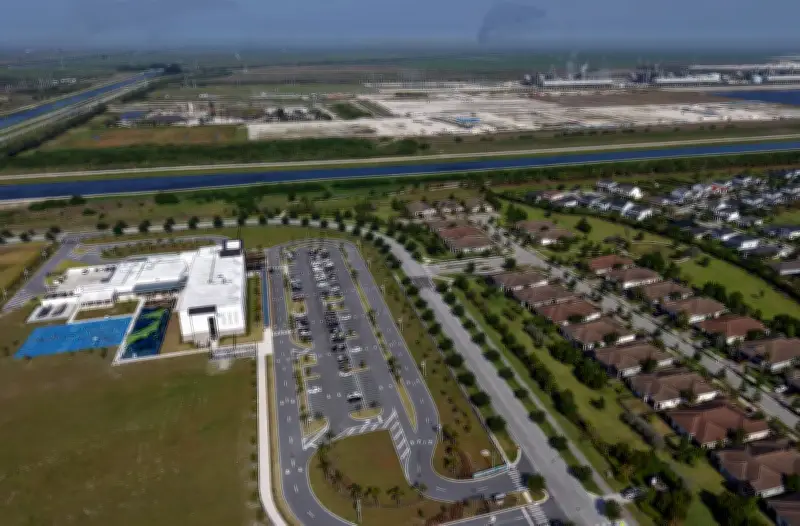
Environmentalists are warning that a proposed hyperscale datacenter in western Palm Beach County, Florida, could damage the Everglades by increasing water temperatures and fueling toxic bacterial blooms. The 600MW facility, known as Project Tango, would be built on a 202-acre parcel of land surrounded by water, about 16 miles west of Mar-a-Lago.
Concerns over water and electricity demands
Local environmentalists say the datacenter could exacerbate an existing issue of toxic bacterial blooms in a water system already stressed by drought, fertilizer runoff, and warm water temperatures. In recent summers, blooms of blue-green algae have covered nearly half of Lake Okeechobee, which feeds into the Everglades. The cyanobacteria blooms produce microcystin, a toxin that can sicken people and animals and contaminate drinking water.
Reinaldo Diaz, founder of Lake Worth Waterkeeper, said waste heat from the datacenter could increase water temperatures in the surrounding watershed, putting the Everglades further at risk. “Our watershed is really complex,” Diaz said. “Ours is more like a spiderweb that’s why the impacts would be far reaching.”
Potential impacts on communities and the grid
The high energy use of the datacenter could require costly upgrades to the power grid, potentially driving up electricity costs for households. At peak capacity, a 600MW datacenter could use as much power as half a million US homes, based on US Energy Information estimates.
Earthjustice attorney Christina Reichert represents neighbors opposing the project. She said a hyperscale datacenter could have offsite water, air, and sound impacts not covered by light industrial use zoning. “One of the concerns we had about this location is the risk of increasing the heat in this area because it could lead to algal blooms in that canal that could compromise drinking water and Everglades restoration,” Reichert said.
Community opposition and regulatory actions
At a Palm Beach County zoning hearing last month, residents spoke about the proximity of the proposed datacenter to a local elementary school (about 1,200 feet). They expressed concerns about noise, traffic, heat pollution, lower property values, and higher energy bills. After more than 12 hours of testimony, commissioners voted 5-1 to deny an expansion of the proposed datacenter. Two more administrative applications from the developers remain on the table.
Sue Ellen Loyzelle, a founding member of the Western Palm Beach Community Alliance, said regulations are needed to reduce potential effects. “We don’t want our bills to go up, but it’s more than that,” she said. “What is all of this going to do?”
Next month, Palm Beach County commissioners will vote on a moratorium against large-scale datacenters. Several other Florida counties have already adopted similar measures. Loyzelle said such moratoriums are necessary until regulations can be put in place. “I would like to not see them at all. I know that’s not a reality. If there was to be one, it would have to be far away from homes because of the sound and the health impacts of air pollution,” she said. “But the water, I don’t think Florida could handle it anywhere with the water issues.”




