
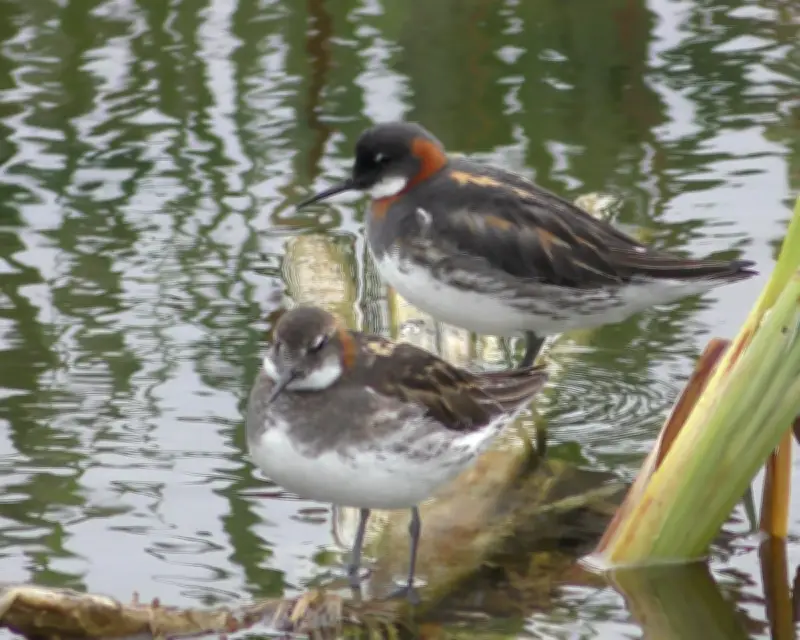
On a sunny morning a few weeks ago, Dave Suddaby, the reserves manager with BirdWatch Ireland, led me across the machair to where the fairy birds were nesting in Annagh Marsh. The red-necked phalarope, called a 'fairy bird' by Irish naturalist Robert Lloyd Praeger after he encountered the species in this area during the early 1900s, has made a remarkable return.
Habitat Restoration Brings Species Back
As we walked, the habitat restoration that drew this diminutive wader back to breed here in 2015, after an absence of more than 30 years, was already casting a spell. The air was full of the sounds of lapwings, redshanks, corncrakes and snipes. The sward was a dazzle of wildflowers. Eventually we came to a narrow freshwater pool, where we stopped to wait.
A Magical Encounter
I spent the following days watching a tussock of sedge. When the bird appeared, he flicked into the air and, in a blink, darted to the water. Buoyant as a cork, elegant as a dancer, the phalarope then swam in and out through the reeds, tweezering up invertebrates with his needle-like bill. After a few minutes, he flicked back to his nest hidden in the tussock. As he vanished under cover, I breathed again. And waited.
Unique Biology of the Red-Necked Phalarope
It's little wonder that sightings of the fairy bird feel magical. The red-necked phalarope is a pelagic species, spending most of the year out at sea feeding on plankton. It generally nests on Arctic tundra – Annagh Marsh is its most southerly breeding location in the world. Unusually, females are the more brightly coloured sex, and they compete for males, which do all the parental care once the clutch is laid. Indeed, during the week that I observed her mate, the female – her job done – could have crossed the north Atlantic to begin her migration. Joining flocks that breed across the western hemisphere, the Irish phalaropes migrate south along the eastern seaboard of North America, flying over the isthmus of Panama to winter in the tropical Pacific.
Successful Breeding and Future Prospects
My phalarope successfully hatched four chicks in late June. By now, he may have left his precocial offspring to fend for themselves, and by this month's end they too will be winging an ocean. The return of this species highlights the importance of habitat conservation efforts.




