
El Niño-driven wildfires in Indonesia have affected habitats containing 52% of the total Bornean orangutan population, according to the International Union for Conservation of Nature (IUCN). The fires, which are devastating forests and peatland, have unleashed thick smog and destroyed the habitat of some of the planet's most vulnerable species.
Primate specialists from the IUCN have called for urgent international assistance to help control the fires, warning this week that thousands of orangutans could be killed, injured or displaced. An estimated 600,000 hectares (1.4 million acres) were damaged by fire in August, according to the environmental group YKAN.
Rescue operations underway
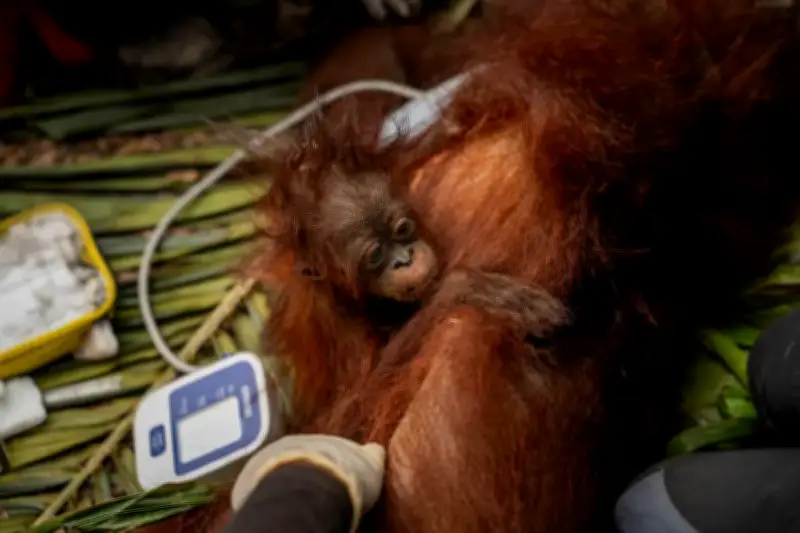
So far, more than 20 orangutans, as well as other species such as pangolin, have been evacuated from the fires by Yiari, a non-profit focused on primate and habitat conservation, which is working alongside West Kalimantan's Natural Resources Conservation Agency. One of the rescued orangutans died, probably due to smoke inhalation.
The mother and baby rescued last week are now being held at a quarantine centre run by Yiari. When it is safe, they will be released in a new location – one with enough food and no other orangutan populations that might compete with them for territory.
Long-term effects on wildlife
Even animals that survive the catastrophe can face long-term consequences. Food availability falls in the aftermath of fires as forests struggle to recover, and the risk of conflict between animals can rise if they are displaced and forced to live closer to each other. Experts believe that, as with humans, there will also be health impacts for animals that have lived with months of dense smog.
Research published after the 2015 fires found orangutans called less in heavy smoke, and that they had reduced vocal quality. Most vocal changes persisted for two months after the smoke had cleared and probably signalled changes in health, researchers concluded. Gibbons, which rely on song to attract mates, cement bonds and defend territory, have also been found to sing less when exposed to heavy smoke.
Research sites threatened
Both the Tuanan orangutan research station in Central Kalimantan, and Rangkong research station in West Kalimantan, have been threatened by fires in recent weeks. Staff and local people have worked to halt the spread, setting up improvised sprinkler systems and clearing the ground cover. Localised rains have brought some relief at Rangkong, though staff fear this may only be temporary. At Tuanan, where there is still no rain, the fire fighting continues day and night.
The IUCN says "urgent technical and financial support" are needed, but that the emergency response must be followed by greater investment in re-wetting peatland, addressing deforestation, and ensuring burned forests are restored, not converted into plantations.




