
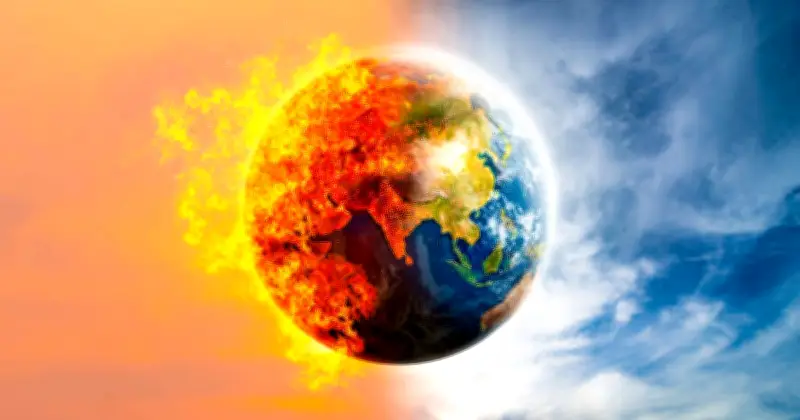
A new report warns that seven of nine planetary boundaries—the systems that keep Earth habitable—have now been exceeded. The Planetary Health Check 2026, compiled by over 60 scientists, likens the planet's current state to a patient requiring immediate intensive care.
Key thresholds surpassed
Among the breached boundaries are climate change and ocean acidification. Other exceeded thresholds include the destruction of the Amazon rainforest and the consequences of deep-sea mining and trawling on the ocean floor.
The seven breached boundaries are ocean acidity levels, freshwater change, land system change, climate change, modification of biogeochemical flows, introduction of novel entities, and change in biosphere integrity. The two remaining boundaries—stratospheric ozone depletion and atmospheric aerosol loading—remain at safe levels.
Scientists urge urgent action
Niklas Kitzmann, lead editor of the report, told Live Science: "If you had a patient with a blood test that looks like this, you would send them to the ICU right away."
The scientists assert that recovery remains achievable and that there is still a window to reverse the damage, provided significant environmental action is implemented without delay. Kitzmann said: "We still have a window to turn this around, but we do have to start bending the curves on emissions and on nature degradation within the next few years. We're rapidly running out of time."
Visible impacts and grounds for optimism
Among the concerns identified are extreme weather phenomena, the damage caused by forever chemicals, and the accelerating loss of biodiversity. Evidence of global challenges is already evident, according to specialists, including intense heatwaves, the disappearance of polar glaciers, and increasingly frequent coral bleaching events.
Grounds for optimism in averting disaster lie in the renewable energy transition, driven by plummeting solar technology costs, growing public consciousness, and international agreements safeguarding land and marine environments. Kitzmann said: "It's not enough yet, it's not sufficient, but we shouldn't think that this is a completely unsolvable problem. It is very much in the process of being solved, and we just need to step on the accelerator right now and make sure that these solutions that we have get implemented as quickly as we possibly can."




