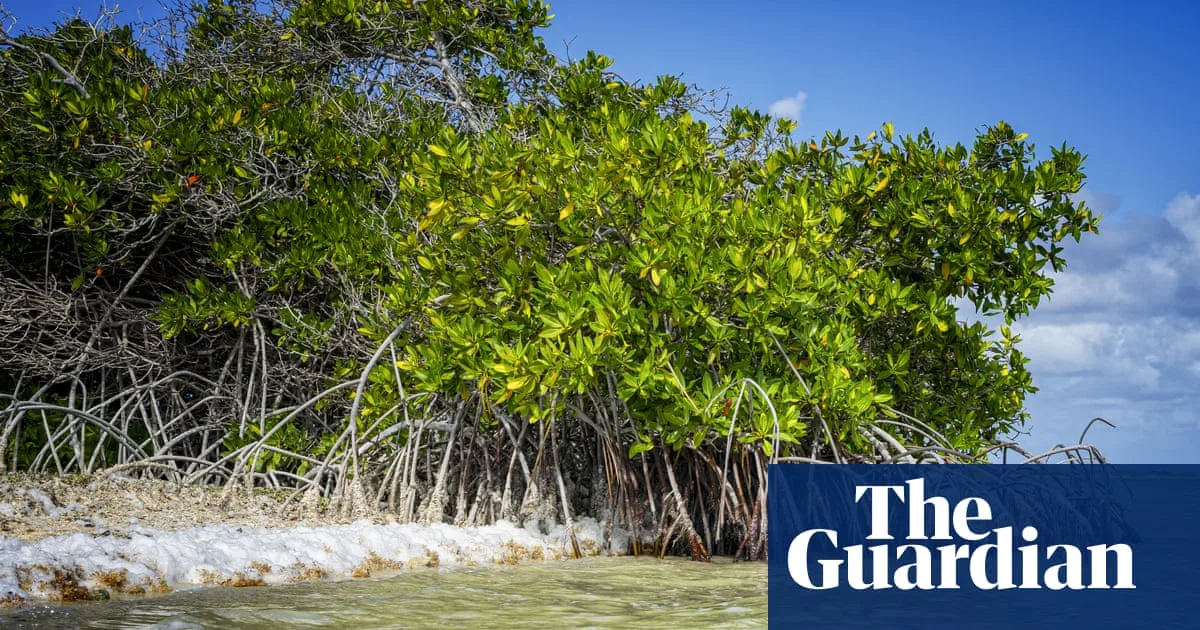
A Dutch district court is delivering a crucial ruling on Wednesday in a landmark climate change case brought by eight residents of a small Caribbean island against the Dutch government. The plaintiffs accuse the Netherlands of not doing enough to shield them from the devastating impacts of global warming, including rising sea levels and extreme weather events.
Historic Legal Challenge Backed by Environmental Groups
The case, which has received significant backing from Greenpeace, seeks to compel the Dutch government to implement more robust measures to protect its citizens from climate change consequences. Should the court rule in favour of the islanders, it could establish a powerful legal precedent for similar challenges worldwide.
"It would be a victory of historic significance, should the court ruling force the State to take concrete measures to protect people from extreme weather and other consequences of the climate crisis," stated Marieke Vellekoop, director of Greenpeace Netherlands, in an official release.
Colonial History and Legal Jurisdiction
The case is being heard at The Hague District Court due to the unique political status of Bonaire, along with St. Eustatius and Saba, which became special Dutch municipalities in 2010. The islands' approximately 20,000 residents hold Dutch citizenship based on their colonial history, placing them under the Netherlands' legal protection.
Government lawyers have argued that the Netherlands is already making substantial progress in combating climate change, citing greenhouse gas reductions and various mitigation efforts. Edward Brans, representing the government, contended that climate policy should remain the domain of national administrations rather than judicial bodies.
Political Context and Climate Leadership
The court's decision arrives during a critical political moment, as weeks of negotiations to form a new Dutch government following October's national elections appear likely to produce a minority coalition. This potential government would be led by centrist D66 leader Rob Jetten, who earned the nickname "climate pusher" during his previous ministerial tenure.
Jetten was instrumental in shepherding through comprehensive legislation aimed at reducing the Netherlands' dependence on fossil fuels and significantly cutting carbon emissions, establishing his reputation as a climate policy advocate.
Legal Precedents and International Implications
The District Court of The Hague holds particular significance in climate litigation history, having heard the initial stages of the groundbreaking Urgenda case over a decade ago. That case concluded in 2019 when the Dutch Supreme Court ruled in favour of climate activists, ordering the government to reduce greenhouse gas emissions.
The Urgenda decision has since influenced numerous international legal proceedings, featuring prominently in recent climate change rulings from both the European Court of Human Rights and the United Nations' International Court of Justice. Both courts have determined that failure to adequately address climate change constitutes a violation of international law.
Scientific Context of Climate Impacts
The case unfolds against a backdrop of measurable climate change impacts. Between 2013 and 2023, global sea levels rose by an average of approximately 4.3 centimetres, with certain Pacific regions experiencing even more significant increases. Meanwhile, global temperatures have risen 1.3 degrees Celsius since pre-industrial times, primarily due to fossil fuel combustion.
For low-lying Caribbean islands like Bonaire, these changes pose existential threats, making effective climate protection measures increasingly urgent for vulnerable populations.




