
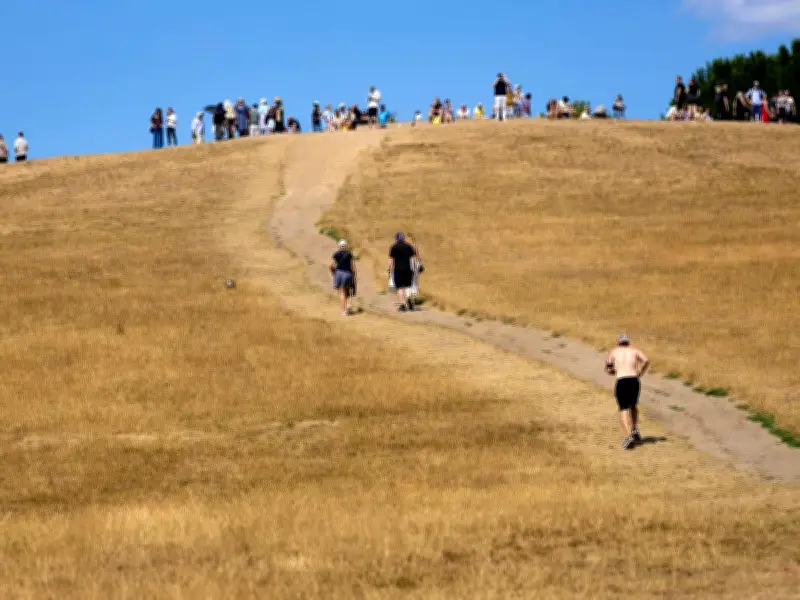
Provisional Met Office figures show just 5.6mm of rain fell in England in July, less than half the previous record of 13.4mm set in 1911. Wales recorded 7.9mm, almost a third of the 22.6mm seen in 1911, putting both nations on course for their driest July since records began.
Northern Ireland is tracking its eighth driest July, while the UK as a whole is heading for its third driest. Scotland received 72% of its average rainfall for the month and is not currently within its top 10 driest Julys.
Drought confirmed across England and Wales
The Environment Agency has confirmed that half of England is in drought, and Natural Resources Wales said all of its areas are in drought for the third time in five years. The UK has seen four heatwaves since May, turning fields and lawns brown and fuelling wildfires.
The forecaster said July had been characterised by an “exceptional combination of extreme heat, abundant sunshine and an almost complete absence of rainfall”. The figures were released with one day of July still remaining, and the forecaster said the emerging picture is “one of a truly exceptional July”.
“A prolonged heatwave, exceptionally low rainfall and widespread drought conditions have combined to make July 2026 a remarkable month,” the Met Office said.
Met Office scientist Dr Emily Carlisle said: “The headline story for July is undoubtedly the rainfall. Across parts of England and Wales we’ve seen extraordinarily low totals, with some locations recording little or no meaningful rainfall for much of the month. Provisional figures suggest this could be one of the driest Julys in nearly two centuries of records, which is particularly notable when coupled with the exceptional heat experienced so far this summer.”
Hosepipe bans and heat
Water companies are not currently expecting a threat to drinking water supplies, as record winter rainfall means reservoirs remain close to expected levels. However, more than 23 million people across England and Wales are facing hosepipe bans.
Aerial pictures show the parched London landscape after weeks of hot weather and dry conditions. Much of the grass in the gardens of Buckingham Palace and Kensington Palace has turned brown, while only the track at Ascot Racecourse appears nourished.
Temperatures reached 35.2C on Wednesday, marking the seventh day in 2026 that temperatures have hit 35C or higher.
Wildfires and response
Fire chiefs said wildfires are becoming a “recurring and growing feature of the risks facing our communities” in the face of a changing climate. Firefighters responded to 393 wildfires across England and Wales in July, making it the busiest month on record.
The number of wildfire incidents recorded this year already matches the total annual figures for 2021, 2023 and 2024 combined, although it remains below the same point in 2025, when long-lasting drought and heat caused severe fire risk.
Firefighters have been tackling a blaze at Dunwich Heath, near Leiston, Suffolk, since 5.30pm on Wednesday. The wildfire is a few miles from nuclear power station Sizewell B and the construction site for new power station Sizewell C.
The National Trust, which has had wildfires at a number of its sites including Dunwich Heath, is demanding action to help people adapt to the changing climate. Its demands include building homes fit for the future, creating wetter and more resilient landscapes, cooling towns and cities and helping communities.
Heat-related deaths
The UK Health Security Agency (UKHSA) said it “is likely that 2026 could see the highest number of heat-associated deaths on record”, surpassing the number seen in 2022, when the UKHSA started studying them.
Data shows there have been almost double the number of excess deaths caused by heatwaves so far this year than all of last summer. An estimated 2,877 heat-associated deaths occurred during the heatwaves in May and June, with 753 linked to the heatwave from May 24-27 and 2,124 to the heatwave between June 21 and 28.




