
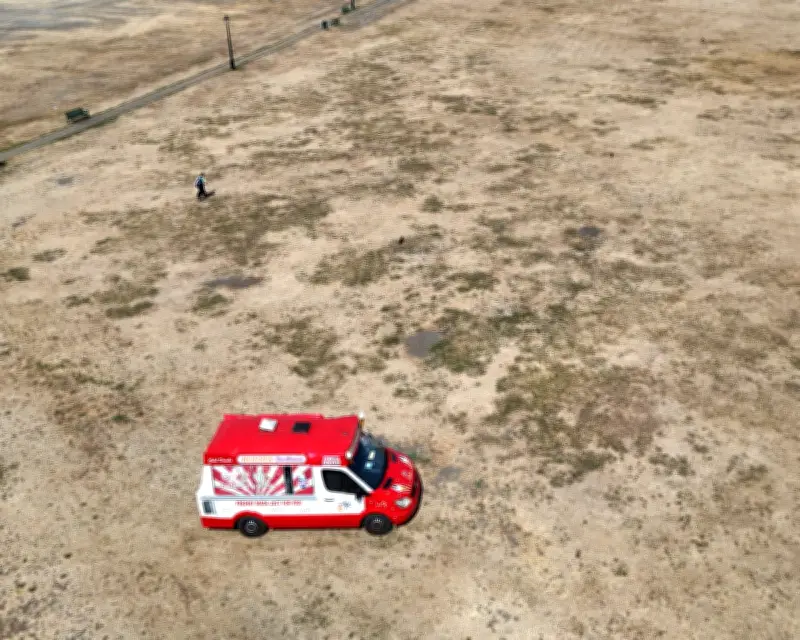
The Met Office has confirmed that July 2026 was the driest month in southern England since records began nearly 200 years ago. England and Wales also provisionally recorded their driest July since records started in 1836.
Record heat and dryness
Wales experienced its joint warmest July on record for mean temperature, while England saw its second warmest. The Met Office described the conditions as “remarkable” and noted that the summer has been marked by multiple heat records.
The heatwaves have been made more intense and more likely by the fossil fuel-driven climate crisis. The heatwave affecting western Europe at the end of June was the most severe and widespread ever recorded.
Sixth consecutive warm month
July was the sixth consecutive month with above-average mean temperatures this year, with only January seeing temperatures below average. Dr Amy Doherty, a science manager at the Met Office, said: “The combination of record-breaking dryness, exceptional warmth and unprecedented sunshine has delivered one of the most notable summer months in our historical records.”
Impact on water and agriculture
The Environment Agency reported that the conditions are affecting farmers, wildlife, and the availability of water for public and business use. Half of England and the whole of Wales were declared officially in drought last week, and 40% of England's population are under a hosepipe ban.
The National Farmers’ Union has warned that the punishing drought could lead to shortages of certain foods in Britain.
Wildfires and river flows
Large parts of Europe have been scorched by wildfires, supercharged by the climate crisis. Greece is battling one of its worst wildfire seasons in a decade, and in France, thousands of evacuees were allowed to return home after the country's largest wildfire on record.
Rivers in Europe are experiencing extremely low flows. The Danube's water flow in Romania has fallen to 1,500 cubic metres per second, less than a third of its July average.
Rainfall figures
England had its driest July on record with only 6.5mm of rainfall, which is 10% of its long-term average and less than half the previous record of 13.4mm set in 1911. Wales also had its driest July, with 9.3mm – just 9% of its average.
Nineteen counties recorded less than or equal to 1mm of rainfall in July, including Berkshire, Dorset, Greater London, Kent, and Surrey.
The Environment Agency said water reserves should be sufficient for the coming months until the next period of sustained rainfall. While rain is forecast for some parts of England, the Met Office said south-east England would continue to see little rain.




