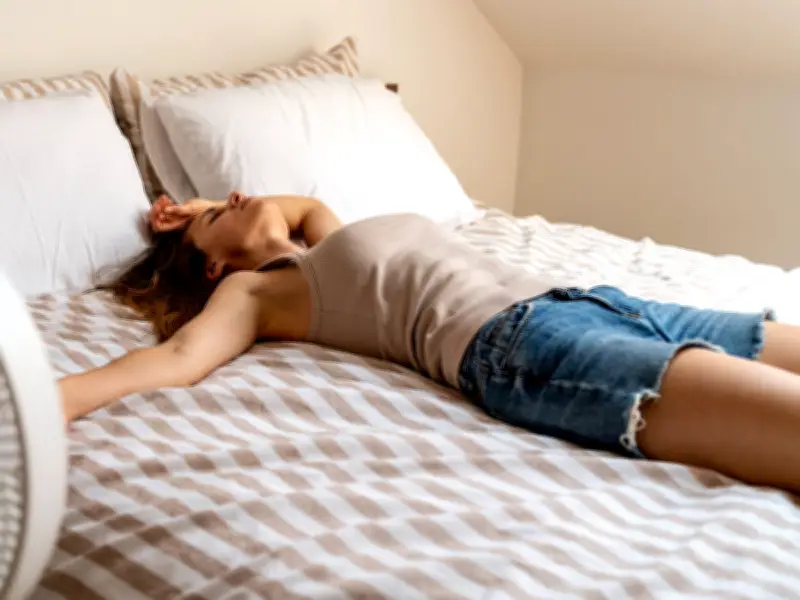
As Britain experiences its third heatwave of 2026, many people are struggling to get a decent night's sleep. Hot weather makes it harder to fall asleep and stay asleep because the body relies on a drop in core temperature to initiate and maintain sleep.
Why Heat Disrupts Sleep
Dave Gibson, founder of The Sleep Site, explained: "Our core body temperature naturally begins to fall by around 0.5–1C as we fall asleep and through the first part of the night, but hot and humid conditions can prevent this cooling process from happening properly, leaving us tossing and turning throughout the night."
While many people reach for fans to keep cool at night, Gibson highlighted an often-overlooked household appliance that could also help: the dehumidifier.
Dehumidifier as a Cooling Tool
Gibson told Marks Electrical: "In a humid bedroom, the air is already saturated, so the sweat can't evaporate from your skin. A dehumidifier literally removes that excess moisture in the air so your body's natural cooling can work effectively in the hot humid nights."
He recommends setting the relative humidity at 40-60%. "Here I would avoid going dryer as it can make it uncomfortable to breathe by drying out your nose and throat which also increases snoring. It's worth getting this right in both directions. Equally if you leave a room with excess humidity, it can encourage dust mites, and even mould in some cases."
Additional Benefits of Dehumidifiers
One bonus of dehumidifiers is the gentle hum they produce, which can double up as white noise and mask sounds from outside and inside the bedroom. Dehumidifiers have become increasingly widespread in UK households, with usage soaring amid the cost of living squeeze and rising energy bills. The appliances can also be used for drying clothes, proving considerably cheaper than relying on a tumble dryer.
Fans: How to Use Them Effectively
Gibson noted that fans do not actually lower the room's temperature. However, they can still be useful when deployed correctly. "The primary aim of any fan is to move air so that you get a flow passing over your skin. This then speeds up the evaporation of sweat."
To optimise a fan's performance, it should be positioned to "push hot air out through the window rather than just stirring it around." He also suggests placing a tray of ice or a damp sheet in front of the fan to further cool the air being circulated.