
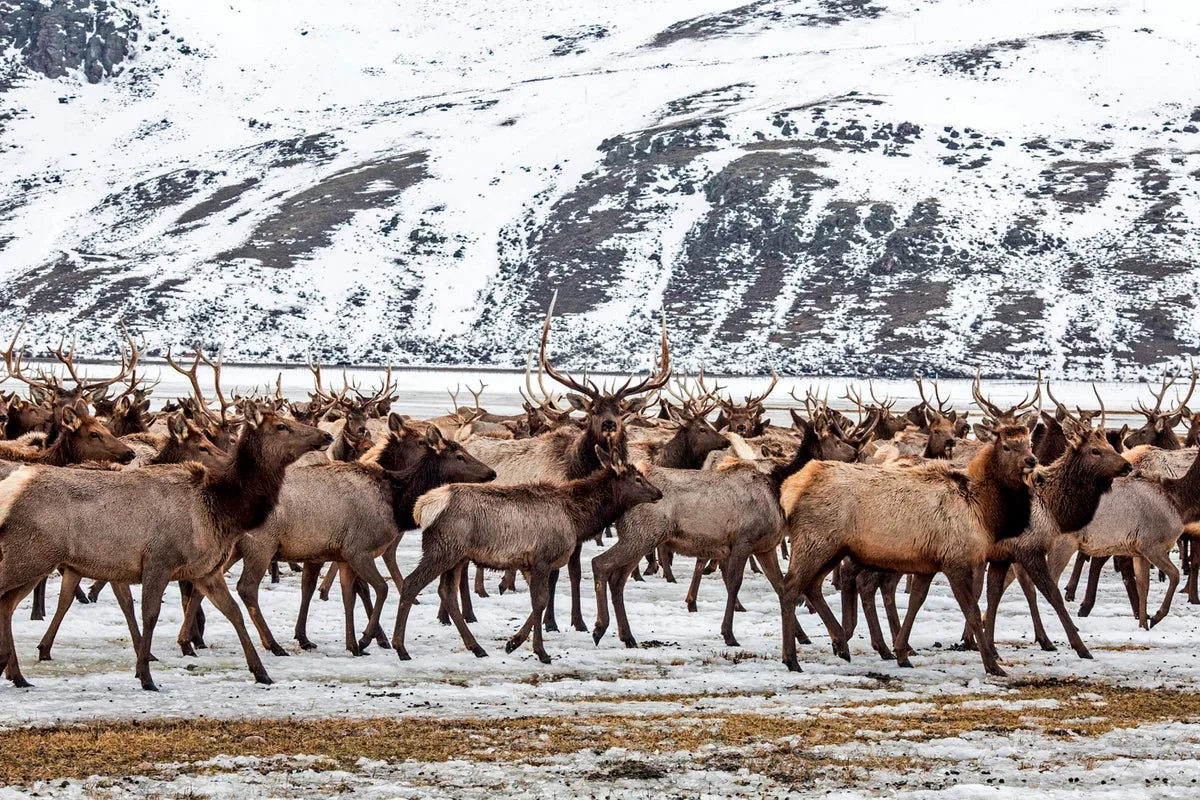
The discovery of chronic wasting disease (CWD) on the National Elk Refuge has added urgency to a 2021 plan to re-examine the size of the 11,000-strong Jackson Elk Herd, the largest migratory herd in the United States. The finding also raises questions about the annual Scouts' antler collection and auction, other traditions, and the safety of nearby Jackson's water supply.
The diagnosis came after officials killed an ailing cow elk on the refuge just north of Jackson on April 15. Biological samples were sent to a Wyoming Game and Fish Department laboratory, with a second lab confirming the results. Federal and state officials announced the infection on Monday, marking the first case of CWD in an elk on the refuge. Game and Fish tested 50 hunter-harvested elk from the refuge in 2025 and 14 elk that died after the hunt.
In a joint statement, the U.S. Fish and Wildlife Service and Wyoming Game and Fish Department said they would increase monitoring and surveillance of herds, re-evaluate existing programmes, and implement additional bio-security protocols. The disease is now embedded in what Game and Fish described as "one of the largest and most well-known elk herds in North America." Concentration of elk at feedgrounds is believed to promote the spread of CWD, and the refuge provides supplemental feed to wintering elk, while Game and Fish operates 21 feedgrounds west of the Continental Divide.
Environmental activist Lloyd Dorsey, who has lived in Teton County for 50 years, said the arrival of CWD on the refuge was "not unexpected" but a "shame" that feeding programmes were not phased out long ago. State and federal officials did not immediately answer questions about whether the discovery threatens Jackson's water supply, which draws drinking water from wells on the south end of the refuge. CWD is caused by a prion, is always fatal, and persists in the environment. Although no confirmed case of infection in humans exists, scientists warn against eating infected game.
Wyoming's elk feedground programme is unique to three counties, with feeders often in horse-drawn sleighs distributing hay. Before the programme and ranch development, elk migrated to natural wintering grounds. This winter, the refuge reported a high count of 6,970 elk, but no supplemental feed was dispensed due to lack of snow, one of 11 winters since 1912 without such feeding. Although CWD was previously detected in an elk from the herd killed in Grand Teton National Park, its arrival on the refuge marks a significant development.




