Amazon Hosts Critical Climate Summit
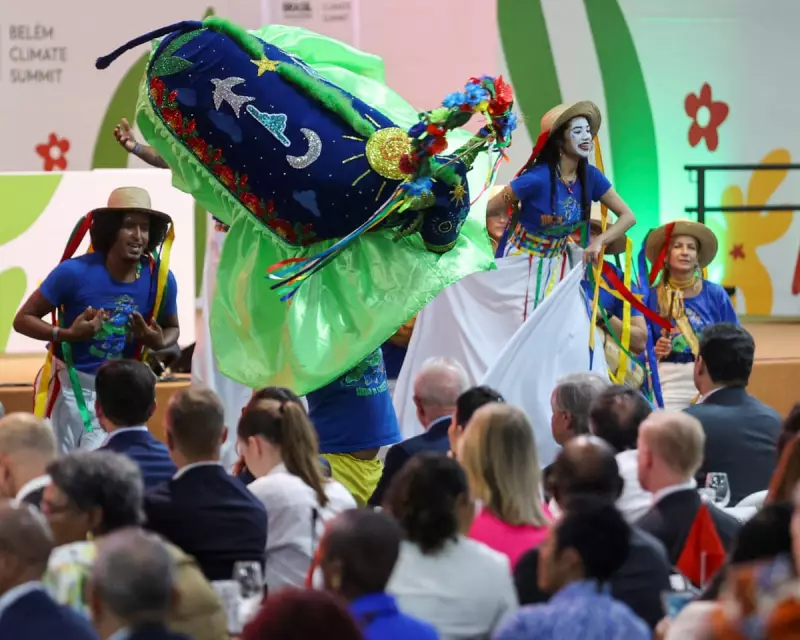
The eyes of the world turn to Belém, Brazil, as it prepares to host the Cop30 climate conference near the mouth of the Amazon River. This marks the 30th conference of the parties to the UN framework convention on climate change, the parent treaty to the landmark Paris agreement.
Brazil's Flagship Forest Initiative
Brazil's President, Luiz Inácio Lula da Silva, arrives with a bold centrepiece proposal: the Tropical Forest Forever Facility. This ambitious fund aims to revolutionise forest economics by paying nations and local communities to keep their forests standing, rather than exploiting them for short-term gain through logging or agriculture.
President Lula envisions the fund growing to a substantial $125bn (£95bn), with $25bn sourced from developed nation governments and public institutions. The remaining $100bn would be raised from private investors and financial markets. However, the initiative currently stands at approximately $5bn, with the UK notably among the major economies yet to contribute.
New Concepts and Contentious Debates
The summit will introduce a global ethical stocktake, an innovative concept championed by Brazil. Applying the Paris agreement's stocktake principle to ethical dimensions, it will assess how effectively global climate policies serve the poor, disadvantaged, Indigenous communities, and other marginalised groups. A dedicated report focusing on climate justice will be presented during the conference.
One of the most contentious topics remains loss and damage finance. This refers to funding for recovery from the most devastating impacts of extreme weather—events so severe that adaptation is impossible. Examples include the catastrophic 2022 floods in Pakistan and persistent droughts across Africa. While some initially viewed this as compensation, it has evolved into a framework for rescue and rehabilitation, addressing both immediate impacts and broader social consequences.
The Financial Challenge and Innovative Solutions
A significant gap looms between the $1tn annual climate finance needed by developing nations and the $300m currently pledged by developed countries. This shortfall has spurred discussions around innovative finance mechanisms.
Brazil has proposed a 2% wealth tax on global billionaires, potentially affecting around 100 families and raising an estimated $250bn. Other proposals include levies on frequent flyers, small charges on international shipping, and repurposing the hundreds of billions in subsidies currently directed towards harmful agricultural practices, overfishing, and fossil fuel industries.
The Legacy of Past Agreements and Future Goals
The conference will operate within the framework established by the Paris agreement, with its core goal of limiting global heating to "well below" 2C while "pursuing efforts" to stay within the safer 1.5C threshold. This is managed through Nationally Determined Contributions (NDCs)—national climate action plans that countries are supposed to strengthen every five years, or annually as agreed at Cop26.
Despite this, by the eve of Cop30, fewer than 90 countries had submitted updated NDCs. Furthermore, the historic commitment from Cop28 in Dubai to "transition away" from fossil fuels, known as the UAE consensus, is expected to face renewed scrutiny and potential opposition from certain nations.
The success of Cop30 will be measured by its ability to bridge the finance gap, secure tangible commitments for forest preservation, and reinforce the global resolve to tackle the escalating climate crisis with urgency and justice at its core.