
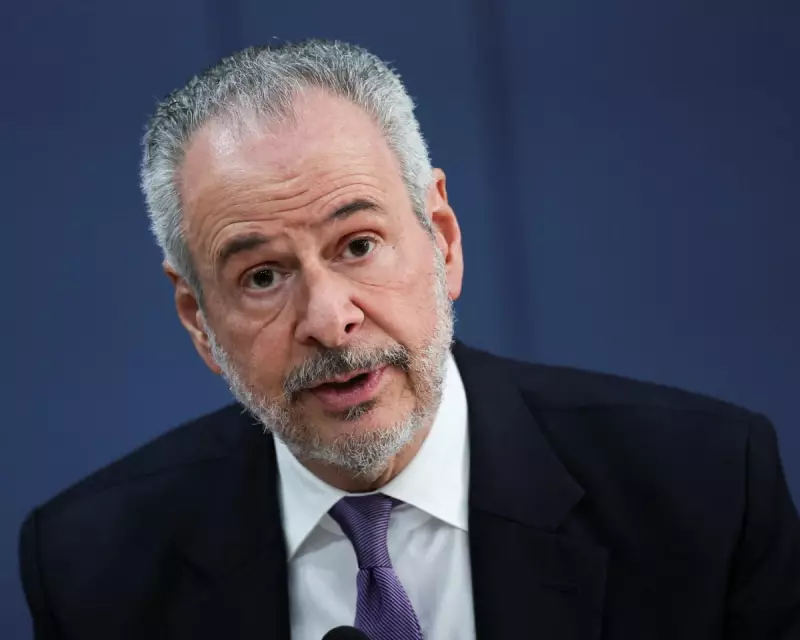
Climate Chief's Stark Warning as Cop30 Talks Begin
The president of the UN climate talks has delivered a stark warning that wealthy nations have lost their enthusiasm for tackling the climate crisis, while China is surging ahead in producing and using clean energy equipment. André Corrêa do Lago, the Brazilian diplomat leading the Cop30 conference, made these comments as the crucial fortnight-long meeting commenced in Belém, deep within the Amazonian rainforest.
André Corrêa do Lago pointed specifically to China, the world's largest emitter of greenhouse gases, which also holds the title of the biggest producer and consumer of low-carbon energy. "China is coming up with solutions that are for everyone, not just China," he told reporters. He highlighted the proliferation of solar panels, noting their increased affordability and competitiveness against fossil fuels. "If you're thinking of climate change, this is good," he stated, suggesting that more countries should follow China's lead rather than complain about being outcompeted.
The Core Challenges on the Cop30 Agenda
Ministers and high-ranking officials from 194 countries have gathered with the monumental task of forging plans to stay within the 1.5C heating limit set by the Paris agreement. The agenda is packed with critical items: establishing a roadmap to phase out fossil fuels and ensuring that poorer nations receive the financial help they desperately need.
Top of the list will be scrutinising national plans for cutting greenhouse gas emissions. The current collective commitments are alarmingly inadequate, projected to lead to a devastating 2.5C of global heating. Ilana Seid, Palau's ambassador to the UN and a spokesperson for the Alliance of Small Island States (Aosis), emphasised the urgency. "Progress so far has been insufficient and we have to have a response," she said. "Otherwise, we don't know where we are going." She insisted that the 1.5C target must be our north star, requiring a collective response to current shortcomings.
While the Brazilian hosts are focused on "implementation"—turning existing commitments like a tripling of renewable energy by 2030 into reality—vulnerable nations are pushing for more aggressive action. They argue that without faster emissions cuts, the 1.5C goal will be irrevocably lost.
Broken Promises and the Methane Problem
As the conference begins, a key climate pledge is already being undermined. The global methane pledge, forged at Cop26 in Glasgow, committed signatories to a 30% cut in methane emissions by 2030. However, data from satellite analysis company Kayrros reveals a troubling reality.
Emissions from several major signatories have actually increased. Collectively, emissions from six key nations—the US, Australia, Kuwait, Turkmenistan, Uzbekistan and Iraq—are now 8.5% above their 2020 levels. Notably, emissions from US oil and gas operations have risen by 18%.
Antoine Rostand, president of Kayrros, delivered a sobering assessment: "Despite the promises made year after year, despite the worsening state of the climate, methane emissions are rising. Our analysis makes that painfully clear."
This is particularly concerning given that methane is a greenhouse gas 80 times more powerful than carbon dioxide in the short term, responsible for about a third of recent global warming. Durwood Zaelke of the Institute for Governance and Sustainable Development argued for a stronger, binding agreement, stating, "With emissions still high, the voluntary pledge is clearly not enough... We need a more muscular binding methane agreement."
With bitter disagreements over the conference agenda still likely, the stage is set for a challenging but critical two weeks of negotiations, where the future trajectory of global climate action will be determined.