
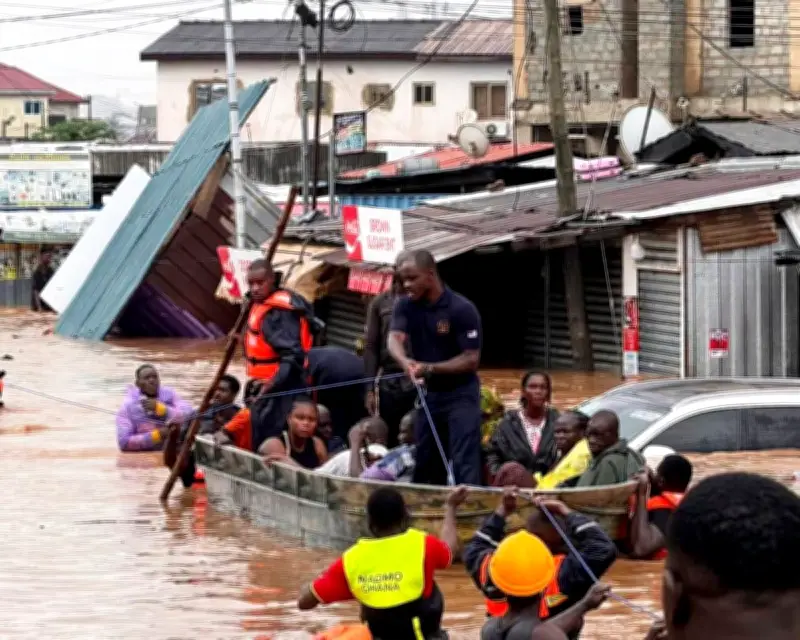
Dozens of people drowned, hundreds had to be rescued and thousands were displaced when floods struck the coasts of West Africa in late June. Now scientists have concluded that the rains that caused the floods were supercharged by climate breakdown. Global heating, they say, turned what should have been a routine weather event into a climate catastrophe.
Devastating Impact Across the Region
From Lagos to Monrovia in Liberia, the overflow inundated neighbourhoods and washed away markets. It submerged roads and swamped infrastructure. At least 34 people died in Ghana. Five died in Togo. In Côte d'Ivoire, 59 have died as a result of floods since May. Over the course of 72 hours, intense rainfall drenched the densely populated coastal regions of Côte d'Ivoire, Ghana, Togo and Nigeria. More than 140mm of rain fell in some cities in less than a day. The deluge overwhelmed drainage systems, triggering a series of flash floods.
Scientific Attribution Study
On Thursday, the World Weather Attribution team said such a deluge was five times more likely in today's climate. Heavy, three-day downpours in the region had increased in intensity by roughly 23% since record-keeping began, they said. To quantify the role the climate crisis had played in the disaster, scientists compared historical weather observations with climate model simulations. They focused specifically on the three most extreme days of rainfall.
Climate Models Confirm Human Influence
Despite climate models often struggling to recreate similar events in regions in the global south, they showed climate change had caused a 4% increase in intensity. The researchers said this made them confident that greenhouse gas emissions had intensified the event. Joyce Kimutai, who researches extreme weather and climate change at Imperial College London, was the lead author on the study. She said: “Climate models typically struggle to capture the full scale of tropical precipitation trends when we look at extreme events like this one. As such, the fact that we found such a role for climate change is significant. Combined with the very wetter trend in the observational-based data, it’s clear that human-caused warming made this event worse, and wetter, with devastating impacts.”
Urgent Need for Adaptation and Emissions Cuts
They also warn that the countries affected must adapt to a frightening new reality. “The climate is changing faster than most nations can adapt,” said Friederike Otto, a professor of climate science at Imperial College London. “Adapting to these now common events is critical, but so is reducing emissions much further and faster, to allow us time to keep up with the changes we’ve already put into motion. Quite simply, until emissions stop these extremes will only grow worse.”
Future Risks and Climate Justice
It will not be long until something similar occurs again, they warned. With the climate 1.4C hotter than before the industrial use of fossil fuels, they expect rainfall of a similar scale to explode above the Gulf of Guinea every two to four years. Kimutai added: “This study is a clear example of the need for international cooperation on climate justice. Industrialised nations have a responsibility to help nations like Togo, Côte d'Ivoire and Ghana to adapt to a worsening problem that they didn’t cause.”




