
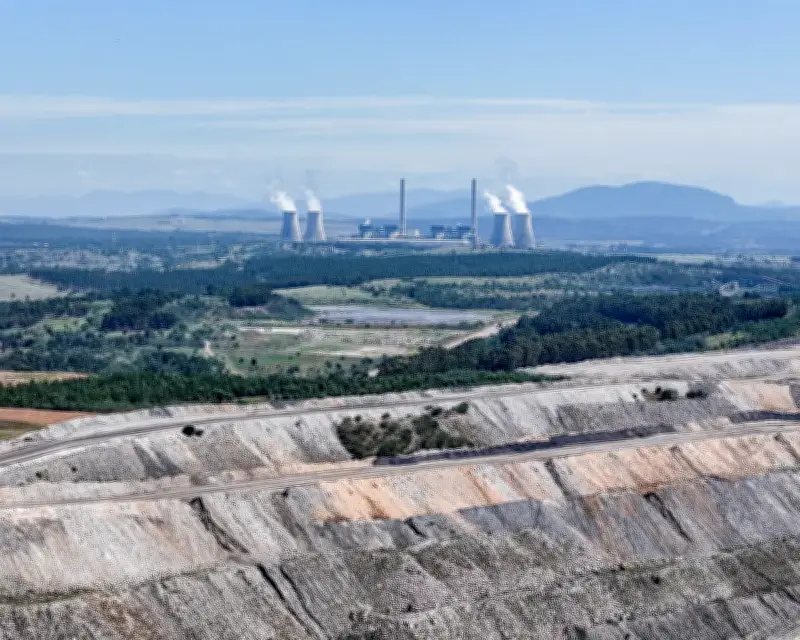
A senior Albanese government climate adviser has challenged the state approval of the largest coalmining development in New South Wales’ history, arguing “climate change isn’t someone else’s problem”.
Matt Kean, the chair of the Climate Change Authority and a former NSW treasurer and energy minister, questioned why the state Independent Planning Commission had not weighed the economic cost of climate change caused by burning the coal from the Hunter Valley Operations mine before giving it the green light to run until 2045.
Commission’s reasoning
The commission said greenhouse gases from the coal mined near Singleton would contribute to climate change impacts that affected the “people, economy and environment of the Hunter region, NSW and globally”, but said those impacts were outweighed by local benefits, including “employment, economic activity, support for local business, ongoing royalties and taxation revenue”.
The decision was applauded by the NSW Labor premier, Chris Minns. In an interview on 2GB radio on Thursday, he said it was “the right decision” and “hugely important” for the state economy. “It props up, and is responsible for, literally thousands of direct and indirect jobs,” he said. “It also produces billions of dollars of royalties for the NSW government.”
Climate costs and warnings
Minns did not mention in the interview the development’s projected climate impact. The mine’s owners, Yancoal and Glencore, forecast it could lead to 809m tonnes of carbon dioxide – nearly double Australia’s annual climate pollution – being released into the atmosphere once the coal is exported and burned.
Kean said the commission had acknowledged the project would contribute to climate change, and evidence that found climate-related disasters could cost Australians at least $73bn a year by 2060. But he said it had not estimated the climate-related economic damage in NSW as it weighed the local costs and benefits of the mine expansion.
He pointed to a recent report by the UN Environment Programme that found the world was heading beyond 1.5C in global heating – a goal agreed in the 2015 Paris agreement – and stressed that costs would increase with “every fraction of a degree of warming”.
“Climate change isn’t someone else’s problem. Australians pay through it through high food prices, damaged infrastructure, disrupted businesses, and lower incomes. The hotter the planet gets, the bigger that bill becomes,” he said.
“This isn’t an abstract environmental issue. Climate change is already imposing economic costs on NSW households and businesses, and those costs rise as the planet gets hotter. For regional NSW, that means greater risks from extreme heat, drought, fire, and other extreme weather, alongside pressure on food production, infrastructure, and household incomes.”
Approval process and next steps
The approval decision follows a protracted assessment that drew more than 10,000 public submissions. Without it, the export mine could have been forced to close in December. The approval was welcomed by Coal Australia and the NSW Minerals Council. The latter urged the Minns government to pass legislation to prevent climate activists challenging it in court.
The mine expansion still needs approval under federal environment law before the end of the year. Climate impacts are not considered grounds to block a development under national legislation.
The Greens called on the Albanese government to rule out approving the extension before the November Cop31 climate summit in Turkey, where the federal climate change minister, Chris Bowen, will lead the negotiations. Anthony Albanese and Bowen will intend a Cop31 preparatory meeting in Fiji next week.
The Greens’ deputy leader, Steph Hodgins-May, said Australia had supported a global transition away from fossil fuels at previous summits but was “contemplating walking into the next summit having just approved a massive fossil fuel project”. “The prime minister should be listening to the Pacific communities on the frontline of the climate crisis,” she said.
Jacynta Fa’amau, a Pacific campaigner with the global organisation 350.org, said the decision was horrifying. “It’s not just the Pacific that will suffer. The science has made it very clear that whether Australia burns its coal at home or overseas, the wildfires, floods and droughts will remain at their front door,” she said.




