
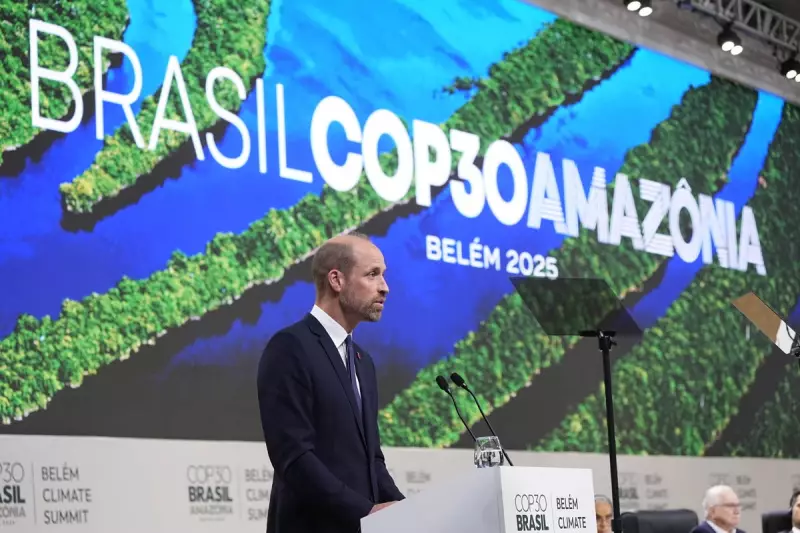
While world leaders gather in Brazil for COP30 climate talks, Britain faces a domestic scandal that threatens both its environmental commitments and food security. The massive scale of food waste across the nation represents what activists call "Britain's quietest scandal" - one that demands immediate attention.
The Shocking Scale of Britain's Waste
Recent data from the Department for Environment, Food and Rural Affairs and waste charity WRAP reveals the staggering extent of the problem. An estimated 10.7 million tonnes of food are discarded each year across farms, factories, shops, restaurants and households. This waste carries a financial burden of approximately £17 billion annually - equivalent to about £1,000 for every typical family of four.
The distribution of responsibility shows households account for around 60% of total waste, while farms contribute nearly one-sixth. Most alarmingly, almost half of all discarded food remains perfectly edible, representing millions of lost meals every single day while food poverty rises across the country.
Environmental Impact and Climate Consequences
The environmental cost of this waste is profound. Wasted food in the UK produces approximately 18 million tonnes of greenhouse gases each year. To put this in perspective, that's equivalent to the emissions from 3.5 million cars or roughly one-tenth of all vehicles on UK roads, according to the RAC Foundation.
This hidden crisis directly undermines Britain's climate commitments at a time when the country positions itself as a global leader in environmental policy. Despite hosting international climate discussions and pledging Net Zero targets, the food waste problem continues largely unaddressed in national climate planning.
A Broken System That Rewards Waste
Taz Khan MBE, founder of London's Community Kitchen, has witnessed the systemic failures firsthand. Through twelve years of operation, his organisation has intercepted surplus food and redistributed it to schools, shelters and community hubs, saving thousands of tonnes from landfill and serving millions of meals.
"What I have seen is not just inefficiency," Khan states. "It is a system that actively incentivises destruction." The problems are multiple and deeply embedded:
- Farmers locked into contracts where destroying crops is cheaper than harvesting them
- Supermarkets maintaining cosmetic standards that reject edible produce
- Government departments commissioning endless reviews without implementing mandatory measurement or redistribution
- Consultancy industries profiting from reports while redistribution hubs operate on near-zero funding
Khan highlights the stark contrast: "The Food Standards Agency enforces strict traceability on every sandwich sold, but when that same sandwich becomes surplus, no system ensures it reaches a hungry child instead of a bin."
Call to Action at COP30 and Beyond
As COP30 discussions unfold in Brazil, Khan and other campaigners demand concrete action. Their proposals include:
- Legislation requiring farm-to-fork waste tracking with public reporting and independent audits
- Commitment from every nation to halve food waste by 2030 as part of Paris Agreement obligations
- Flipping incentives through donor liability protection, tax credits for redistribution, and penalties for destruction
- Redirecting funding from consultancy contracts to community redistribution hubs and infrastructure
The timing is critical. With fewer than 15% of national climate plans under the Paris Agreement even mentioning food waste, this represents what campaigners describe as "a blind spot that borders on negligence."
As Britain grapples with both rising hunger and climate commitments, addressing the food waste scandal becomes not just an environmental imperative but a moral one. The solutions exist - what's needed now is the political will to implement them.