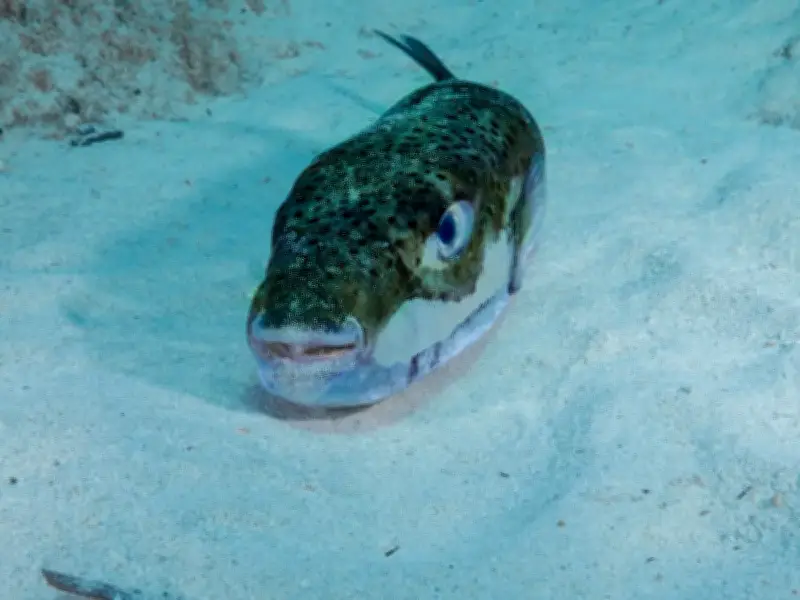
A British tourist was rushed to hospital after being bitten by a toxic pufferfish in the water at Kalamaki, Zante. The woman sought urgent medical treatment at a private clinic after the gruesome bite, initially believing it was a monkfish attack and receiving first aid for the wound.
Invasive species spreads through Mediterranean
The incident comes as a species of toxic pufferfish has spread through the Mediterranean. Officials are urgently implementing extensive sea barriers in a bid to keep the fish away, as the razor-toothed silver-cheeked pufferfish have been spotted across Greece. The latest incident is set to be investigated by port authorities.
Known as Lagocephalus sceleratus, the species is typically found in the Indian and Pacific oceans but is believed to have followed warming seas and swum up through the Suez Canal to the Red Sea. It has been spreading quickly since it was first spotted in 2003.
Fang-like teeth and lethal toxins
The fish has fang-like teeth with the ability to tear through bone, wood and metal, prompting the Greek Red Cross to issue an urgent alert over the invasive species. On top of their bite, the fish’s flesh and organs are potentially lethal, containing the neurotoxic tetrodotoxin, which can cause heart and lung failure if eaten.
An elderly Greek woman was reportedly bitten by the same species of pufferfish in June, after the fish forcefully lunged at her. Just a month before, researchers caught a 52cm hefty male weighing just over a kilo, marking just the fourth recorded catch within the Adriatic and the furthest north discovery, sparking fears the species is travelling deeper into European waters.
Threat to tourism and fishing
Scientists have warned the invasion is a “direct threat to tourism”. Study co-author Dr Neven Iveša said: “This invasive species is known for its aggressive behaviour. With reported cases of bites causing significant injuries. Alarmingly, recent evidence from the southern and eastern Mediterranean shows that these bites can result in severe injuries, such as partial amputation of fingers.”
On top of the risks to swimmers, the predators have caused problems for fishermen by devouring fish, crustaceans and squid and tearing through valuable nets, adding an estimated cost to each fishing boat of around £8,000 a year in damage and lost income.
Dr Iveša, of Croatia’s Juraj Dobrila University, said: “The presence of Lagocephalus sceleratus in the northern Adriatic is a clear warning sign of the species’ expanding range and potential ecological and economic consequences. Proactive monitoring and management strategies are important to mitigating its impact on local marine biodiversity, fisheries, and public safety.”
Dr Iveša added: “Although such cases are rare, they highlight the potential danger this species poses to humans. These risks not only create safety concerns for swimmers, but also threaten the image and appeal of tourist destinations. Potentially leading to economic losses in local tourism and related industries.” Scientists are now calling for the removal of the species during its spawning period.