British Scientists Launch High-Stakes Mission to Probe 'Doomsday' Glacier
In a groundbreaking expedition that combines extreme polar science with urgent climate research, scientists from the British Antarctic Survey (BAS) are preparing to drill into the most remote and poorly understood section of the Thwaites Glacier. This colossal ice formation in West Antarctica, comparable in size to Great Britain, represents one of the planet's largest and most rapidly transforming glaciers.
The Critical Threat of Global Sea Level Rise
Research has established that if the Thwaites Glacier were to collapse, it would trigger a global sea level increase of approximately 2.1 feet (65 centimetres). Such an event would submerge coastal communities worldwide, displacing millions of people and causing unprecedented environmental and humanitarian crises. This dire potential has earned the glacier its ominous nickname: the 'Doomsday Glacier'.
Despite its profound significance, the oceanic mechanisms driving subglacial melting remain largely mysterious. The BAS team aims to change that by deploying specialised instruments directly at the glacier's grounding line—the crucial juncture where the ice detaches from the seabed to form a floating shelf.

An Expedition of Extreme Difficulty and Precision
While BAS has monitored Thwaites since 2018, previous studies concentrated on more stable areas. The current mission targets the treacherous main trunk, riddled with hazardous crevasses. To reach this uncharted territory, researchers embarked from New Zealand aboard the RV Araon, enduring a three-week voyage through the Southern Ocean.
Before setting foot on the ice, the team deployed a remote-controlled vehicle to scan for hidden subsurface fissures. Once a secure location was identified, they conducted over 40 helicopter flights spanning 18 miles to transport all necessary equipment. Now, with just a fortnight to complete their work, the scientists face a race against time and freezing conditions.
Innovative Drilling Technology and Data Collection
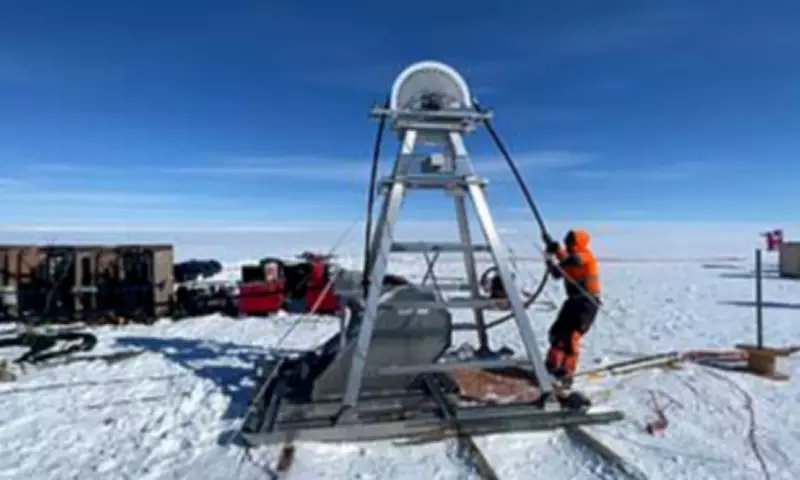
The team will utilise a BAS-developed technique, heating water to around 90°C and pumping it at high pressure through a hose to melt through 3,280 feet (1,000 metres) of ice. This process will create a 30-centimetre-wide borehole, allowing instruments to measure ocean temperatures and currents directly beneath the ice shelf.
Additionally, sediment and water samples will be gathered to reconstruct the glacier's historical behaviour and assess current changes. However, the harsh Antarctic environment means the borehole refreezes every one to two days, necessitating continuous re-drilling.
Expert Insights on a Pivotal Moment for Climate Science
Dr Peter Davis, a physical oceanographer at BAS, emphasised the mission's importance: 'This is one of the most important and unstable glaciers on the planet, and we are finally able to see what is happening where it matters most.' He added that obtaining near-real-time data from beneath the ice shelf near the grounding line is a recent technological breakthrough critical for forecasting sea level rise.
Dr Won Sang Lee, expedition leader from the Korea Polar Research Institute (KOPRI), described the endeavour as 'polar science in the extreme,' praising the collaborative expertise that made the risky venture possible.
Global Implications for Coastal Communities
The data harvested from this mission will refine scientific models predicting the rate of future sea level increases. This information is vital for governments and communities to develop adaptation strategies, offering a crucial window for planning and mitigation. With millions residing in vulnerable coastal zones, understanding the Thwaites Glacier's stability is not merely an academic pursuit but a pressing global imperative.
The Thwaites Glacier, up to 4,000 metres thick in places, has already shown alarming signs of retreat. Since the 1970s, ice discharge from the region has surged by 77 percent, and its grounding line has receded nearly 14 kilometres. As a gateway to the wider West Antarctic Ice Sheet, its collapse could ultimately contribute several metres to global sea levels, underscoring the urgency of this pioneering research effort.