
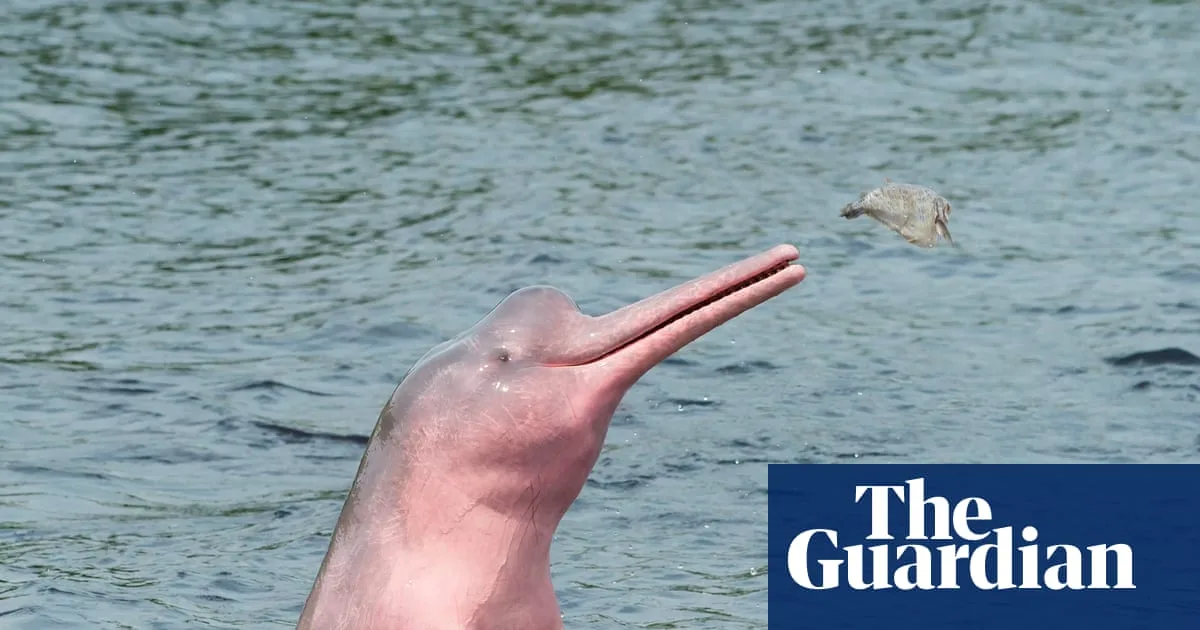
Amazonian lakes have turned into simmering basins hotter than spa baths as severe heatwaves and drought grip the region, new research reveals. Water temperatures in some areas have hit 41C (105.8F), causing mass die-offs of endangered pink river dolphins and fish.
Lake Tefé, which is only two metres deep, reached 41C under intense sunlight and cloudless skies. “We couldn’t even put our fingers in the water. It was really hot, not just in the top bit, but right down to the bottom,” said lead researcher Ayan Fleischmann from the Mamirauá Institute. “You put your finger in and remove it instantaneously, it’s unbearable.”
Floating carcasses of up to 200 river dolphins washed up over six weeks around September 2023. No one in the region had seen such an event in the past century. The incident prompted researchers to investigate other water bodies across the Amazon, finding that half of the ten lakes studied experienced daytime water temperatures above 37C.
Published in the journal Science, the study analysed data from central Amazonian lakes during the 2023 drought. On average, Lake Tefé reaches 30C in the hottest months, but in 2024 it hit 40C. The lakes have been warming by 0.3 to 0.8C per decade over the past 30 years – rates higher than the global average. During the 2024 drought, Lake Tefé lost about 75% of its surface area and Lake Badajós shrank by 90%.
Adrian Barnett, senior lecturer in behavioural ecology at the University of Greenwich, who was not involved in the research, described a 10C increase in water temperature as “unparalleled”. He noted that most fish, dolphins and manatees breed in the low-water season, making 2023 likely a disastrous reproductive year. “If this happens repeatedly, then their populations and those of the species connected to them ecologically will decline severely,” he warned.
Barnett said local solutions are limited: “Something happening at such a huge scale really requires a systems approach – attacking the root cause, which is fossil fuel emissions and global warming itself.”




