
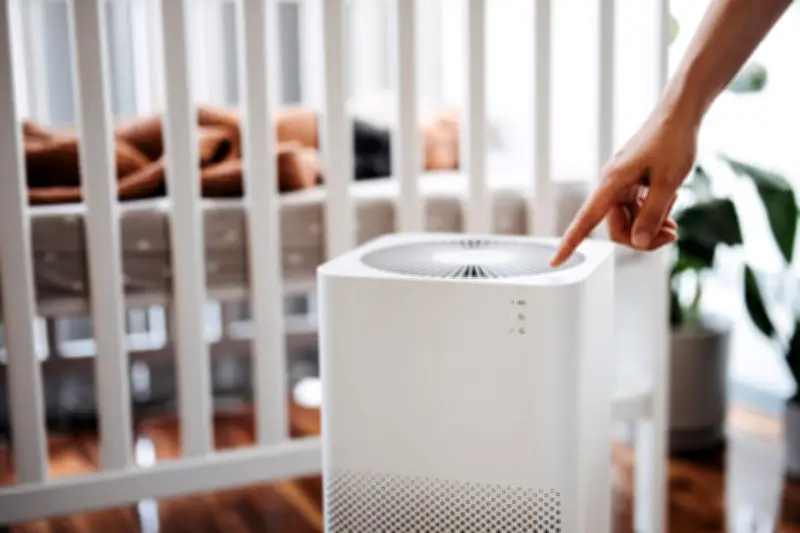
As wildfires burn in Canada and parts of the US, more than 20 states have issued air quality alerts. Local leaders urged people to stay inside as unhealthy air quality levels affected the US midwest and north-east. Air purifiers can be useful when the air outside is unhealthy, but understanding how they work and their limitations is key.
What Does an Air Purifier Do?
Air purifiers are usually portable, mechanical filters that capture particulate matter such as dust and fine particles in the air. Jill Heins, a senior director at the American Lung Association, notes that technically these devices clean the air rather than purify it. Just because air goes through a HEPA filter does not mean it is free of viruses, bacteria, and other germs. Most at-home devices may capture viral particles but generally do not kill them unless they also use germicidal UV light or other technology.
According to Jienan Li, a research scientist specializing in indoor air quality at Colorado State University, outdoor air pollutants can influence indoor air chemistry, making the air less healthy. Indoor air pollution can exacerbate asthma and other respiratory issues, and lead to sick building syndrome, with symptoms like fatigue, headache, and nausea.
Who Needs an Air Purifier?
Air purifiers are most important for people sensitive to particles due to asthma, allergies to pollen or dust, or cardiovascular issues, as well as children, pregnant people, and the elderly. However, at an Air Quality Index of 150 or higher, everyone should consider using an air purifier, says Li. The US market for air purifiers is anticipated to more than double from $2.8bn in 2022 to $4.78bn by 2030.
How Does an Air Purifier Work?
The components are simple: a fan draws in air and pulls it through one or more filters. The gold standard is a HEPA filter, which can remove 99% of particles as small as 0.3 microns, including dust, pollen, pet dander, and some bacteria. Some air cleaners also include carbon filters effective at removing odors, gases, and volatile organic compounds (VOCs). Some devices have add-ons like germicidal UV or ionizers, but ionizers create ozone gas and have fallen out of favor.
The effectiveness depends on the type of filtration, the size of the unit relative to the room, and its clean air delivery rate (CADR), which measures how much air the system can filter per minute. Proper maintenance, such as regular filter changes, is essential. Heins advises checking the cost of replacement filters before purchasing, as they can sometimes be as expensive as the device itself. Use air cleaners with regular cleaning and at least 10 minutes of ventilation daily if outdoor air quality is safe.
Air Purifier vs. HVAC System
Air cleaners target finer particles than HVAC systems and can improve air quality. Li recommends one air purifier per floor in a house, checking the CADR to ensure it can handle the space. In smaller apartments, one unit may suffice, moved to the room where you spend the most time.
When to Use an Air Purifier
You can use an air purifier as much as you like. To be judicious with energy use, track the Air Quality Index daily and use it when the index reaches about 100 or higher (orange zone). Air purifiers do not use a lot of energy, though total cost depends on wattage, setting, and energy costs. Some devices have built-in particulate matter sensors that start filtration when PM2.5 levels are high, but these sensors do not target ozone, CO2, or VOCs.
Heins says the American Lung Association does not recommend routine testing of home environment for more than carbon monoxide and radon, both monitored via long-term detectors. Some companies offer continuous indoor air quality monitoring systems that test a wide range of pollutants and provide feedback to a phone app, but these can be expensive and unreliable.
Cost of a Good Air Purifier
A good air purifier can cost from $150 to $1,500, according to Heins. An excellent single-room unit can be found for under $300. A homemade Corsi-Rosenthal box can effectively and inexpensively clean air, using four or five MERV13 filters taped into a cube with a box fan. A 2022 study found a five-filter Corsi-Rosenthal box had a CADR of 600 to 850 cubic feet per minute.
Maintaining Good Indoor Air Quality
Heins advises not burning things indoors, including cigarettes, vaping materials, fireplaces, candles, or natural gas for appliances. Air quality drops when cooking with gas; use an exhaust fan and open a window if outdoor air is safe. Fragrance chemicals in cleaners and personal care products can affect indoor air quality; choose products free from harmful compounds. Regular dusting and vacuuming removes dust particles and pet dander, especially during wildfires when harmful polycyclic aromatic hydrocarbon (PAH) particles can settle on surfaces.




