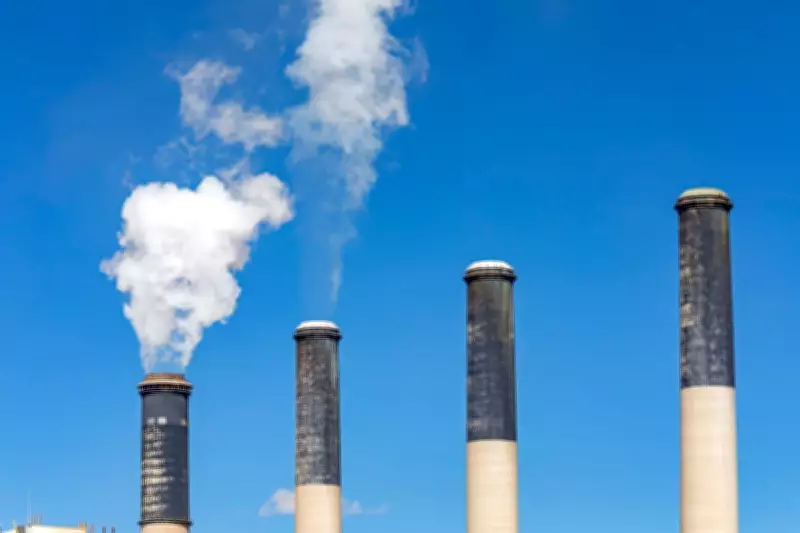
US AI Boom Fuels Record Gas Power Surge, Threatening Climate Goals
The United States is spearheading an unprecedented global expansion of gas-fired power generation, a trend largely propelled by the soaring energy demands of artificial intelligence datacenters. According to a new forecast by Global Energy Monitor (GEM), this record-breaking boom is set to inflict significant costs on the climate, with planned projects potentially emitting billions of tonnes of carbon dioxide over their operational lifetimes.
Record Gas Capacity Set to Triple Globally
This year is poised to shatter annual records for new gas power additions worldwide. Projects earmarked for 2026 are expected to nearly triple the existing global gas capacity, as detailed in GEM's report. The US is at the forefront of this surge, having tripled its planned gas-fired capacity in 2025 and now accounting for nearly a quarter of all global gas capacity in development.
Following the US, the leading countries in this expansion include China, Vietnam, Iraq, and Brazil. Notably, China, the world's largest carbon emitter, installed 22.4 gigawatts of gas capacity last year, marking its highest single-year addition ever.

AI Datacenters Drive Massive Energy Demand
Much of this new gas capacity is dedicated to powering the vast electricity needs of artificial intelligence. Approximately one-third of the 252 gigawatts of gas power currently in development is slated to be situated on-site at datacenters. This growth has been enthusiastically promoted by former President Donald Trump, who vowed to sweep away regulations to accelerate datacenter build-out and ensure US leadership in AI.
However, the proliferation of datacenters has already led to increased greenhouse gas emissions and heightened electricity demand, resulting in higher power bills for many Americans. Experts warn that electricity demand in the US could surge by 60% by 2050 due to new datacenters, exacerbating cost pressures.
Substantial Climate and Economic Impacts
If all US gas projects in development are completed, they are projected to produce 12.1 billion tonnes of carbon dioxide emissions over their lifetimes. This staggering figure is double the current annual emissions from all sources in the United States. Globally, the planned gas boom could result in 53.2 billion tonnes of emissions, pushing the planet toward more severe heatwaves, droughts, floods, and other climate disruptions.
Jenny Martos, project manager at GEM's oil and gas plant tracker, cautioned, "Locking in new gas plants to meet uncertain AI energy demand means hard-wiring decades of pollution into a gambit that could be solved with flexible, clean power." She added, "As the AI bubble inflates, the US must decide whether it will double down on a fossil future while the rest of the world pivots to renewables."
Regional Hotspots and Local Backlash
Texas stands as the epicenter of this boom in the US, with 57.9 gigawatts of new gas power underway last year, followed by Louisiana and Pennsylvania. In 2026, new gas additions are expected to surpass the annual record of 100 gigawatts set in 2002.
Specific projects highlight the scale of this expansion. For instance, tech giant Meta is planning a $1.5 billion datacenter in El Paso, Texas, powered by gas. Meanwhile, in western Pennsylvania, a shuttered coal plant is set to be resurrected as the largest gas-fired facility in the US to service a datacenter campus at the Homer City site, about 50 miles east of Pittsburgh.
This plan has divided local communities. Tom Pike, director of campaigns at the Clean Air Council, noted, "The coal plant was an environmental monstrosity, but it was a pillar of the local economy and some people are nostalgic for that. But no one wants to live next to a datacenter. The ammonia, and the smell of that, from gas will be worse than the coal plant, and the power generated will be used in service of private profit rather than keep households' lights on."
Pike further warned, "There's no way it won't impact power prices, either. There is tremendous public concern about this plan." A grassroots backlash against datacenters over rising power bills and excessive water use has already halted some projects, creating political challenges for proponents.

Policy and Future Implications
The administration's actions, including blocking clean energy projects and escalating liquefied natural gas exports, have contributed to higher energy prices for American households. Domestic gas prices rose last year and, after a static period in 2026, are forecast to surge again next year.
Steve Clemmer, director of energy research at the Union of Concerned Scientists, emphasized, "Frenzied datacenter growth with little transparency or guardrails puts the public at risk of massive cost increases." Despite Trump's recent promises that big tech companies will "pay their own way" for new infrastructure, detailed plans remain scarce.
In a speech in Davos, Switzerland, Trump conceded, "I said, You can't create this much energy. We needed more than double the energy currently in the country just to take care of the AI plants, and I said we can't do that." Nonetheless, the datacenter juggernaut shows little sign of slowing, raising urgent questions about the balance between technological advancement and environmental sustainability.