
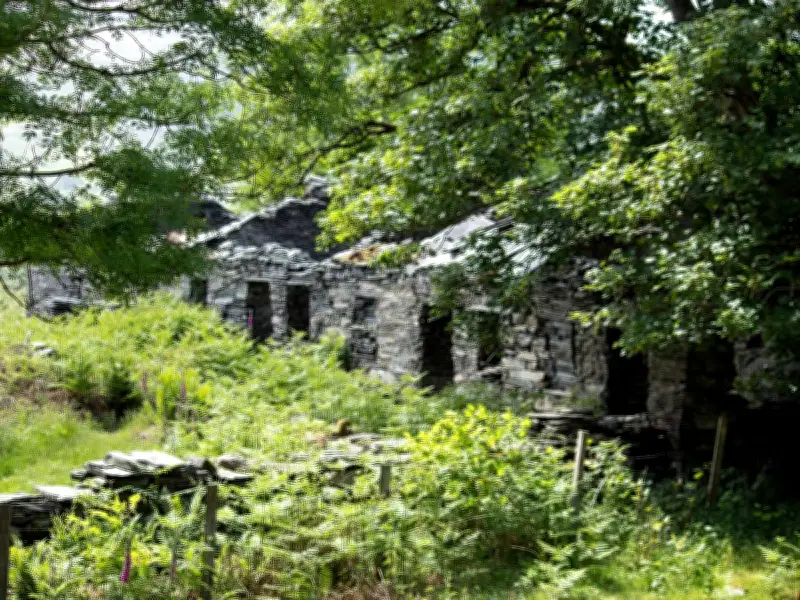
The abandoned village of Talysarn in Gwynedd, North Wales, once a bustling community of 2,000 people, now lies completely overgrown with moss and vegetation. The residents were relocated in 1927 due to the expansion of the nearby Dorothea Quarry slate mine, leaving their homes to be reclaimed by nature.
History of the Village
Throughout the 19th century, the slate mines provided vital income for thousands across Wales. As the quarries expanded, the village grew alongside them. However, by 1927, authorities decided to move thousands of residents to a new village built from scratch. The old village was left to decay.
By the 1840s, Dorothea Quarry produced 5,000 tonnes of slate annually. By the 1870s, output surged to over 17,000 tonnes. Despite this success, the quarry faced severe flooding. In 1884, several men died when the pit flooded. In response, the river was realigned and a Cornish beam engine was installed to replace waterwheels. The engine still stands today as one of the village's most impressive sights.
Ruins and Attractions
Another focal point is the 18th-century hall, untouched since 1946, now covered in ivy and graffiti. The site has become popular with explorers and walkers eager to see the overgrown ruins. It is part of the UNESCO Slate Landscape of Northwest Wales World Heritage Site.
Wild Guide Wales author Daniel Start compared the ruins to a Welsh Angkor Wat, saying, "Only the baboons are missing. It's a vast, wild site with many fascinating, overgrown ruins."
The quarry closed in 1970 and has since flooded, creating a lake over 100 meters deep in some areas. Photographer Tony Harnett of Gems of Snowdonia said, "I didn't expect to find so many old buildings. I could easily have stayed for the whole day."




