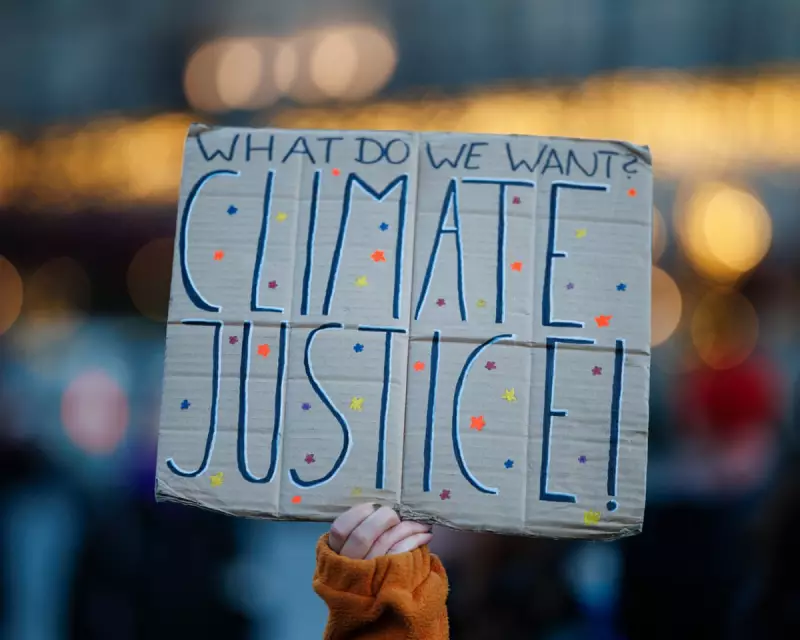
The year 2025 has proven to be a watershed moment for climate justice, with a series of landmark legal rulings forcing both governments and major corporations to fundamentally alter their environmental plans. This surge in successful climate litigation, marking a decade since the historic Paris Agreement and the pioneering Urgenda case in the Netherlands, has established a powerful new legal framework for holding polluters accountable and demanding faster climate action.
Courtroom Battles Halt Major Fossil Fuel Projects
The year began with a seismic ruling in the UK. The Scottish Court of Session declared the government's approval of the Rosebank and Jackdaw North Sea oil and gas fields illegal. The court found the decision flawed because it failed to account for the greenhouse gas emissions produced when the extracted fuels are ultimately burned. This judgment leaned heavily on a 2024 Supreme Court precedent set by campaigner Sarah Finch.
This legal precedent had an immediate domino effect. It led the High Court to revoke planning permission for a new coal mine in Whitehaven, Cumbria, prompting the developer to withdraw its plans entirely. While new government guidance was issued in June, the door remains open for further legal challenges if projects like Rosebank, which had a revised assessment published in October, are re-approved.

Similar victories were seen globally. In Brazil, sustained legal pressure from civil society groups led coal company Copelmi to formally abandon plans for the massive Nova Seival plant and Guaíba mine in February 2025. In Kenya, a decade-long legal battle culminated in October with the environment court upholding the revocation of a licence for a coal power plant in Lamu, citing a flawed environmental assessment.
Cracking Down on Corporate Greenwashing
Courts worldwide took a firm stance against misleading environmental marketing, a practice known as greenwashing. In a significant Australian case, EnergyAustralia settled a lawsuit in May brought by the group Parents for Climate. The utility acknowledged that carbon offsets do not prevent climate damage and apologised to 400,000 customers, marking the country's first successful case against a company for marketing itself as carbon neutral.
In Europe, a Frankfurt court ruled in August that Apple could not label its Apple Watch as 'carbon neutral', agreeing with claims that its offsetting scheme involving Paraguayan forestry leases was insufficient. Shortly after, tech observers noted Apple had quietly dropped the claim globally. Meanwhile, in France, the Paris judicial court found TotalEnergies had made false claims in its 'reinvention' campaign, misleading consumers about its path to net zero while continuing fossil fuel production.
The trend continued in the US, where New York secured a $1.1m settlement from meat giant JBS's US arm in November over misleading climate claims. Soon after, Tyson Foods agreed to stop marketing its beef as 'climate friendly' and to drop its 2050 net zero claim to settle a separate greenwashing lawsuit.
Legal Precedents Reshape Government Obligations
The legal pressure extended directly to national governments. Following a High Court ruling that its previous strategy was unlawful, the UK government published a revised and more robust Carbon Budget Delivery Plan in October 2025. The new plan reaffirmed commitments to decarbonise electricity by 2030 and set out specific measures across the economy, though campaigners warn further legal action is possible.
Internationally, two landmark advisory opinions in July 2025 from the Inter-American Court of Human Rights and the International Court of Justice powerfully affirmed state duties to protect the climate. These opinions are already being cited in lawsuits worldwide, strengthening the legal basis for climate action.
In a pivotal German case, while a claim by Peruvian farmer Saúl Luciano Lliuya against RWE was rejected, the court's acknowledgment of potential liability for emissions set a crucial precedent. This directly inspired a new claim later in the year by Pakistani farmers against two major German polluters.

Other notable victories included the annulment of a major New South Wales coalmine expansion in July due to unassessed emissions, and a settlement in Hawaii where the state agreed to create a zero-emissions transport roadmap by 2045. Finally, in November, a Norwegian appeals court declared licences for three North Sea oilfields illegal, giving the government six months to rectify the situation.
Collectively, these thirteen cases from 2025 demonstrate a powerful and accelerating trend: the courtroom has become a decisive arena in the fight for climate accountability, compelling tangible action from both the boardroom and the halls of government.