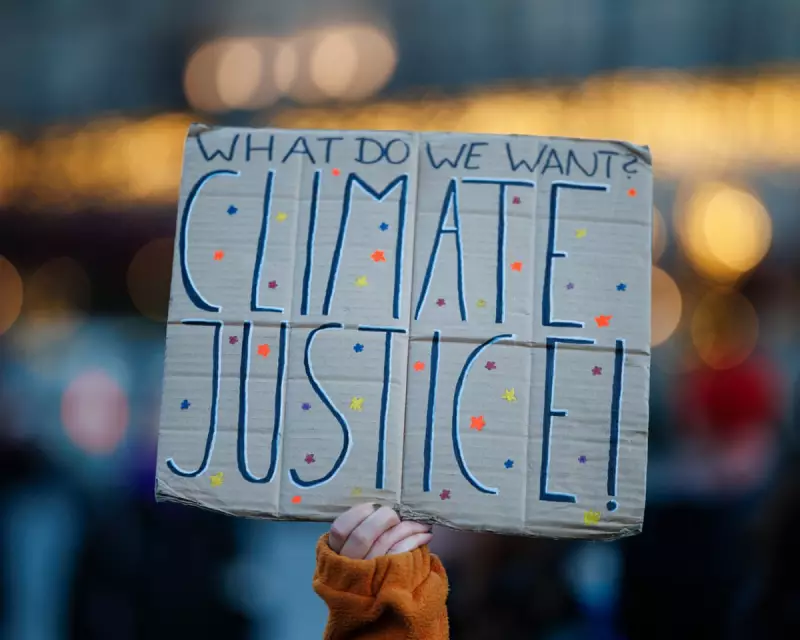
The year 2025 has proven to be a watershed moment for climate justice, with courts around the world delivering a series of powerful rulings that are forcing tangible changes on governments and corporations. This surge in successful climate litigation marks a decade since the landmark Urgenda case in the Netherlands, which first ordered a state to accelerate its emissions cuts. Over the past twelve months, this legal architecture has been solidified through decisive actions against greenwashing, illegal fossil fuel approvals, and inadequate climate plans.
Fossil Fuel Projects Halted and Ruled Illegal
The year began with a significant blow to the UK's energy strategy. The Scottish Court of Session ruled that the government's approval of the Rosebank and Jackdaw oil and gas fields was illegal. The judgment found that ministers had failed to account for the greenhouse gas emissions from burning the extracted fuels, a principle established in the 2024 Supreme Court ruling in the Sarah Finch case. This same logic led to the collapse of plans for a new coalmine in Whitehaven, Cumbria.
In a parallel victory overseas, plans to build Brazil's largest coal plant were formally scrapped in February. After years of campaigning and a 2022 court suspension of its licences, the coal company Copelmi withdrew its proposal for the Nova Seival plant and Guaíba mine, deeming the project unfeasible.

Further north, a Norwegian court delivered another critical verdict in November. The Borgarting Court of Appeal declared licences for three North Sea oilfields—Breidablikk, Yggdrasil, and Tyrving—illegal because they were approved without proper consideration of their full climate impacts. The court gave the government six months to rectify the licences, though it stopped short of halting production immediately.
Corporate Greenwashing Claims Unravel in Court
Corporations found their environmental marketing under intense legal scrutiny in 2025. In a landmark Australian case, EnergyAustralia settled a greenwashing lawsuit brought by the group Parents for Climate. The utility acknowledged that carbon offsets do not prevent climate damage and apologised to 400,000 customers, marking the country's first successful case against a company for marketing itself as carbon neutral.
In Europe, a Frankfurt court ruled that Apple could not market its Apple Watch as 'carbon neutral'. The court agreed with the NGO Deutsche Umwelthilfe that the claim, based on soon-to-expire forestry leases in Paraguay, was misleading. Apple subsequently scaled back the claim globally.
The pressure continued in France, where the Paris judicial court found TotalEnergies had made false claims about its climate goals in its 'reinvention' campaign. The court ruled that suggesting the company could reach net zero by 2050 while continuing fossil fuel production was likely to mislead consumers.
The trend extended to the food sector. In New York, JBS USA agreed to a $1.1m settlement over misleading claims about its emissions reductions. Soon after, Tyson Foods agreed to stop marketing its beef as climate-friendly and claiming it would reach net zero by 2050 to settle a separate greenwashing lawsuit.
Governments Forced to Strengthen Climate Ambition
Legal action has also compelled governments to bolster their climate policies. Following a High Court ruling that its previous plan was unlawful, the UK government published a revised carbon budget and growth delivery plan in October. The new strategy reaffirms commitments to decarbonise electricity by 2030 and drastically cut emissions by 2037, with detailed measures across key sectors.
In a historic settlement from 2024 that saw implementation this year, Hawaii delivered its 'energy security and waste reduction plan' in October. This roadmap, born from a lawsuit by 13 young people, aims for zero emissions across all ground, sea, and inter-island air transport by 2045, featuring investments in electric vehicles and public transport.

The legal landscape was further defined by two landmark international advisory opinions in July. The Inter-American Court of Human Rights established a human right to a healthy climate, and the International Court of Justice stated countries must prevent climate harm or face compensation claims. These opinions are already being cited in lawsuits worldwide.
Precedents Set for Future Climate Accountability
Other rulings have opened new avenues for holding polluters accountable. Although a German court rejected Peruvian farmer Saúl Luciano Lliuya's case against RWE, it set a crucial precedent on polluter liability for emissions. This paved the way for a new claim by Pakistani farmers against two major German polluters later in the year.
In Kenya, a decade-long legal battle culminated in October with the environment court upholding the revocation of a licence for a coal power plant in Lamu. The court cited a flawed environmental assessment, including a lack of proper public participation and climate impact analysis.
Similarly, in New South Wales, approval for the state's largest coalmine expansion was annulled in July because the planning commission failed to account for the 'scope 3' emissions generated when the exported coal is burned overseas.
Collectively, these thirteen cases from 2025 demonstrate that climate litigation has evolved from a niche tool into a powerful force reshaping global environmental policy and corporate behaviour. The courts are increasingly mandating that climate promises are backed by credible, science-aligned action.