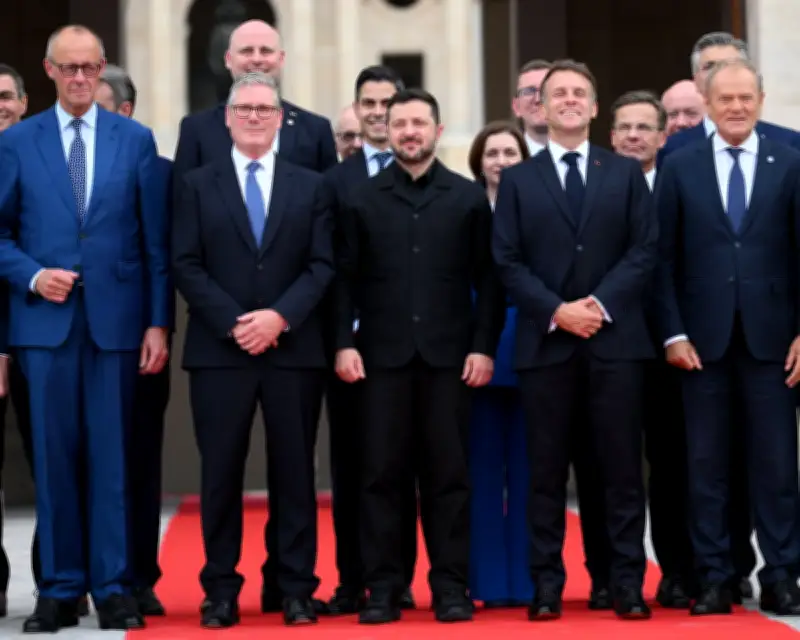
Ukraine and nine other countries, including the UK, Germany, and France, have announced a joint initiative to develop a shared European anti-ballistic missile defence programme, drawing on Kyiv's experience in countering Russia's full-scale invasion. The declaration was made on Monday as leaders gathered in Paris for talks with Ukrainian President Volodymyr Zelenskyy.
Joint Statement and Goals
“Our goal is to build a shared ballistic missile defence capability for Europe,” the 10 nations stated in a joint communiqué. The coalition, which also includes Denmark, Italy, the Netherlands, Sweden, Norway, and Spain, recognized “the growing threat posed by ballistic missiles,” which are more difficult to intercept than cruise missiles or drones. The programme aims to create “an integrated missile defence architecture, to deter and neutralise future missile threats,” according to the statement. The nations acknowledged “Ukraine’s unique experience, gained through its defence against the war of aggression waged by Russia.” However, no specific timeline for the anti-ballistic programme was provided.
UK Joins EU Loan for Ukraine
In a related development, the UK signed on to participate in the European Union's €90 billion (£77 billion) support loan for Ukraine. This move will allow British companies to supply more weapons funded by the loan. British Prime Minister Keir Starmer emphasized the importance of the agreement, stating, “This agreement will help ensure Ukraine gets the support it needs to defend itself against Russian aggression, while backing British defence companies, supporting skilled jobs and strengthening our national security.” According to a joint statement from London and Brussels, Britain will provide “a fair and proportionate contribution to the costs arising from borrowing, commensurate with the value of contracts awarded to UK companies.”
Macron's Call for Unity and Military Exercises
French President Emmanuel Macron also announced that the Multinational Force for Ukraine, which would be deployed in the event of a ceasefire between Ukraine and Russia, will conduct exercises in neighbouring countries in the coming months. These exercises aim “to validate our deployment plans and demonstrate that we are ready, determined and credible,” Macron said. He also cautioned European nations against pursuing go-it-alone national defence policies, warning that fragmentation undermines collective security. “Every time we create fragmentation, we may feel good in the moment, but we are creating the delays of tomorrow. Every time we pander to nationalism, in France or elsewhere, we misunderstand our own history. Patriotism, yes; nationalism, never,” Macron declared in his annual address to the French armed forces.
Zelenskyy's Urgent Appeal for Air Defences
Zelenskyy arrived in Paris seeking to accelerate European efforts to bolster Ukraine's air defences before winter, when Russia typically intensifies attacks on energy infrastructure to cut off electricity, heat, and water. He urged European leaders to join in developing countermeasures against Russia's missile strikes, which have devastated Ukraine and raised concerns across Europe about Moscow's broader ambitions. The Ukrainian president was also expected to meet national security advisers and defence companies that could contribute to the programme.
EU Loan Disbursement and Ukraine's Progress
Last month, the EU began disbursing the two-year loan to Ukraine, with an initial €6 billion allocated to boost drone production for Kyiv's forces. The funds come at a critical time as Ukraine appears to be turning the tide in the nearly four-year war, stabilising the front line and striking deep inside Russia. The latest initiatives underscore a push for closer cooperation between the EU and the UK since Britain left the bloc in 2020.