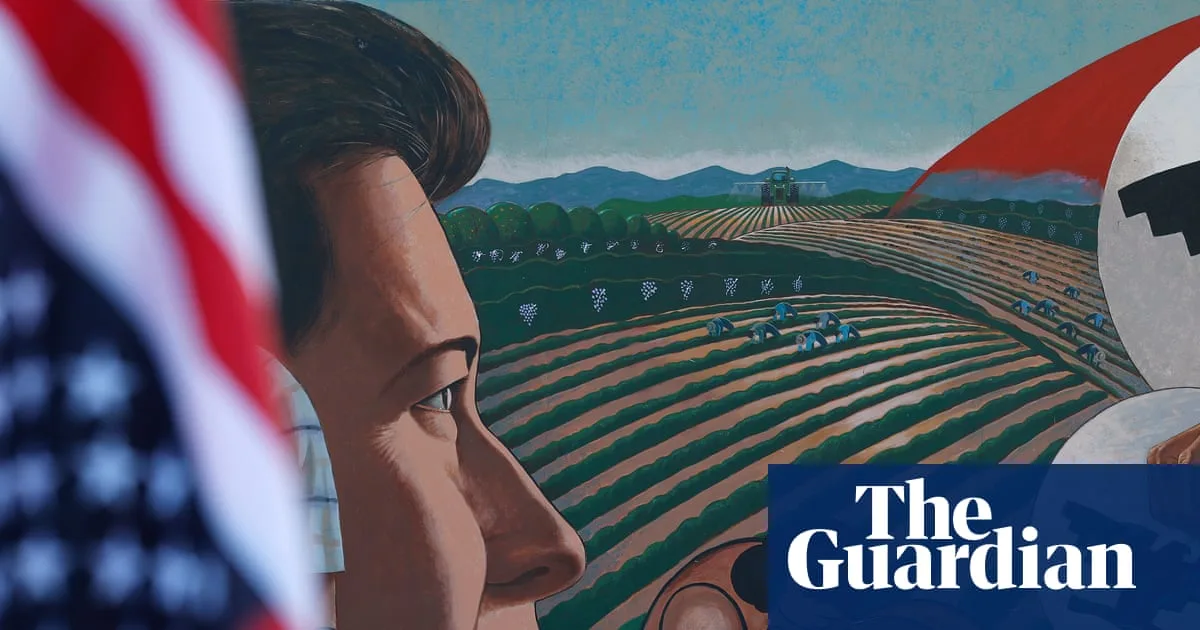
In the wake of explosive allegations that famed labour leader Cesar Chavez sexually abused women and girls from the 1960s to the 1980s, Latino leaders and historians are grappling with his tarnished legacy and the perils of building a movement around a single person. The New York Times investigation detailed decades of abuse by Chavez against Dolores Huerta, a co-founder of the United Farm Workers (UFW), and girls as young as 13. Huerta, now 95, said she kept the abuse secret for more than 60 years because she feared it would harm the movement she considered her life's work.
Chavez, who organised farm workers and fought for Latino civil rights, has often eclipsed the movement he galvanised. Dozens of public spaces bear his name, and a federal commemorative holiday celebrates his birthday. As legislators in California, Texas and Arizona began painting over murals and renaming streets, schools and a state holiday dedicated to the late union organiser, the conflation of Chavez's image with the fight for farm worker rights has come under scrutiny.
Manuel Pastor, a professor at the University of Southern California, said: “We tend to focus on individuals as stand-ins for social trends or social movements. In part it’s that Latinos were unrecognised in US history that, when one recognisable figure emerged, a lot of hopes got pinned on him.” David Meyer, a sociology professor at the University of California, Irvine, added that charisma is less a personality trait than the “relationship between a person and a constituency that’s underrepresented”.
Historian Christian Paiz noted that the veneration of Chavez can be partly attributed to the fact that most books on the movement have been written by white people, sidelining the contributions of rank-and-file members, including women and Filipino farm workers who engineered the 1965 Delano grape strike. “Almost every book has been on Chavez, whether he’s a saint or an authoritarian leader,” Paiz said.
Scholarship from the past two decades has triggered a reevaluation of Chavez's image, delving into his authoritarian management of the union, his purging of rivals, and his vile rhetoric against undocumented workers, some of whom he reported to federal immigration authorities. By the mid-1970s, Chavez's influence on the farm worker movement had diminished significantly.