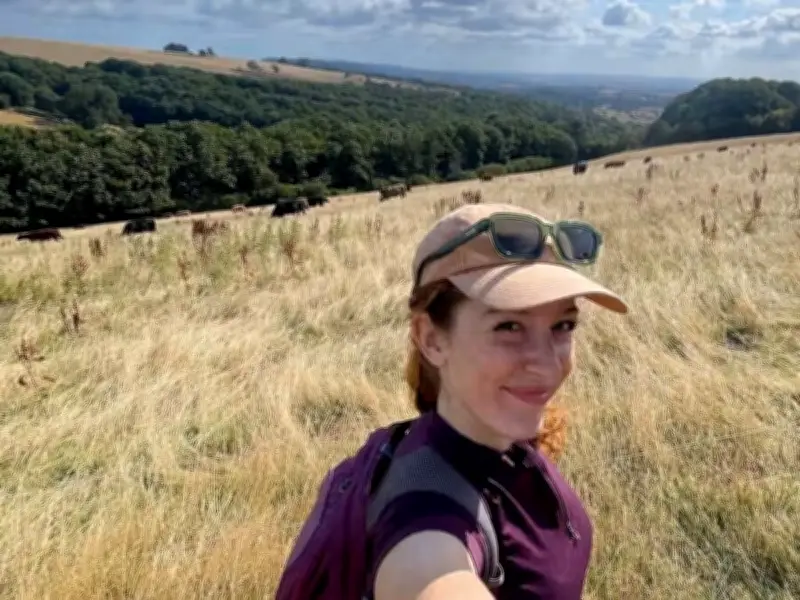
Walking specialist Holly Robertson, who works for walking holiday provider Celtic Trails, has shared her top seven practical tips for anyone looking to walk parts of the 84-mile-long Hadrian's Wall Path this summer from Wallsend to Bowness-on-Solway on the Cumbrian coast. Robertson aims to encourage more people to take up solo walking, stating it is far safer than people think, yet many avoid it for fear of judgement.
Robertson's Walking Experience
In March, Robertson, who lives in Hertfordshire, completed the Coleridge Way in Somerset with her father, a 51-mile walk through the Quantock Hills and Exmoor. A month later, she tackled the Great Glen Way in the Scottish Highlands, a 73-mile route from Fort William to Inverness, with her partner. While long walks with others can be rewarding, Robertson initially felt apprehensive about walking alone.
"As a woman, there is always that thought in the back of your mind saying 'is this safe?" she said. "But as long as you take safety precautions you’re unlikely to run into any issues. I don’t actually encounter lots of people on my solo walks, but those I do meet are very approachable. People come and talk to you and the vast majority you meet out there are genuinely friendly."
Tip 1: The Insole Test
Robertson advises the 'insole test' to ensure boots fit properly. "Start by removing the insoles of your walking boots and standing on them. You should aim to have between 1cm - 2cm distance between your big toe and the top of the edge of the insole. If your toe reaches or hangs over the edge of the insole, it's worth investing in a bigger pair of boots." She warns that ill-fitting boots can cause blisters or bruised toenails on longer walks.
Tip 2: Pack Smart
Robertson emphasizes avoiding over-packing. "Don't try to pack too much, aim to stick to the essentials. I always bring a first aid kit, enough layers, plenty of water and a portable phone charger. There’s the temptation to carry lots of extra items, but the more weight you carry, the harder the walk becomes, and the less you’ll enjoy it."
Tip 3: Save Maps Offline
She recommends downloading offline maps via apps like OS Maps or Komoot. "In my experience phone signal on remote routes tends to be unreliable. Having the map cached locally gives me the confidence that I’m on the right track."
Tip 4: Have an Accountability Partner
For solo walks, Robertson suggests informing a friend or family member of your route and expected arrival time. "I send a quick message to a friend or family member before setting off saying that I'm doing X route and should be at Y by a certain time. It costs nothing and provides real reassurance if you’re walking alone. You can also share your location on 'Find My' on iPhone, but remember your location accuracy will depend on how good your signal is."
Tip 5: Walking Poles Aren't Cheating
Robertson advises investing in walking poles, especially for older walkers or those new to longer distances. "Despite what some may say, using walking poles isn’t cheating. I use a pair of Leki walking poles, which are on the pricier side, but you can pick up a pair for as little as £20. They really do make a difference to how you feel by the end of the day, and are really helpful on descents."
Tip 6: Use the 'Rest Step' Technique
For uphill sections, Robertson recommends the 'rest step' to reduce leg fatigue. "Start by moving your forward foot up to a solid position on the incline. As you plant your forward foot, straighten your rear leg that is still on the ground and lock your knee. Then relax the muscles in your upper body and the leg that isn’t locked. Then repeat the motion with the other leg to continue moving upwards." This technique shifts tension from the quads and helps regulate heart rate.
Tip 7: Don't Worry What People Think
Robertson encourages walkers to ignore social media comparisons. "Try not to compare yourself to other people and ignore the noise you see on social media. It can feel difficult to get started, but starting off with small distances can really help build your confidence. Walking doesn't have to be extreme to be rewarding." She adds, "When you stop and look back along the route you have just walked, that feeling is hard to describe."