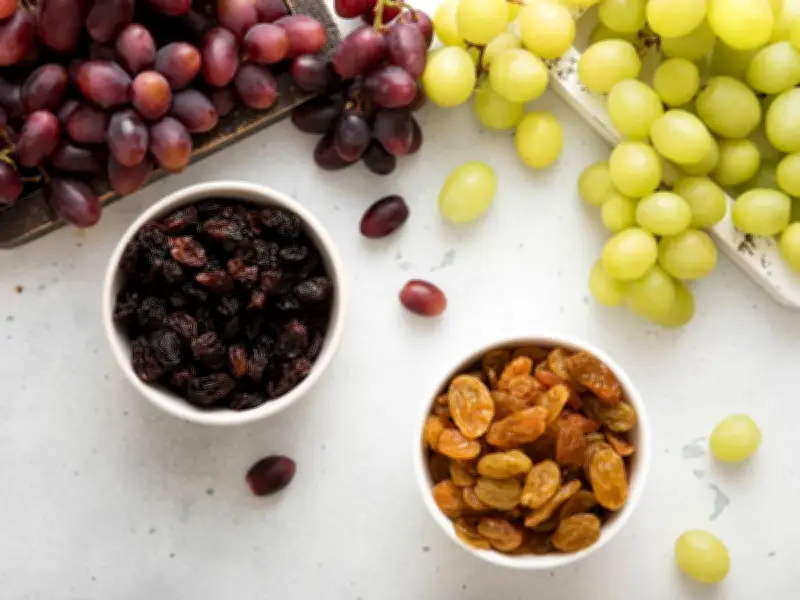
Raisins and sultanas are both dried grapes, but they differ in colour, texture, sweetness, and culinary applications. Raisins are made from larger, darker grape varieties and are typically sun-dried or dehydrated, resulting in a dark, rich colour, chewy texture, and caramel-like flavour. They are commonly used in baking, cereals, flapjacks, and savoury dishes like tagines or rice pilaf.
What Are Sultanas?
Sultanas come from green, seedless grapes and undergo a faster drying process, often being coated in an oil-based solution to retain moisture and a lighter colour. They are smaller, sweeter, and juicier than raisins, with a pale golden tone. Sultanas are ideal for cakes, scones, hot cross buns, and fruit loaves.
Currants: A Different Dried Fruit
Currants, though often grouped with raisins and sultanas, are made from small, seedless Black Corinth grapes. They are much smaller and have a sharper, more intense flavour, making them perfect for Christmas pudding and fruit cakes.
According to Sophie Harris and Isobel Pankhurst of What's On, knowing these differences helps choose the correct dried fruit for recipes where texture and sweetness matter.