
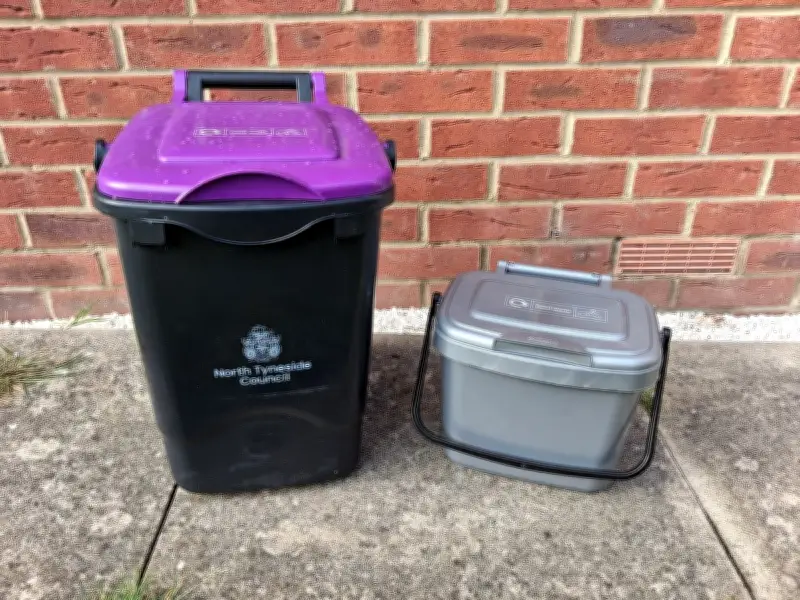
Food waste collections are starting in North Tyneside in August, with thousands of householders set to benefit from a free weekly collection. The service, run by North Tyneside Council, will operate alongside regular household waste and recycling collections and will be introduced through a phased rollout.
Phase one begins August 17
Phase one will commence in the week starting August 17, 2026. Residents in the areas included in this phase have already started receiving the bins they will need. Exact start dates and locations for each phase will be confirmed and communicated to residents in advance, the council says.
Why the service is starting
North Tyneside Council says: "The new service is being introduced as part of the Government’s Simpler Recycling Reforms. These are designed to increase recycling and we are required by law to introduce this service."
Cost and bins
The service will be free. Each household will receive a 5-litre caddy for kitchen use and a 23-litre kerbside caddy with a lockable lid for outside. Residents in communal properties will get a 5-litre caddy and a shared 140-litre or 240-litre external bin in the communal bin store. The council has already been delivering caddies and containers to households in the first phase, along with a roll of caddy liners.
Phase one areas
Around 32,000 households are included in phase one, covering Annitsford, Burradon and Camperdown, parts of Killingworth, Benton, Holy Cross, Forest Hall and Palmersville, parts of Backworth, northern and western parts of Whitley Bay, Monkseaton, a large part of North Shields, Battle Hill and Hadrian Park, parts of Wallsend, and parts of Howdon and Rosehill.
Why phased rollout
The council explains: "Food waste collection is a new service that requires specialist vehicles, crews, containers, and processing capacity. While it is part of a national initiative, funding and infrastructure mean it will be introduced in phases. A phased rollout allows us to deliver the service efficiently and responsibly."
The wards in phase one were selected based on operational requirements, including collecting food waste on the same day as existing waste and recycling collections. Four collection rounds were chosen to provide a balanced geographical spread while avoiding areas with higher recycling contamination rates where possible. A mix of residential property types was included to help establish effective arrangements ahead of phase two.
What to put in your caddy
You can put all types of food in your caddy, including inedible parts such as bones, shells, peelings, and tea bags. This includes leftovers, meat, fish and bones (raw or cooked), fruit and vegetable peelings, bread and pastries, tea bags and coffee grounds, dairy products like cheese and eggs (including egg shells), and any mouldy or out-of-date food. All packaging must be removed before placing food in the caddy.
What not to put in
Do not put packaging of any kind, cooking oil, fat or other liquids, cutlery, flowers and plants, glass, garden waste, kitchen towels and tissues, or pet waste such as cat litter or dog poo in the caddy.
Collection day
Your normal collection day will stay the same. Food waste will be collected weekly on the same day as your recycling and refuse.




