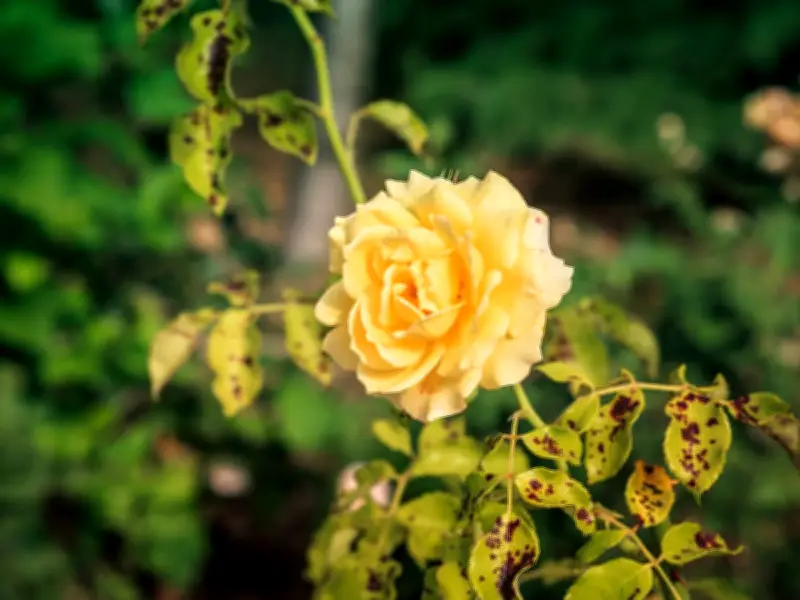
Mulching roses in July is the key to keeping them healthy and free from black spot, according to gardening experts and experienced growers. Black spot is a common fungal infection that causes leaves to yellow and drop prematurely, weakening plants over time.
What Is Black Spot and Why Is It Dangerous?
Black spot is a devastating fungal infection that represents a significant danger to roses. The initial signs are irregular blotches measuring up to half an inch across, predominantly on the top side of foliage. As the infection advances, leaves start to yellow and drop earlier than normal, usually beginning at the bottom and moving upwards. Eventually, the whole plant may lose all its leaves, with stems also at risk of becoming infected. While black spot typically does not destroy plants in the first year or two, if ignored, it makes them more vulnerable to additional infections that can become lethal.
Gardener's Plea for Advice
Frustrated by her roses constantly falling victim to black spot, Kelly Lynch sought advice on the David Austin Roses Facebook page. She asked, "Does anyone have any advice for black spot? I've tried removing all the infected leaves and don't overwater, but no matter what I do, most of my roses end up with it."
The overwhelming majority of group members who replied suggested mulching in July. Ruth Hall commented, "It seems to have helped that I planted my Intrigue rose (prone to black spot) in a bed that has a surface of mulch on top. No moisture on the surface. That seems to help prevent black spot." Julie Graig posted, "Don't spray. Mulch can protect and nurture the fungal spores. Remove it, clean the area, and snip any infection. Water gently in the early morning or late evening. Keep the area well ventilated, not overgrown." Anna Elizabeth responded, "I try to mulch around the plant, but keep it away from the bud union and not water too much."
Expert Advice on Mulching
Horticultural specialists at Moowy also advocate mulching roses to ward off black spot. They explained: "Apply a substantial layer of mulch around the plant's base to help prevent black spot. Mulch acts as a barrier, preventing soil from splashing onto the plant. Because if spores are present in the earth, the mulch will help stop black spot from spreading to the roses."
Mulch offers roses a nutritional enhancement, keeps weeds at bay, and helps retain moisture. It is especially advantageous for roses vulnerable to black spot because it prevents rainfall from splashing spores found in the soil onto fresh growth.
How to Mulch Roses
A broad range of materials are appropriate for mulching, including high-quality garden compost, composted straw or bark, or thoroughly rotted manure obtained from a nearby farm. However, any manure used must be at least two years old, as fresh manure could scorch the roses' roots.
Start by watering the surrounding earth thoroughly. The area should be free from weeds and any fallen or diseased foliage. After the soil is prepared, place a layer of mulch around the rose's base. Distribute it uniformly to a depth of approximately one to two inches and stretch it outwards to roughly the width of the rose canopy. It is vital to keep the mulch slightly away from the stems directly, maintaining a small space to allow air to move freely and help avoid rot at the plant's base.