An inevitability of life is that nothing ever stays the same. That is true in most industries, sectors, and hobbies – but more so if you happen to be a farmer. Rising costs, fuel hikes, fertiliser shortages, changing legislation, government red tape, Brexit, extreme sunshine, extreme rain, extreme isolation.... Name a problem and there's a good chance a farmer in Wales has it.
The Royal Welsh Show has been held in Wales since 1904 and just outside Builth Wells since 1963. There's a familiar feel to the 150-acre showground in Llanelwedd this year: crowds jostling for shade and ice creams melting all while announcers, choirs, and musicians battle to be heard by thousands of people. Amid the hustle and bustle it seems that now, more than ever, there is a lot to talk about when it comes to farming.
Young farmer's story: from loneliness to social media
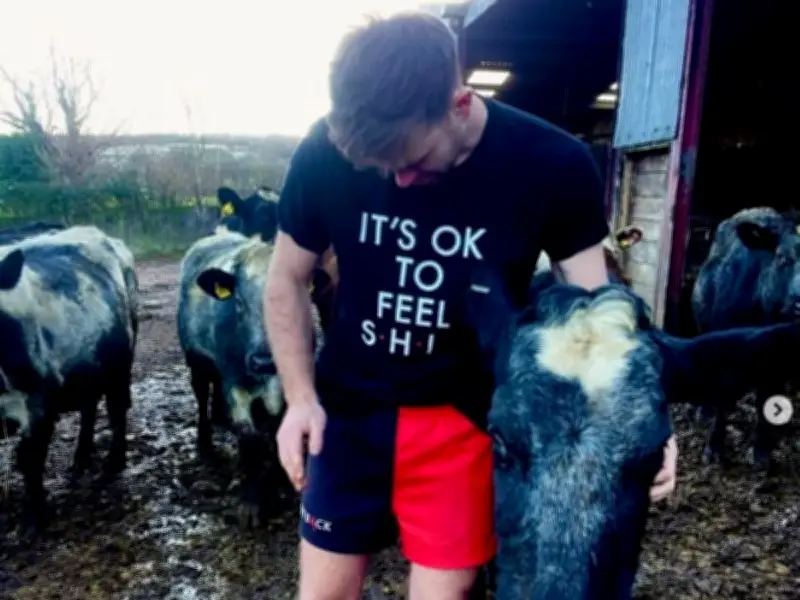
Ioan Humphreys is a young farmer. His farm in the Carno area of Powys has been in his family since 1903. Because of isolation he decided to make a video of himself working on the farm some years ago and posted it on social media. Now he has almost 65,000 followers on Instagram. But farming was never really part of his plan until his father became ill.
"I was 20 and my father had cancer. He could no longer run the farm so he said we would have to rent it out or sell it. It was then that I decided to take it over and I haven't looked back since." One night while working on his own he filmed a video of himself lambing. "People seemed to take an interest in it," he says. "I was lonely and had nobody to talk to apart from the sheep."
Loneliness is a major factor in farming. The Senedd's presiding officer Huw Irranca-Davies previously said that "loneliness and isolation in rural Wales is a ticking timebomb". Ioan admits there were times when he would see people during a weekly food shop "and that was it". "Isolation is a big, big thing, and it's across the board," he says. "You are tied to the farm. There is a stigma around it – a sense that farmers always have to be busy, that you don't have the time to speak to other people.
"My grandfather used to tell me: 'Leave the county once a month and the country once a year' but there are some farmers that don't even manage that. They might brag: 'I haven't been out of the country for five years'. Well I have. You have to. You need to have that balance."
Mental health crisis and recovery
Six years ago things came to a head for Ioan and he ended up in hospital. "In 2020 I had a lot of financial struggles," he says candidly. "I was working too much. I had not been sleeping and I was stressed. I was lambing on my own one day and all of a sudden I just put everything down and got in my car. I drove straight to Newtown and walked into a barber's shop. I sat in the chair and told him: 'Just shave all my hair off'." A short time later Ioan was diagnosed with meningitis.
"I was run down – my body couldn't fight it off. I was in hospital for two and a half weeks. I still have some after-effects like memory loss. I don't remember two weeks ago. In two weeks' time I won't remember this chat." Ioan is imploring any farmer who needs to talk to do just that. He thinks the YFC (Young Farmers' Club) is a "huge thing" in giving people a social outlet. There are also charities like the DPJ Foundation, set up in 2016 after Pembrokeshire farmer Daniel Picton-Jones took his own life.
"Pick up the phone," says Ioan. "We need to get that accountability and realise that something is not right. Charities can't phone everyone to check they're OK. Farmers don't like to admit they're feeling down. Since I had that breakdown I know my mind needs to move around so I have to do certain things. I go to the gym three times a week just to get off the farm, just to get that mental reset. But I'm a farmer. I love farming. I will never do anything else."
Weather and changing times
Alun Owen is a farmer from Pentrefoelas in Conwy. When asked if farming is getting harder than ever he smiles and says: "It's always been hard." He says money made by farmers is generally offset by rising costs for essentials like fuel, fertiliser, and materials. So even when things seem to be improving in reality they tend to stay the same. One thing that does seem to be getting worse, however, is the weather. For non-farmers this summer has largely been glorious. But every story has a different side.
"The weather impacts all farmers," says Alun, sitting inside in the shade near the Royal Welsh showground's sweltering main ring. "We're lucky on our farm because we've changed our system in order to be able to harvest earlier in the season but generally until the sky cries it's very difficult. Things are not growing but we've been here before and we'll be here again. As a farmer you just live in hope that you'll be able to harvest something before Christmas."
New Sustainable Farming Scheme
Farming in Wales is changing in a seismic way. The new Sustainable Farming Scheme was introduced earlier this year leading to much criticism and large protests. Previously farmers would receive government subsidies primarily based on how much land they owned under a system called the Basic Payment Scheme. The new system has a greener focus where farmers have to met certain criteria and agree to a number of requirements to qualify for subsidies including managing at least 10% of their land as habitat in order to benefit biodiversity.
According to Farmers Weekly around half of Welsh farmers have decided to remain in the basic scheme despite its funding level being cut and plans being in place to phase it out completely over the next three years. On the first day of this year's Royal Welsh Show the Welsh Government's new cabinet minister for rural resilience and sustainability Llyr Gruffydd announced a commitment to deliver £340m per year for three years to March 2030 for the Sustainable Farming Scheme, replacing the previous year-to-year funding model.
Mr Gruffydd said on Monday: "Giving farmers only 12 months' line of sight to funding is not sufficient. We know how hard it is to plan and make business decisions without knowing what funding is coming. Farmers told us loud and clear they need certainty and stability and that is exactly what we are delivering." But as Alun from Pentrefoelas explains the new system will take some getting used to for some who are sceptical of what it might mean moving forward.
"There's been a lot of resentment about the new system with some feeling it's a bit like teaching your grandmother to suck eggs – that you have to do more just to be able to do your job," he says. "But on the other hand education is not a bad thing. We have to jump through more hoops but if your business profits from it then it isn't a bad thing. It's a matter of getting used to it. In an ideal world it would be phased in gradually so that the industry can have time to adjust. I think that's the main factor that frightens some farmers – you need to complete all the requirements by the end of the year and if you don't you could be open to penalties."
Community and future outlook
As well as government legislation other factors are changing the farming landscape too. "I can remember neighbours coming up to help with the bales, and every neighbour going to their neighbour to help, and we would all sit and talk, chat, and eat together," says Alun. He says for various reasons – farms being sold, contractors working on farms, farmers just being too busy – that has largely disappeared. "It's a sign of the times," he adds. "We're lucky in that we still send out cattle to market so you might spend half a day in the market with other farmers talking – talking rubbish probably – but that's what you need. You see fewer farmers at the market now but I think it's vitally important."
So with all the changes Alun has seen over the previous few decades what will farming look like in 10 years' time – or 50? "If I had that crystal ball I would not be sat here today," he laughs. And does he still enjoy farming? "There are days I don't. But a couple of weeks ago we were trying to get a newborn foal to suck and he did after a couple of days. It was very rewarding because without that the foal would have died so you're helping bring life into the world. That's one of the main reasons why we do this."
Paul Williams is a beef farmer from near Llanrwst in Conwy. He was not born into farming but has been working on a farm "since he could walk". While things have changed and continue to change he says as a farmer "you have to be prepared for that". "It's a brilliant way of life and it's a brilliant way to bring up your children," he says. "I was at a YFC celebration the other evening and the inspiration you get from young people is heartwarming – they're the next generation of farmers. I am all for young people getting into agriculture. I was not born on a farm and there was almost a stigma to that with people thinking I wasn't a 'real farmer'. But you need people who weren't born into farming coming into the industry – that is something that should be encouraged."
Paul thinks farming and how it is viewed by those outside the industry has changed in recent years, saying there is now a "fashion" connected to it. "Because of the popularity of Clarkson's Farm and other things I think farming has become interesting to others and that can't be a bad thing." Paul also thinks the YFC plays an "absolutely crucial" role in not only teaching young people "skills that will last a lifetime" but also in allowing young farmers to meet like-minded people. He says isolation can be a big problem in farming and that it tends to be a generational thing. "For some farmers the only time they see or speak to others will be when they go to market or when the postman calls and that's sad." But Paul adds: "I love this industry, it's given me a hell of a lot. I just hope any one of my three children wants to do the same. You'll never get rich but it is so fulfilling."
Dairy farmer's perspective
Abi Reader is a dairy farmer who owns a farm on the outskirts of Cardiff. She is also the President of NFU Cymru. She's honest about farming in 2026. "It’s more complex and more challenging," she says. "It used to be easy to grow grass but on our farm we've been in drought for seven of the past eight years. It's a colossal concern. This year it hasn't just been the lack of rain but also the heat. Cows spend a lot of time standing in the heat, which means they're not eating, so our milk yield has dropped 10%.
"It was desperate last year and give it another week or 10 days of this weather and we'll be in the same position. At the moment I'm just crossing my fingers for a bit of rain." But the future of farming in Wales is a bright one, Abi insists, citing the sheer number of young people who continue to attend the Royal Welsh Show. "It can be a difficult industry to get into, it's very remote in its nature, but we're seeing more people get into agriculture. A lot of young people want to work outdoors and farming is a really good career for people who know they don't want to sit in an office. It's a massive opportunity for young people. With a government that is more conscious of promoting the industry the future of farming in Wales is definitely bright."
Tim Faire from Denbighshire has been farming for 45 years. He is the chair of the land use and climate change committee for the Farmers' Union of Wales (FUW). "There's definitely been a change in weather patterns," he says. "This dry weather we've been having has its advantages but the trouble is you need rain for things to grow." It's not just the weather that's changing. Farming in general is changing – especially in the face of a new subsidy system.
"Brexit has been a complete disaster not just for farmers but for trade in general," says Tim. "Farmers have to do more for their money now rather than the old system where you would get subsidies based on the size of your land. About 50% of farmers have signed up to the new system with many staying on the old scheme. I think some are frightened by the amount of work you need to do in terms of admin. After all we provide food and maintain the environment. But we face rising costs and political uncertainty. The cost of fuel has gone up, which everybody suffers from, but as farmers we face rising costs with other things like fertiliser.
"The future can be bright for farming. There are still people, including younger generations, who are desperate to farm. I don't think that enthusiasm for farming will diminish amongst young people. It's a great industry to be in. It's still very rewarding but you have to be prepared to work for that reward."