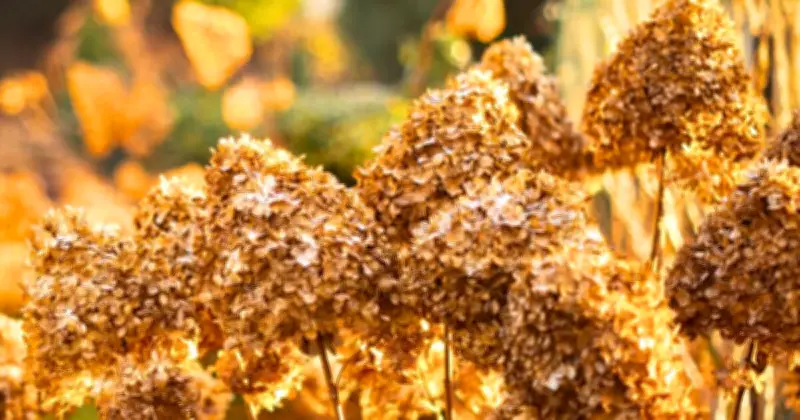
Gardeners are being urged to leave their hydrangeas unpruned through winter, as the old flower heads provide essential frost protection for the tender growth buds beneath and keep the shrub looking attractive during the colder months.
Cold tolerance varies among hydrangea varieties, and winter damage can be unpleasant to see. Although many species can withstand winter, their hardiness has limits. Unpredictable winter weather can be especially harmful, resulting in few blooms, or none at all, the following season. The key is to protect the plant from before the first winter frost until after the final frost of spring.
Why you should delay pruning
Ish Kamran, known as @gardening.with.ish on Instagram, addressed the common dilemma of whether to prune hydrangeas or leave them be. He pointed out that it's best to put off pruning for two beneficial reasons: the blooms look great in winter and have thermal properties.
Kamran said: "Hydrangeas are starting to wind themselves down and brown off. It's tempting to want to prune them down, but they have the benefits of not only looking great in winter but has thermal properties too."
He added: "Today's gardening tip is less about what to do and more about leaving things be and letting them thrive naturally. Let them look fantastic over winter and enjoy them in full flower again next spring."
Expert advice from the RHS and Soto Gardens
Gardening experts at the Royal Horticultural Society (RHS) also advise against pruning hydrangeas just before winter. They explained: "Although the blooms on hydrangeas can, in mild areas, be removed as soon as they have faded, it is best to leave them on the plant over winter to provide some frost protection for the tender growth buds below."
Experts at Soto Gardens agreed, urging gardeners to "avoid pruning hydrangeas in the autumn or winter". They added: "The flower buds protect the hydrangea in winter from freezing temperatures and add winter interest in your garden."
When and how to prune instead
For those who want to cut back their hydrangeas, Kamran advised waiting "until around about February or March time before that new growth comes". He said: "As a result, you've protected them over the winter, but then you've taken care of it, ready for new growth next year."
The RHS recommends removing the dead flowerheads in "early spring", cutting back the stem to the first strong, healthy pair of buds down from the faded bloom. Kamran recommends cutting just above a healthy leaf, noting that you'll usually see a few little shoots there ready to go. If the plant is too big and needs controlling, you can go a little lower, but always cut above a healthy leaf.
The RHS says to cut out one or two of the oldest stems at the base to encourage the production of new, replacement growth that will produce more flowers. Overgrown or poorly shaped plants can be entirely renovated by cutting off all the stems at the base, though this will remove all the flowers for that summer, with new stems not blooming until the following year.