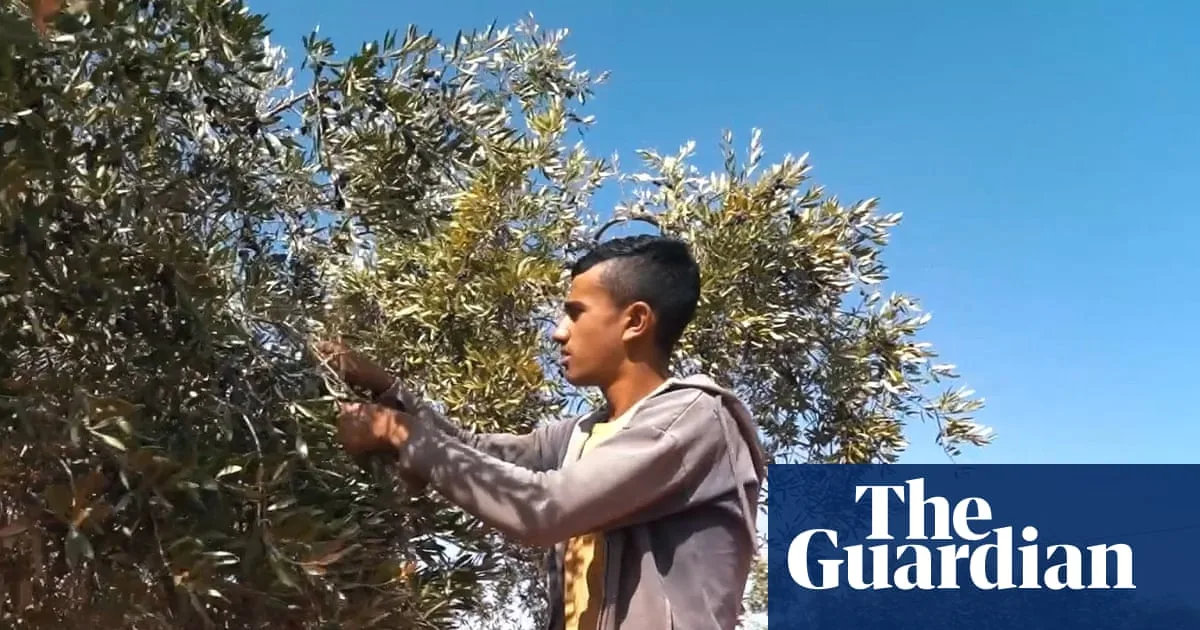
Extreme heat and drought have destroyed 70% of Jordan’s olive crop, threatening the livelihoods of 80,000 families and a centuries-old tradition. The country is facing its weakest olive oil season in four decades, with production down as much as 70% compared with last year.
Abu Khaled al-Zoubi, a 67-year-old farmer in Irbid, northern Jordan, said he had never experienced such a poor harvest. “We’ve lost more than half of our crop before the harvest even started,” he told the Guardian. The harvest, which normally begins in late September, did not start until early November this year.
According to the National Agricultural Research Center, the crisis affects a sector that generates more than $1.4bn (£1bn) annually for Jordan’s economy. In the hardest-hit northern regions, output has collapsed to just 10% of the average 200,000 tonnes that typically yield 30,000 tonnes of oil. Prices have soared, with 20-litre containers of olive oil now fetching $190, up from $140.
Mahmoud al-Auran, director of the Jordanian Farmers Union, said temperatures were 10-15C above average, delaying the winter harvest. Climate records show a 13-day extreme heatwave from 12-24 August, the longest on record for Jordan. The 2024-25 rainfall season delivered a further blow, with northern and central regions receiving roughly 54% of normal precipitation.
“Olive trees here depend on rain to grow, not chemical fertilisers,” Auran explained. “Heat and drought give the trees less water, resulting in smaller fruits and oils of less quality.” In response to the shortage, the government now allows West Bank visitors to bring five tins of olive oil into the kingdom, while the minister of agriculture has pledged to open imports if prices continue rising.
Amal al-Ghawanmeh, head of al-Sendyan Land Association for Environmental Development, said: “Olive oil is woven into the fabric of Jordanian life. When production decreases, every household suffers.” Farmers are calling for drought-resistant olive varieties, improved irrigation infrastructure, and climate-smart agriculture to mitigate future losses.